
By Timothy Tan Jee Vin
We grow up hearing the same advice again and again: save money, invest wisely, plan for retirement.
Those are good tips, but they’re not the full picture. They all assume that when we get old, the right places and systems will already be there to support us.
But the truth is, in Malaysia, that kind of care infrastructure isn’t yet ready, at least not at the scale or quality we’ll need.
Look at the numbers. In 2024, 11.6% of the population were aged 60 and above. By 2040, it’s expected to pass 17%. Twelve states are already considered ageing.
- Sign up for Aliran's free daily email updates or weekly newsletters or both
- Make a one-off donation to Persatuan Aliran Kesedaran Negara (ALIRAN), Maybank a/c 507246118995 or CIMB a/c 8004240948
- Make a pledge or schedule an auto donation to Aliran every month or every quarter
- Become an Aliran member
By 2030, millions more in Malaysia will be elderly, and many will be living with long-term health problems like diabetes, high blood pressure and heart disease. Some will also face dementia or struggle to move around easily.
These are not just statistics. They’re our parents today, and they’ll be us in a few decades.
There are three big gaps that make this a real concern:
- not enough trained caregivers and proper facilities
- huge differences between urban and rural areas
- the cost barrier that locks out many middle-income families
For example, nursing home fees in Malaysia can range from around RM1,500 a month to more than RM12,000, depending on the location and quality. That shows good care is possible, but it’s often too expensive. Many families are stuck in the middle, not poor enough for subsidies and not rich enough for private care.
This is more than a social issue. It’s an economic one too. When we don’t have a strong care system for older people, the hidden costs pile up.
Adult children, often the main earners, might have to cut their working hours or quit their jobs to care for their parents. Productivity drops, companies lose skilled workers, and healthcare costs rise when untreated conditions get worse.
A proper care sector would do the opposite. It would create jobs for caregivers, nurses, therapists and administrators, and open up new markets for products and services aimed at older adults.
Right now, Malaysia relies heavily on foreign caregivers. But countries like Singapore and Hong Kong pay better, so they attract more workers. Unless we train more locals and improve the pay and working conditions, we’ll keep facing shortages.
Our health system also lacks geriatric specialists, and most of them are in big cities. Smaller towns and rural areas, including Felda settlements with many older residents, are often left behind.
There are other risks too. Older adults who live alone can easily become victims of scams or abuse. Climate change makes things worse. Heatwaves and floods can be deadly for older adults who are unable to move quickly or cool down easily. Without safe and climate-resilient community spaces, many of them are left in unsafe homes.
Culturally, we often say children should take care of their parents. That value is beautiful and important, but times have changed. Families are smaller, more women are working, and many young people move away for studies or jobs.
Depending only on family care isn’t realistic anymore. It’s not about abandoning our values – it’s about updating how we practise them.
I’m not saying we should just copy what other countries do. Malaysia needs its own model. Imagine villages where older adults still teach skills, cook together, help children with homework and contribute to their community. They shouldn’t just be cared for – they should stay active and valued.
The government has started some efforts, like digital literacy classes for older adults, community transport and an upcoming bill focusing on older adults. There’s also a national action plan for older adults and talk of a dedicated ministry.
These are good starts, but without enough buildings, trained people and proper funding, the impact will be limited.
To those in Malaysia saving for retirement: saving money alone isn’t enough. Without proper care infrastructure, that money may not be enough to protect us later.
To investors and policymakers: this is a predictable trend. The demand is guaranteed. Building a care system for older adults isn’t charity. It’s an investment that supports families, protects dignity and creates long-term jobs.
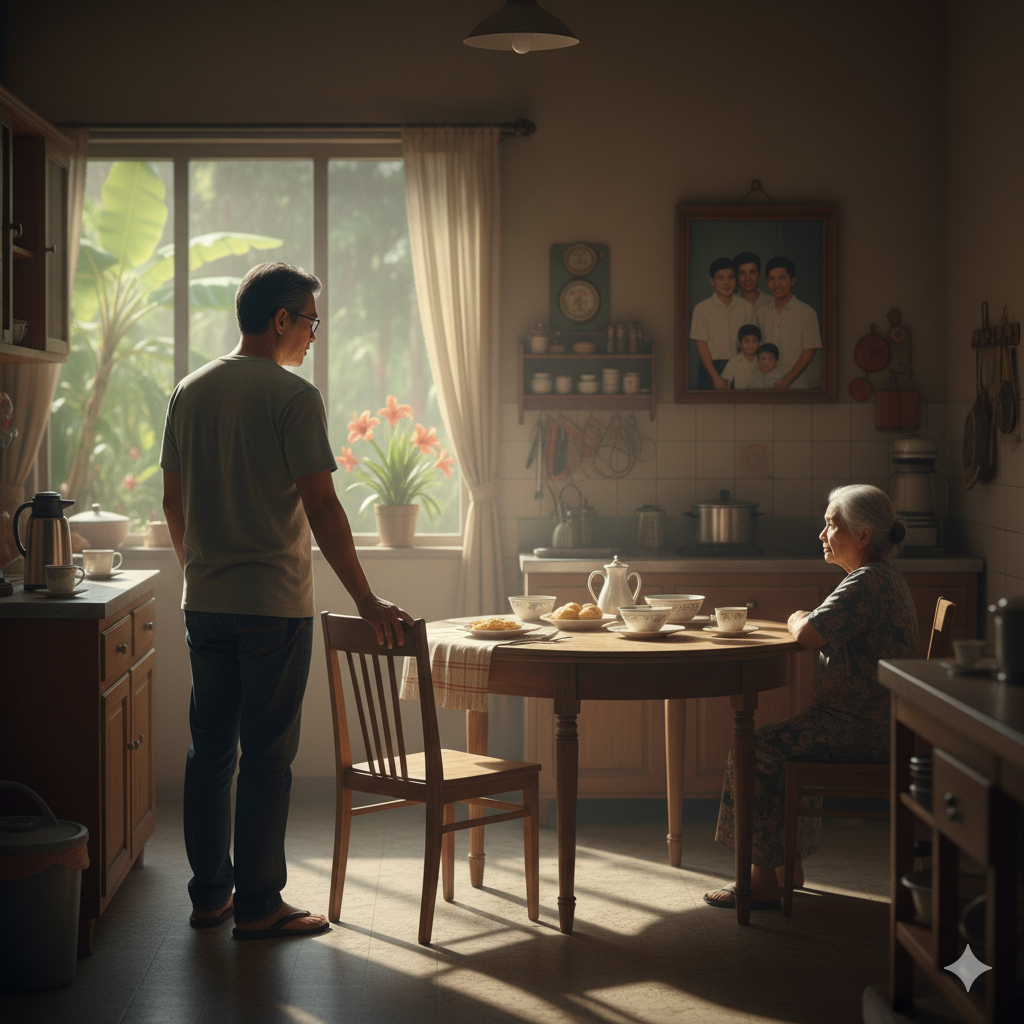
For me, this issue feels personal. When I visit my grandparents, I see not just their health problems but also their loneliness. Sometimes when I picture the empty chair at their kitchen table, I feel scared thinking about what will happen when they’re gone.
And then I wonder, if we don’t want an empty chair at home, why do we accept an empty system out there?
Malaysia has built roads, ports and skyscrapers. Those things shaped our future back then.
Now it’s time to build something just as important, the infrastructure of care. Not because we pity older adults, but because we want a society that takes care of all its members, including our future selves.
Timothy Tan Jee Vin is a final-year undergraduate student of physics at the Faculty of Science, University of Malaya.
AGENDA RAKYAT - Lima perkara utama
- Tegakkan maruah serta kualiti kehidupan rakyat
- Galakkan pembangunan saksama, lestari serta tangani krisis alam sekitar
- Raikan kerencaman dan keterangkuman
- Selamatkan demokrasi dan angkatkan keluhuran undang-undang
- Lawan rasuah dan kronisme
