
Hong Ching Goh
Malaysia is a happier country, based on the scores in the Department of Statistics’ Malaysia Happiness Index for 2024.
The index measures happiness across a wide range of components, including religion, time use, family, health and education.
While all states recorded a surge in happiness scores – Malacca showing the highest, with a significant increase in social participation – Kuala Lumpur and Labuan recorded lower scores.
In Kuala Lumpur, the most notable declines were in culture and arts participation, income and family-related indicators such as relationships and safety within the family.
- Sign up for Aliran's free daily email updates or weekly newsletters or both
- Make a one-off donation to Persatuan Aliran Kesedaran Negara (ALIRAN), Maybank a/c 507246118995 or CIMB a/c 8004240948
- Make a pledge or schedule an auto donation to Aliran every month or every quarter
- Become an Aliran member
The Covid pandemic played a significant role in shaping happiness among people in Malaysia. It reshaped people’s values, placing greater priority on health (both physical and mental), family, safety and stability – all central to happiness.
The post-pandemic recovery period (2022–24) reflects people’s gratitude for normalcy and reactivated social life, which is evident in the overall national improvement. Both federal territories, Kuala Lumpur and Labuan, face distinct structural challenges associated with urban pressures and the cost of living.
As cities grow denser and more competitive, residents often experience time scarcity, high housing costs, income insecurity, longer working hours, commuting stress and social detachment.
According to Global Angle (2023), the bottom 40% of households in Kuala Lumpur earn RM8,880 or less per month, compared to the national bottom 40% threshold of RM5,249.
The pandemic also altered work and mobility patterns, reducing community interactions that once supported social and cultural wellbeing.
Urbanisation, while improving access to services and opportunities, often comes with challenges. Excessive urban development can lead to social fragmentation and mental fatigue.
The income component may have deteriorated due to widening inequality and rising living costs, which now affect even middle-income households, whose monthly incomes range between RM8,880 and RM16,779 – levels once associated only with lower-income vulnerabilities.
As highlighted by Gregory Ho Wai Son and Dr Suraya Ismail of Khazanah Research Institute (2020), this trend has serious policy implications for both income groups.
For Labuan, the lack of diversified economic activities and reliance on niche industries such as oil and gas, coupled with geographical remoteness, may have amplified feelings of isolation and uncertainty.
Malacca’s remarkable rise in happiness scores suggests that strong social bonds and community engagement are key to wellbeing.
Lower living costs, a slower pace of life, and less stressful environments enable smaller cities like Malacca to maintain intergenerational and neighbourhood networks that foster trust, mutual support and collective identity. Community-driven initiatives – including heritage programmes, volunteering and local tourism – have helped restore post-pandemic social life, reminding us that happiness is rooted in how people connect, participate and find meaning in shared experiences.
Reactivating pre-pandemic social life
The pandemic reshaped priorities and relationships, underscoring the value of health, family and safety. As Malaysia transitions through the recovery phase, social reconnection and community resilience remain central to sustained happiness and wellbeing.
Community-level placemaking and connectivity
The drop in Kuala Lumpur’s cultural scores reflects reduced public cultural participation – fewer accessible community arts spaces, green areas and creative hubs following pandemic disruptions.
Happiness can be strengthened through community-level placemaking and enhanced urban connectivity driven by participatory approaches, cultural revitalisation and inclusive economic policies.
Policies that promote accessible public spaces for arts and culture, connect neighbourhoods through green networks, encourage work-life balance, and ensure affordable urban housing will help restore a sense of belonging and collective wellbeing – vital ingredients for personal and societal happiness.
Urban planning and governance
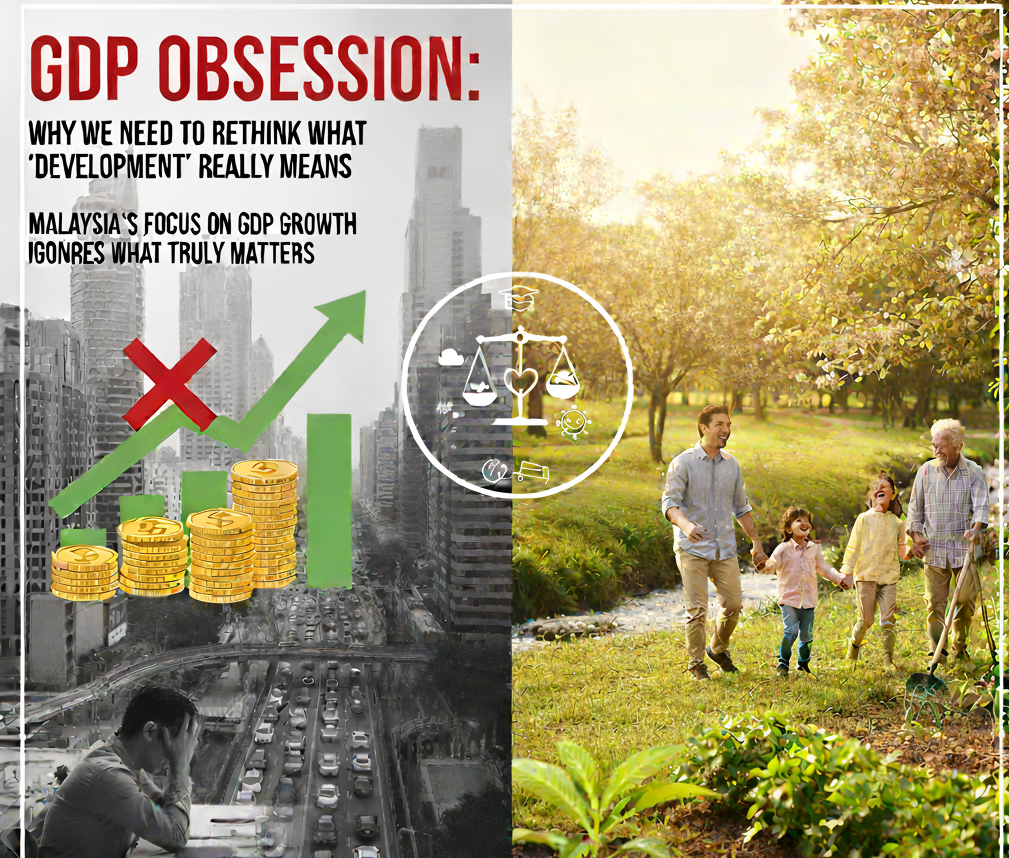
A people-centred development agenda is essential. Happiness should be recognised as a measure of societal resilience and trust, forming the foundation of human wellbeing.
Beyond economic growth, Malaysia must strengthen the social and environmental dimensions of development by embedding happiness indicators in urban planning and local governance.
Encouraging public participation, expanding green and blue infrastructure – parks, trees, wetlands and waterways – for mental health and recreation, and supporting inclusive policies can help narrow inequalities and improve quality of life.
Multipurpose urban spaces
Redesigning conventional active-mobility systems – such as through roofed and elevated pedestrian walkways separated from road traffic – can make walking safer, more comfortable and appealing.
Such infrastructure should not be limited to city centres but extended to high-density development nodes such as the Kerinchi–Bangsar South area. These walkways can serve not only as mobility corridors but also as social, environmental and recreational spaces that enhance urban liveability and contribute to overall wellbeing.
From research to action
Malaysia’s rising happiness scores are encouraging, yet happiness remains unevenly distributed.
Contributing factors vary across urban–rural divides, geographical settings (such as coastal regions versus highlands), gender, age, marital status, income levels and access to cultural or natural spaces.
Concerns about the future persist, underscoring the need to build future-ready cities through continuous community engagement and empowerment. Investing in inclusive and empathetic governance, where everyone feels seen, heard and connected, will form the real foundation of a happy Malaysia.
Notably, PLANMalaysia – the Department of Town and Country Planning – also publishes an annual Malaysia Happiness Index at district and state levels. Comparing its findings with the DoS study could reveal whether the happiest localities are consistent across both.
Further research-to-action initiatives that map locality profiles alongside happiness scores could help narrow existing gaps through targeted, evidence-based interventions.
Professor Hong Ching Goh is a professionally registered urban planner and interdisciplinary social scientist at the University of Malaya. She has worked extensively on urban resilience, human–environment interactions, and wellbeing across coastal Southeast Asia.
AGENDA RAKYAT - Lima perkara utama
- Tegakkan maruah serta kualiti kehidupan rakyat
- Galakkan pembangunan saksama, lestari serta tangani krisis alam sekitar
- Raikan kerencaman dan keterangkuman
- Selamatkan demokrasi dan angkatkan keluhuran undang-undang
- Lawan rasuah dan kronisme
