
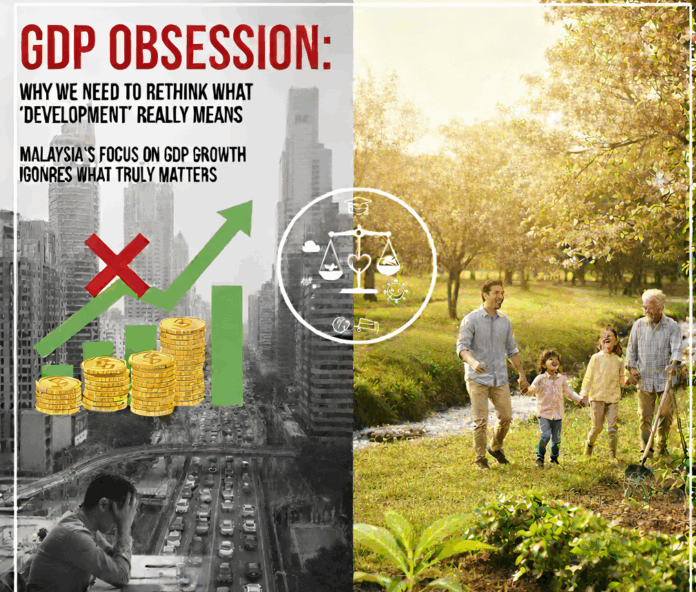
GDP has long been treated as the main measure of national progress. Yet It captures only the volume of economic activity, not quality of life.
The indicator ignores environmental degradation, natural capital loss, pollution, inequality and long-term wellbeing. When ecosystems decline and communities suffer, the gross domestic product (GDP) can still rise.
Consider Malaysia’s natural resources – forests, rivers, peatlands and mangroves. These ecosystems provide essential services such as flood protection, carbon storage, water regulation and cultural value. Yet these benefits are invisible in GDP.
For example, when a mangrove forest is cleared, GDP increases. When floods damage homes and infrastructure as a result, GDP rises again when they have to be repaired or replaced. This distortion hides the real economic value of nature.
Research indicates that every $1 invested in ecosystem restoration can return up to $30 in ecosystem benefits. Given these blind spots, what other tools can complement GDP?
- Sign up for Aliran's free daily email updates or weekly newsletters or both
- Make a one-off donation to Persatuan Aliran Kesedaran Negara (ALIRAN), Maybank a/c 507246118995 or CIMB a/c 8004240948
- Make a pledge or schedule an auto donation to Aliran every month or every quarter
- Become an Aliran member
The UN’s Inclusive Wealth Index (IWI) measures long-term national prosperity through produced capital, human capital and natural capital. Recent global findings show a worrying trend: while GDP has grown quickly, natural capital has declined by 28% since 1990, and natural capital per capita has fallen by more than half. The index reveals the erosion of long-term prosperity that GDP conceals.
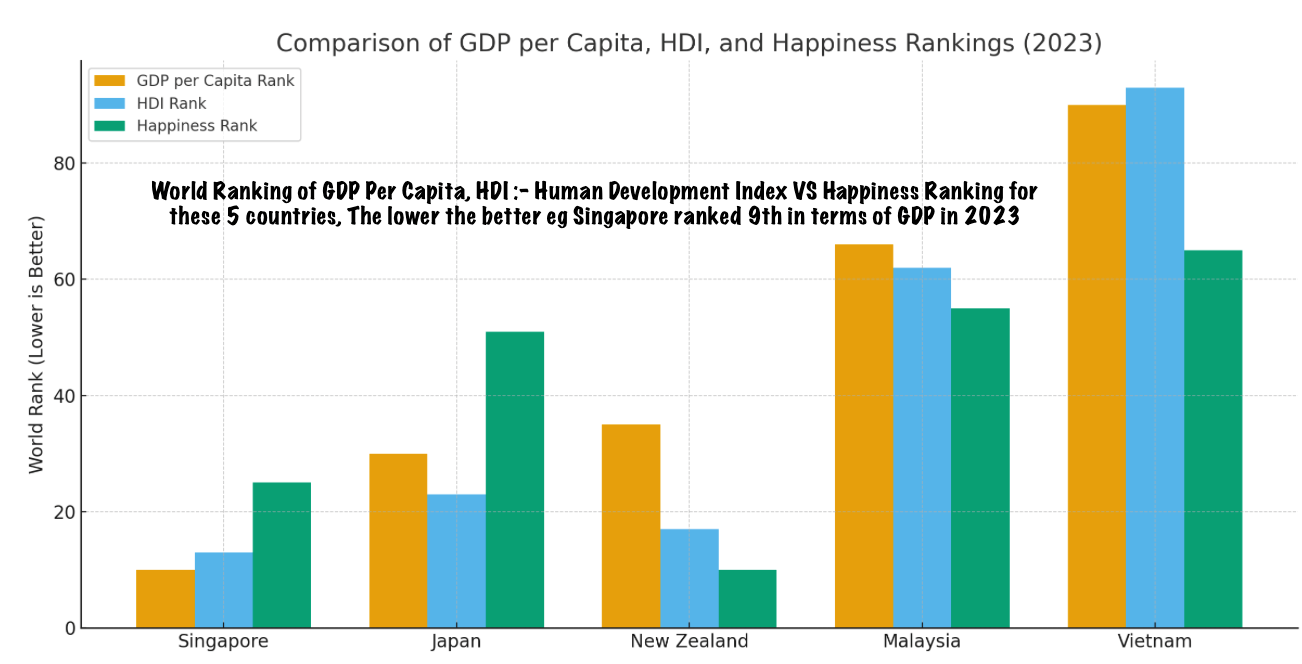
The Human Development Index (HDI) offers a summary measure of human development: a long and healthy life, access to knowledge and a decent standard of living. This shifts the focus from a purely economic measure (GDP) to a more people-centred approach to defining development. The index is compiled and published annually by the United Nations Development Programme.
The World Happiness Index report identifies six key variables that help explain variations in happiness across countries: GDP per capita, social support, healthy life expectancy, freedom to make life choices, generosity and perceptions of corruption. The report is published by the UN Sustainable Development Solutions Network, using data from the Gallup World Poll.
As climate risks intensify and ecological losses mount, relying on GDP alone is no longer viable for Malaysia. Tools like the UN’s System of Environmental Economic Accounting can help the country value ecosystems as real economic assets and guide more sustainable decisions.
It’s worth noting that the Department of Statistics in Malaysia tracks the country’s GDP and publishes its own national Malaysia Happiness Index. However, the Inclusive Wealth Index and Human Development Index are tracked by international organisations, not directly by the department.
On 18 November, I represented Bike Commute Malaysia and Penang Transport Users Association (Petua) at a Malaysia CSO SDG Alliance workshop. I am still searching for suitable indices to measure active mobility or effective use of public transport. Some statistics – such as localised road accident statistics, modal share and the Tom Tom Traffic Index of driving time over 10km – exist. Please provide suggestions in the comments section below.
Redefining progress
Moving beyond GDP is not about rejecting growth, but redefining progress. Malaysia must measure wellbeing, resilience and equity among its people, as well as the health of the country’s natural environment. Only then can the country ensure prosperity that lasts across generations. Civil society groups should use and mainstream the other complementary indices at both grassroots and policy levels.
AGENDA RAKYAT - Lima perkara utama
- Tegakkan maruah serta kualiti kehidupan rakyat
- Galakkan pembangunan saksama, lestari serta tangani krisis alam sekitar
- Raikan kerencaman dan keterangkuman
- Selamatkan demokrasi dan angkatkan keluhuran undang-undang
- Lawan rasuah dan kronisme
