
Chris Majella
The old approach of ‘development equals economic growth at all costs’ is exhausted and is visibly failing.
Traffic crises, environmental pressures and social fragmentation tell the story clearly enough.
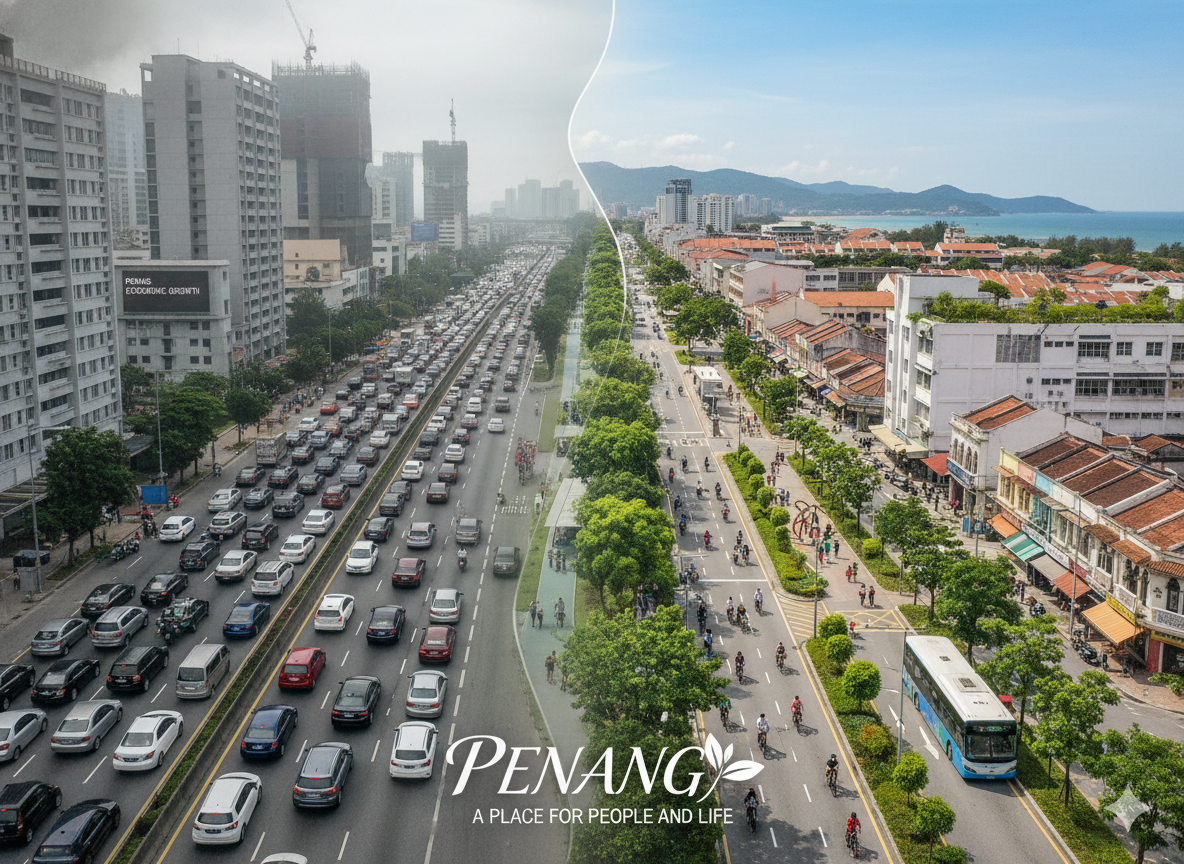
A fresh approach for Penang would be a fundamental shift – from being ‘a place for cars and construction’ to ‘a place for people and life’.
Here is what this new approach could look like, built on the lessons from Utrecht.
A living system, not a machine
- Sign up for Aliran's free daily email updates or weekly newsletters or both
- Make a one-off donation to Persatuan Aliran Kesedaran Negara (ALIRAN), Maybank a/c 507246118995 or CIMB a/c 8004240948
- Make a pledge or schedule an auto donation to Aliran every month or every quarter
- Become an Aliran member
The old approach treats the city as a machine to be optimised for efficiency – car movement, gross domestic product (GDP).
The new approach sees it as a living, breathing ecosystem where wellbeing, culture and nature are paramount.
Value nurturing
Old approach: Land is a commodity to be developed for maximum profit. Success is measured in GDP, foreign investment and square feet built.
Fresh approach: Land is a shared resource that hosts community, culture and biodiversity. Success is measured in quality of life indicators – clean air, access to green space, mental wellbeing, social cohesion and cultural vitality.
Accessibility
Old approach: The goal is to move as many cars as fast as possible. Solution: build more and wider roads.
Fresh approach: The goal is to give people the best possible access to jobs, schools and amenities. Solution: make walking, cycling and public transport the most convenient, affordable and pleasant options.
This means reallocating space – taking lanes from major roads for exclusive bus and bicycle use.
It means traffic calming, designing streets so cars must move slowly, making neighbourhoods safe for people.
And integration is key: a cost-effective rail system must be the spine of a fully integrated network of feeder buses and bike-share systems.
Talent attraction
Old approach: Attract investment for mega-projects and property development. ·
Fresh approach: Cultivate a world-class quality of life to attract and retain the world’s best talent, entrepreneurs and creative minds.
The economy of the future is drawn to liveable, sustainable and inspiring cities, not to congested urban sprawl.
A protected coastline, a walkable George Town and clean hills are not just ‘nice to have’; they are your core economic assets.
Regeneration
Old approach: Do the minimum required environmental impact assessment to get a project approved. Nature is an obstacle or a backdrop.
Fresh approach: Nature is the essential green infrastructure. Protect and enhance it actively because it provides services for free – hills as water catchments, mangroves as flood defence, parks as the ‘lungs’ and ‘living rooms’ of the city. The goal is a net-positive environmental impact.
Co-creation
Old approach: Government plans, developers build, ordinary people adapt.
Fresh approach: Participatory democracy. Ordinary people are partners from the start. Use people’s assemblies, participatory budgeting and collaborative design workshops to shape projects. This builds public trust and leads to better, more accepted outcomes.
What would this look like?
Instead of a new highway, imagine a project called the ‘Green Ribbon’.
The goal would be to reconnect neighbourhoods and give people a continuous, safe and beautiful route across the city without a car. ·
The action? A connected network of pedestrianised streets, dedicated cycle highways and linear parks that link key destinations – from the Unesco core to the suburbs, from universities to tech parks.
It would be created by reclaiming space from existing roads, not by clearing new land.
It would feature shaded paths, public art, pocket parks and integrated bus stops. ·
The result wouldn’t just be a transport route. It would become a new social and economic corridor, boosting small businesses and community health.
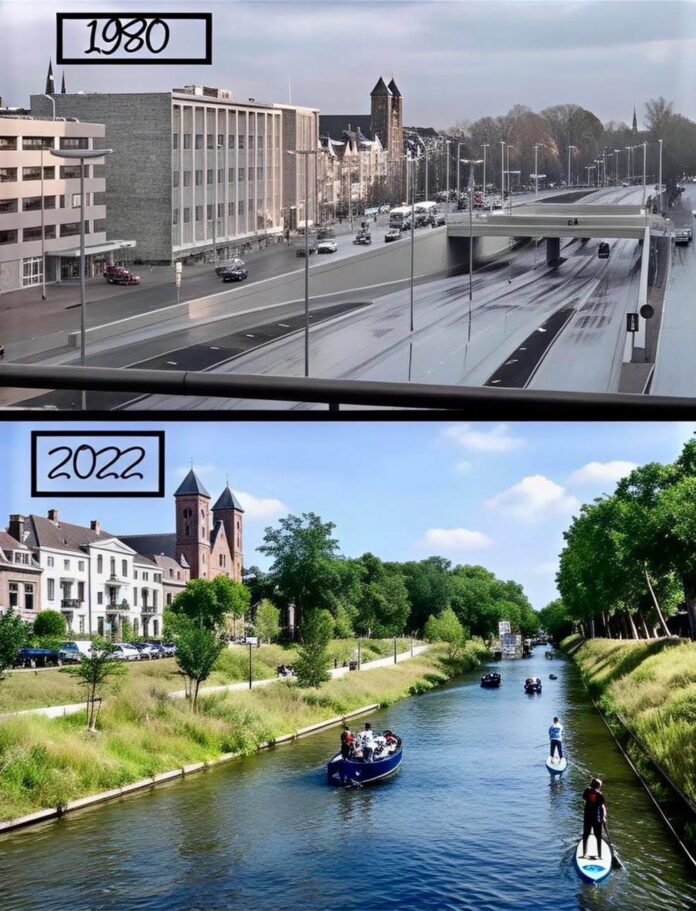
This is the modern equivalent of uncovering Utrecht’s canal.
The choice
Penang stands at a crossroads. It can continue to apply 20th-Century solutions to 21st-Century problems, a path that leads to more congestion, more environmental loss and a diminished quality of life.
Or it can embrace a fresh approach. This requires courage, vision and a profound act of collective soul-searching.
It means valuing the smiles of children playing in a safe street over the convenience of a slightly faster car journey.
It means believing that a city’s true wealth is not in its concrete towers, but in the health, happiness, and spirit of its people.
Utrecht showed it was possible. The question for Penang is, do we have the courage to write a new story?
Chris Majella is a former director of several Malaysian companies. He currently advises several organisations and NGOs.
AGENDA RAKYAT - Lima perkara utama
- Tegakkan maruah serta kualiti kehidupan rakyat
- Galakkan pembangunan saksama, lestari serta tangani krisis alam sekitar
- Raikan kerencaman dan keterangkuman
- Selamatkan demokrasi dan angkatkan keluhuran undang-undang
- Lawan rasuah dan kronisme

The concrete jungle in Penang island is developing too fast a space in city, now we see more traffic jams around this island than before. There is a lack, or perhaps, no one cares about tiwn planning and traffic flowvwhen a high rise project was approved in town. There is no will to control the car populatiin, almost every car is single-occupant. This silicone island has attracted many talents in the semiconductor, due to global demand abd peer pressures, executives are working on irregular hours to meet date lines, can’t rely on ANY public transport especially on calls, even tge technicians, majority of them are Mat Rempit who prefer riding own motor bikes than public transport.