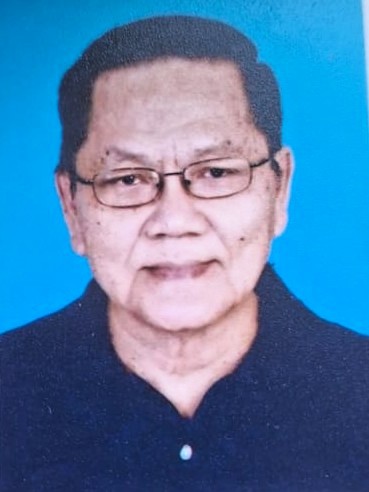
Tan Kim Hong, a pre-eminent historian of the Chinese community in Penang, died on 25 January. He was 84.
Kim Hong was a retired senior school administrator who had taught in several schools in Penang – Methodist School in Nibong Tebal, Chung Hwa Confucian Secondary School, Methodist Boys School in Air Itam and Jelutong Secondary School.
After he retired, he became a tutor at the History Department of Universiti Sains Malaysia and later, a senior lecturer at Han Chiang University College and Inti International College.
Kim Hong was born in Gurun, Kedah, on 21 December 1942.
He came from humble origins and attended the local Chinese primary school. He then moved to Penang to continue his education in Han Chiang High School, a private secondary school.
- Sign up for Aliran's free daily email updates or weekly newsletters or both
- Make a one-off donation to Persatuan Aliran Kesedaran Negara (ALIRAN), Maybank a/c 507246118995 or CIMB a/c 8004240948
- Make a pledge or schedule an auto donation to Aliran every month or every quarter
- Become an Aliran member
He then enrolled in the newly opened Universiti Sains Malaysia. He obtained an honours degree in the social sciences (economics and history) and then a diploma in the teaching of English from the University of Malaya.
Kim Hong joined Aliran on 12 September 2004 after his retirement from the government education service.
He attended our meetings and workshops regularly for a couple of years until he underwent a heart bypass operation, which slowed him down considerably.
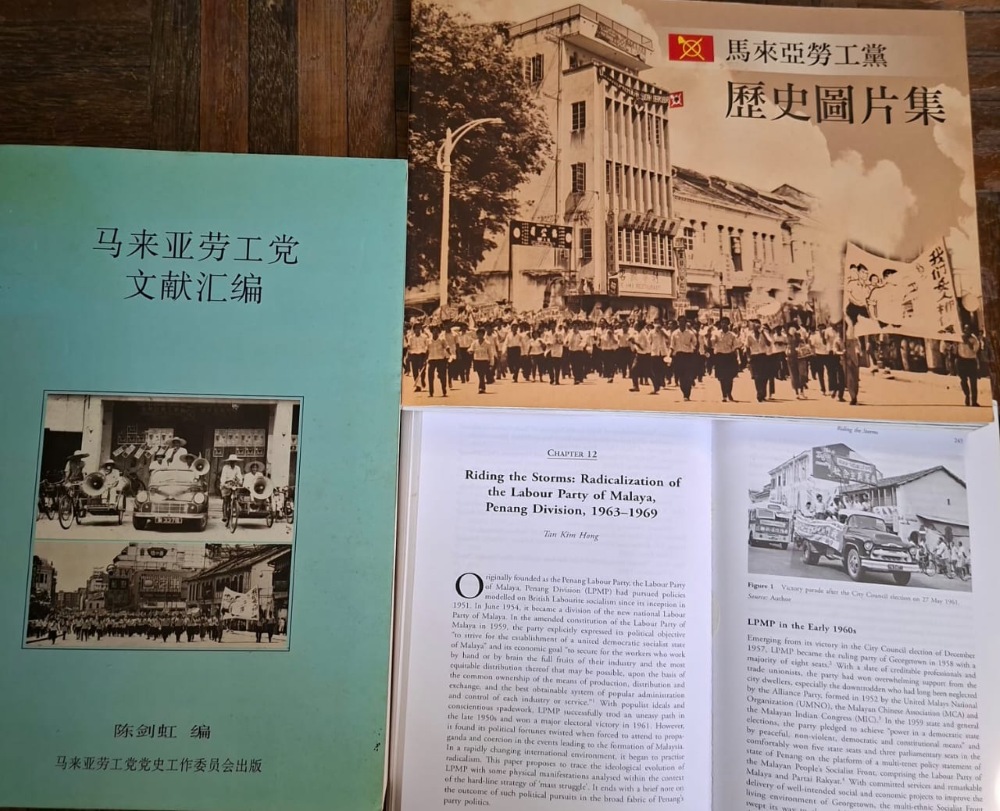
Nonetheless, he wrote a few short articles for Aliran, including a history of “The Labour Party of Malaya, 1952–1972” in Aliran Monthly on 20 February 2009. Read the full article here.
Research on the Labour Party
A longer and more engaging article about the Labour Party is his “Riding the Storms: Radicalization of the Labour Party of Malaya, Penang Division, 1963-1969” (Yeoh Seng Guan et al (eds) Penang and Its Region: The story of an Asian entrepot, Singapore: NUS Press, pp 244-269).
Kim Hong’s study traces the founding of the multi-ethnic socialist Pan-Malayan Labour Party in 1952.
Initially, the PMLP was an amalgam of several state-based labour parties. In 1953, a group of 16 intellectuals, professionals and teachers – including DS Ramanathan, Tan Phock Kin, N Patkunam, Lee Kok Liang, CY Choy, Tan Chong Bee and V Veerapan from the Fabian Society of Penang – joined the PMLP, led by Mohd Sopiee and Osman Siru.
By early 1954, Kim Hong writes, “the PMLP had come to resemble the British Labour Party, advocating gradual economic nationalisation and a welfare state”.
Kim Hong next tracks the evolution of the movement after it adopted the new name of the Labour Party of Malaya (LPM) “to better unite the workers and peasants of Malaya and struggle for a united, independent and democratic nation”.
The LPM’s manifesto for the 1955 federal election, Kim Hong writes, “was inclined towards socialist reforms”.
On the eve of independence for the peninsula, the LPM gained from the Chinese school students’ movement and the national workers’ movement.
It also co-operated with Partai Rakyat (founded in December 1955) to form the Malayan People’s Socialist Front (SF).
“These developments brought LPM victory in the George Town Municipal Council election of 1957. The party won five out of the nine contested seats, a result that strengthened the party’s multi-ethnic mass base in Penang, and gave a leading role to the Penang division in the LPM’s national structure.”
Apart from winning control of the City Council of George Town, the SF also won local councils in Jinjang, Serdang, Tanjung Sepat, Pengkalan Titi and elsewhere.
“In the 1959 general election, the SF progressed in mixed constituencies in Selangor, Johor and Penang: it gained 34.6% of the popular vote cast in the constituencies it contested. The SF was poised to be a non-communal socialist alternative in Malayan politics during the 1960s.”
With committed services and remarkable delivery of well-intended social and economic projects to improve the living environment of George Town, the multi-ethnic SF swept to electoral heights, winning 14 out of 15 seats in the 1961 city council election.
Four LPM candidates – mayor Ooi Thiam Siew, deputy mayor N Patkunam, DS Ramanathan and Lim Kean Siew – won with handsome majorities in wards that were not purely ethnic Indian or Chinese. Patkunam had stood in an entirely Chinese area against an MCA Chinese candidate, and Ooi Thiam Siew and Lim Kean Siew had fought in areas with sizeable ethnic Malay votes – and all won.
Appropriate strategy and visionary planning might have ensured the LPM’s electoral successes throughout the years. Another invaluable resource that organisationally linked the party to the masses was the incessant political education activities carried out by party functionaries and cadres.
Kim Hong told me he participated in the youth wing of the Labour Party while he was still a student in Han Chiang.
As he was from Gurun, he rented a room in Hong Kong Street in George Town to go to school. From there, it was also convenient to attend and participate in local branch activities! He attended talks, participated in political classes and joined the youth choir.
Two of Kim Hong’s major academic contributions are the following collections.
He compiled and edited with introductions the 771-page compendium The Labour Party of Malaya 1952-1972: Selected Documents (馬來亞勞工黨歷史文獻匯編) (Kuala Lumpur: 2000).
With three others, he also helped to put together Malaia Lao Gong Dang Li Shi Yuan Bianji (Klang: Percetakan Kum Sdn Bhd, 2020), a pictorial collection on the history of the LPM.
Both collections provide important resource materials for anyone who wishes to learn more about those stormy years.
Historian of Penang’s Chinese community
These contributions aside, Tan Kim Hong was surely the pre-eminent historian of the Chinese community in Penang.
He compiled and edited the important volume Commemorative Publication of Centenary Celebrations and Inauguration of New Building Penang Chinese Town Hall, 1983, which included a history of the Penang Chinese Town Hall that Kim Hong wrote.
His other publications include:
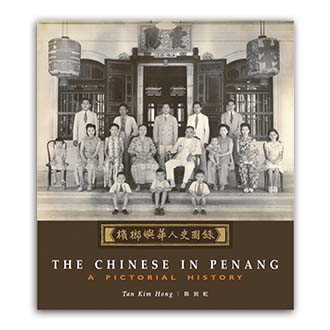
– The Chinese in Penang: A Pictorial History (bilingual) (檳榔嶼華人史圖錄)
– An Outline History of the Teochew Community in Penang (檳榔嶼潮州人史綱) (in Chinese)
– The Story of Ghee Hin Kongsi in Penang (走近義興公司) (in Chinese)
– The Penang Hokkien Association (檳城福建公司) with Ooi Bok Kim
– “Post-war Political Development of Chinese Malaysians” (戰後大馬華人的政治發展) in Loh Cheng Sun and Lim Chook Kwa (eds) A History of the Chinese in Malaysia (馬來西亞華人史)
Just a month ago he launched his latest and last book, Glimpses of Local History and Memories: The Chinese Malaysian Dimension, a collection of his essays through the years.

Significantly, this book is dedicated to R Suntharalingam and Cheah Boon Kheng, both his seniors and mentors in USM’s history department.
One of Kim Hong’s Malay articles is “Di Sekitar pemerintahan Wangsa: Ssu-ma Ch’ien dan Penulisan Sejarah Sezaman” in Abu Talib and Cheah Boon Kheng (penyunting bersama) Isu-isu Pensejarahan; Esei Penghargaan kepada Dr R. Suntharalingam (Penang: Penerbit USM, 1995, ms 97-115), dedicated to Suntharalingam.
Without a doubt, we have lost a great scholar who specialised in the study of the Chinese community in Penang and in the study of the LPM.
His many contributions on these two topics will be appreciated by the next generations, some of whom will surely want to investigate why and how the Chinese community lived, prospered and developed in Penang while others will want to know more about the rise and demise of the labour movement in Malaysia.
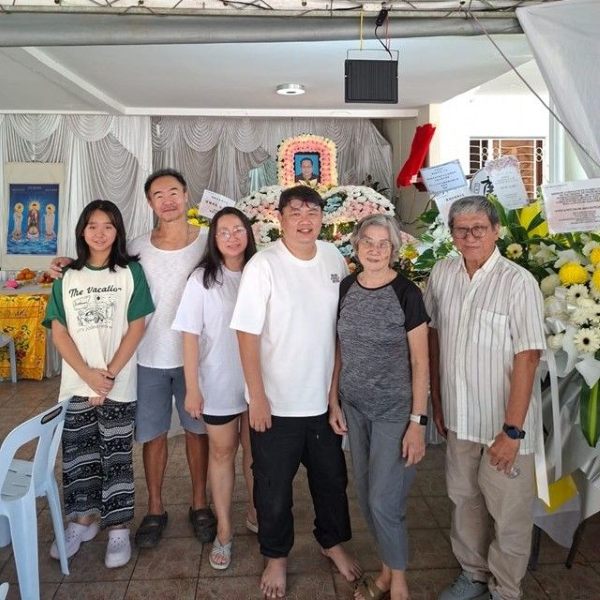
Kim Hong leaves behind his wife Beh Ah Gek (馬雅玉), a son and a daughter, and two grandchildren.
Rest in peace, Kim Hong – a rest thoroughly deserved
AGENDA RAKYAT - Lima perkara utama
- Tegakkan maruah serta kualiti kehidupan rakyat
- Galakkan pembangunan saksama, lestari serta tangani krisis alam sekitar
- Raikan kerencaman dan keterangkuman
- Selamatkan demokrasi dan angkatkan keluhuran undang-undang
- Lawan rasuah dan kronisme