
Raïs Neza Boneza
There are moments in global politics when the mask slips – not because power suddenly discovers morality, but because maintaining the performance becomes too expensive.
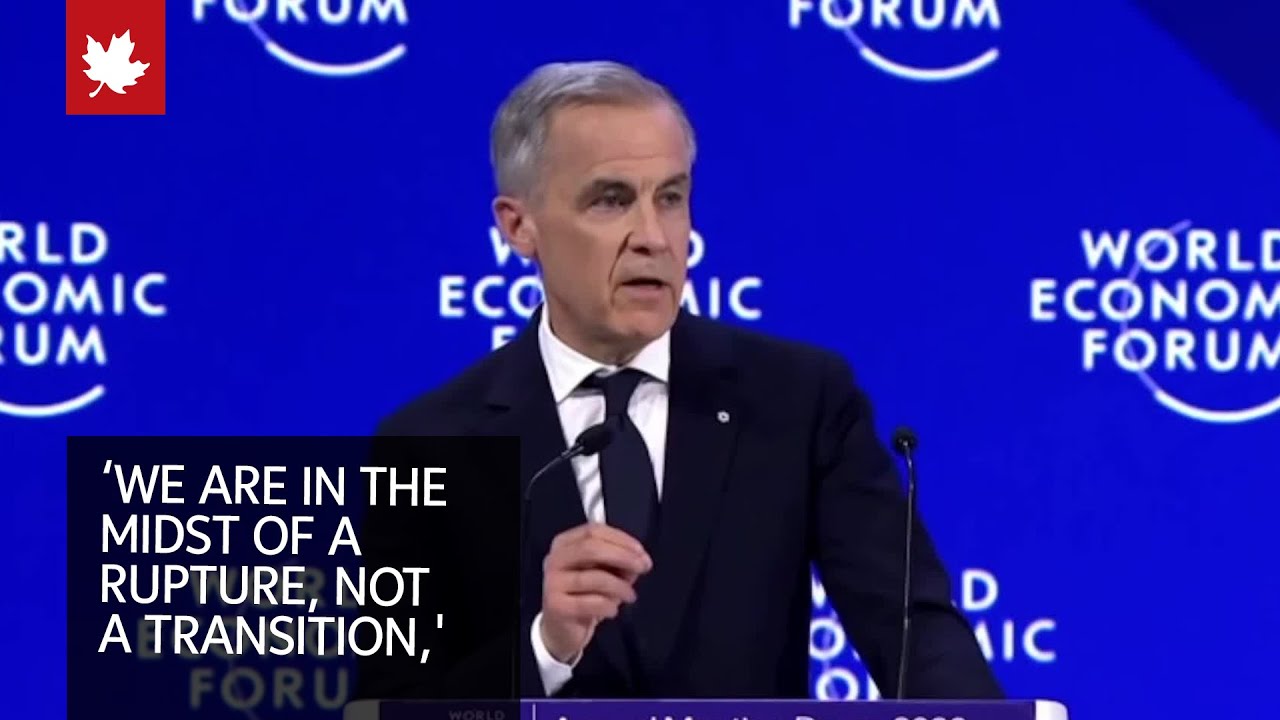
Recently in Davos, the Canadian Prime Minister, Mark Carney, did something unusual. He admitted – almost casually – that the so-called ‘rules-based international order’ has never quite been what it claimed to be. That the rules were unevenly applied. That the strongest routinely exempted themselves. That integration, once sold as mutual benefit, has increasingly become a tool of coercion.
For a brief second, one could almost feel relief. Not because the truth was new – but because it was finally spoken aloud.
We have lived under this system for generations. We were born into it, disciplined by it, told it was neutral, benevolent, inevitable. We were instructed to respect ‘rules’ written elsewhere, interpreted elsewhere, enforced elsewhere – usually against us.
- Sign up for Aliran's free daily email updates or weekly newsletters or both
- Make a one-off donation to Persatuan Aliran Kesedaran Negara (ALIRAN), Maybank a/c 507246118995 or CIMB a/c 8004240948
- Make a pledge or schedule an auto donation to Aliran every month or every quarter
- Become an Aliran member
The outcome was never order, but obedience; never justice, but management.
And yet, the system endured – not because it was true, but because everyone agreed to behave as if it was. This was the real source of its power.
And its fatal weakness. When even one actor stops performing – when the sign is removed from the shop window – the illusion begins to crack.
It is in this context that Emmanuel Macron’s sermon at Davos must be read. His denunciation of the “law of the strongest” on the international stage sounded almost… progressive. A French president speaking the language of anti-colonial restraint. One might even be tempted to applaud.
Almost. Because it is hard to take lectures on power seriously when they come from countries that never truly relinquished it – only rebranded it.
France, after all, insists it has moved beyond colonialism. What remains are not colonies, but territories. Not domination, but administration. Not occupation, but overseas collectivities.
The vocabulary is elegant; the structure is not. From the Caribbean to the Pacific, the pattern repeats.
In Martinique, protests against an unbearable cost of living are met not with structural reform, but with police batons and arrests.
In New Caledonia, decades-long demands for self-determination collide with electoral engineering and the familiar choreography of “restoring order”.
In the Indian Ocean, the contradiction is even starker. Mayotte remains under French control despite repeated UN resolutions recognising it as part of the Comoros.
International law, it seems, is binding – except when it isn’t.
Curiously, when the UN proposed establishing an international day against colonialism in all its forms, France, much of Western Europe, and the US declined to support it. Colonialism is apparently unacceptable – provided the definition stops just short of home.
But modern colonialism rarely announces itself with flags and governors anymore. It prefers balance sheets.
The CFA franc remains one of the most enduring instruments of European influence in Africa. Fourteen countries still use a currency whose value is fixed in Paris, whose reserves are partially held abroad, and over which local populations exercise no meaningful control.
Political independence was granted. Monetary sovereignty was not.
The Netherlands offers its own version of this quiet continuity. From the Caribbean islands still tethered to The Hague, to Indonesia’s long economic afterlife of extraction, to corporate structures that funnel wealth through post-colonial asymmetries, Dutch colonialism did not disappear – it professionalised. It outsourced violence to contracts, and domination to accounting.
Across Europe, the pattern is recognisable. Colonial power did not die. It diversified. And when financial leverage is insufficient, other tools emerge.
In the Sahel, armed groups terrorise civilians amid a fog of external interference. Former colonial powers present themselves as security guarantors, even as questions multiply about arms flows, training networks and destabilisation strategies.
When African governments point fingers, the Western media responds with disbelief – or silence.
Which brings us to another enduring instrument of control: ‘narrative’.
French or Western media corporations still dominate larger parts of the African information space, shaping perceptions of legitimacy, resistance and ‘terrorism’.” Armed groups become ‘rebels’ when convenient. Governments asserting sovereignty become ‘juntas’.
When countries suspend or expel foreign outlets accused of manipulation, the outrage in Europe is immediate. When African voices are silenced, the outrage is optional.
Militarily, the message from Africa has grown unmistakable. Mali, Niger, Burkina Faso, Senegal, Chad. French forces have been asked to leave.
And across francophone Africa, protests against French colonial aspirations continue to swell – not out of fashion, but out of memory. Memory of forced labour in Central Africa. Memory of nuclear tests in Algeria, poisoning land and bodies for generations. Memory of the Senegalese Tirailleurs – sent to die for France, then shot when they demanded their pay.
The numbers remain unclear, but the violence is not.
Europe likes to believe it has turned the page. But it keeps rereading the same chapter – only with better lighting.
This is why the recent Western admissions about the collapse of the rules-based order matter, but only if taken seriously. But then, this system was never sustained by fairness – but by ritual, by participation, by silence.
That bargain is now breaking. Integration has become a vulnerability. Trade has become leverage. Finance has become a weapon.
Institutions once presented as neutral – the World Trade Organization, UN frameworks, multilateral forums – are increasingly exposed as arenas of selective enforcement.
When the rules stop protecting you, you do not reform them politely. You protect yourself.
So yes, credit where it is due. When Western leaders admit the fiction, it is a step.
But vigilance is necessary because history teaches a simple lesson: nothing truly good has ever come from empires discovering humility at the microphone – especially when they still refuse to practise it at home. – Globetrotter
Raïs Neza Boneza is the author of fiction and non-fiction, poetry books and articles. Born in the Katanga province of the Democratic Republic of Congo (former Zaïre), he is also an activist and peace practitioner. Raïs is a member of the Transcend Media Service editorial committee and a convener of the Transcend Network for Peace Development Environment for Central and African Great Lakes.
AGENDA RAKYAT - Lima perkara utama
- Tegakkan maruah serta kualiti kehidupan rakyat
- Galakkan pembangunan saksama, lestari serta tangani krisis alam sekitar
- Raikan kerencaman dan keterangkuman
- Selamatkan demokrasi dan angkatkan keluhuran undang-undang
- Lawan rasuah dan kronisme
