
Ahmad Ibrahim
Managing the supply chain is an important part of global business.
For decades, the mantra of global supply chain management has been “faster, farther, cheaper.” The linear model – take, make, dispose – relied on boundless resource extraction, cheap labour and seemingly infinite landfills.
But as recent literature overwhelmingly shows, that era is over. Resources are limited and finite. This is undeniable.
The rise of the circular economy is not just a sustainability trend. It is a fundamental, disruptive force rewiring the very logic of how we produce, consume and move goods across the planet. It is arguably the most sensible approach in this new era.
The shift from theory to reality
- Sign up for Aliran's free daily email updates or weekly newsletters or both
- Make a one-off donation to Persatuan Aliran Kesedaran Negara (ALIRAN), Maybank a/c 507246118995 or CIMB a/c 8004240948
- Make a pledge or schedule an auto donation to Aliran every month or every quarter
- Become an Aliran member
The findings are clear. The circular economy is moving from theory to supply chain reality, driven by resource scarcity, consumer pressure and regulatory forces like the EU’s right-to-repair and extended producer responsibility laws.
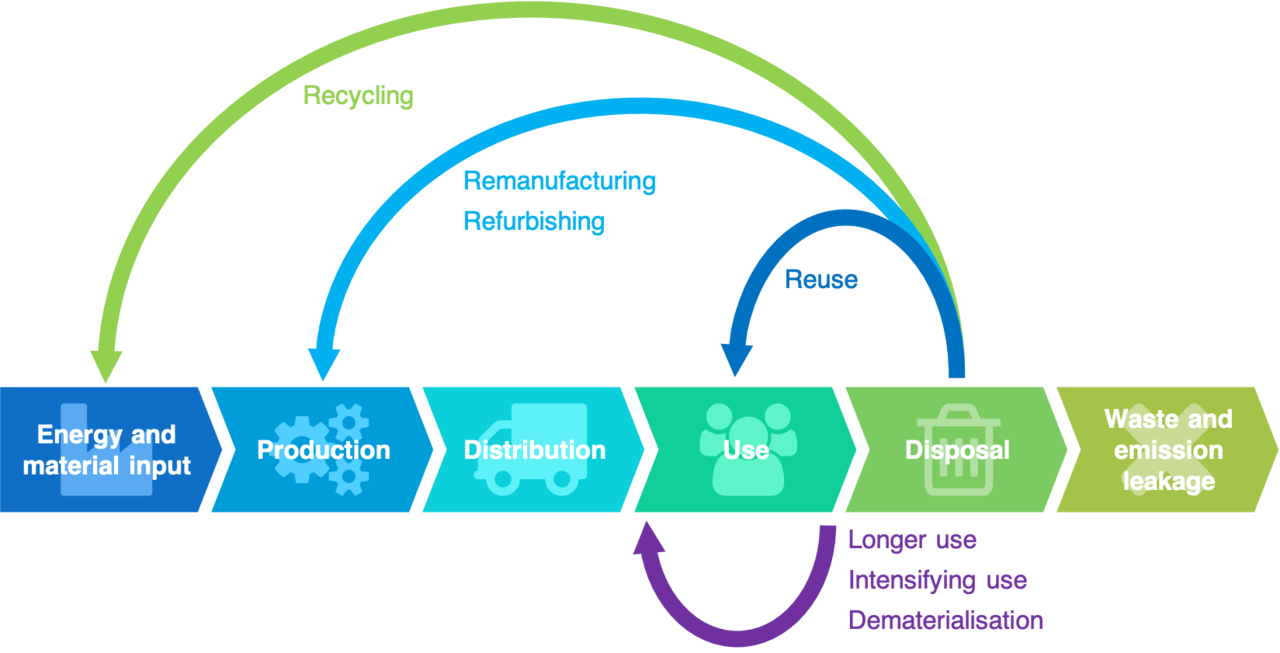
This is not merely about recycling more. It is about a systemic shift where value is no longer created at the point of sale alone, but across a product’s entire lifecycle – including its recovery.
What does this mean for the global supply chain?
First, the ‘reverse supply chain’ is becoming as critical as the forward one. Logistics networks built for one-way trips from factory to consumer must now master the art of returns, refurbishment and remanufacturing. This creates immense complexity but also new profit centres.
Companies are learning that a returned mobile phone is not waste. It is a reservoir of scarce cobalt, gold and silicon. Cheap labour is no longer the critical factor it once was.
Second, design sovereignty is overtaking labour arbitrage. When products are designed for disassembly, reuse and repair, the decision of where to manufacture shifts. Proximity to end-markets and to recovery hubs becomes more important than chasing the lowest hourly wage.
We see early signals of ‘re-shoring’ or ‘near-shoring’ – not just for political resilience, but for circular efficiency. Why ship a broken appliance across an ocean for refurbishment if you can do it regionally? This would also help reduce the overall carbon footprint. As a region, Asean stands to gain from this development.
The digital thread
Third, the digital thread becomes the circulatory system. Blockchain for material tracing, Internet of Things sensors for condition monitoring, Artificial intelligence for predictive refurbishment. These are not buzzwords but essential tools. They turn physical goods into trackable, value-retaining assets.
Transparency is no longer a nice-to-have; it is the bedrock of circular trust, from rare earth miners to second-life markets.
However, the literature also sounds stark warnings. The transition is messy and uneven. We risk ‘circular washing’ – superficial initiatives that do not tackle the core linear model.
Furthermore, a poorly managed circular shift could deepen inequality if it protects rich-world resource security while stripping developing economies of their traditional roles in raw material extraction and low-cost manufacturing, without offering a just transition.
A new playbook for leaders
The ultimate conclusion from the research is this: the circular economy will not simply be integrated into existing supply chains. It will break them and rebuild them.
This demands a new playbook for leaders.
Collaboration is no longer optional. Circularity requires unprecedented co-operation – even among competitors – on standardising materials, recovery systems and data protocols.
Investment in circular logistics is equally essential. The warehouses and trucks of the future will handle used goods as deftly as new ones.
Policy thinking must also change. Governments must move beyond punitive regulations to incentivise the infrastructure and innovation that make circularity scalable.
The linear supply chain was a marvel of optimisation for a world that believed resources were infinite. The circular supply web is the necessary adaptation for a finite planet.
The loop is closing. The question for businesses is no longer whether they will adapt, but whether they will be designing the new system – or struggling to survive within constraints set by others.
The evidence is in. The revolution will not be disposed of. Economies that ignore the inevitable rise of the circular economy will come to regret it. Fortunately, Malaysia is not among them.
As a country that relies heavily on – and contributes immensely to – the global supply chain across many industries, Malaysia is well advised not to delay the implementation of a circular economy plan. This is especially critical for industries strongly linked to the world economy.
Professor Dato Ahmad Ibrahim is affiliated with the Tan Sri Omar Centre for STI Policy Studies at UCSI University and is an adjunct professor at the Tan Sri Ungku Aziz Centre for Development Studies, University of Malaya.
AGENDA RAKYAT - Lima perkara utama
- Tegakkan maruah serta kualiti kehidupan rakyat
- Galakkan pembangunan saksama, lestari serta tangani krisis alam sekitar
- Raikan kerencaman dan keterangkuman
- Selamatkan demokrasi dan angkatkan keluhuran undang-undang
- Lawan rasuah dan kronisme
