
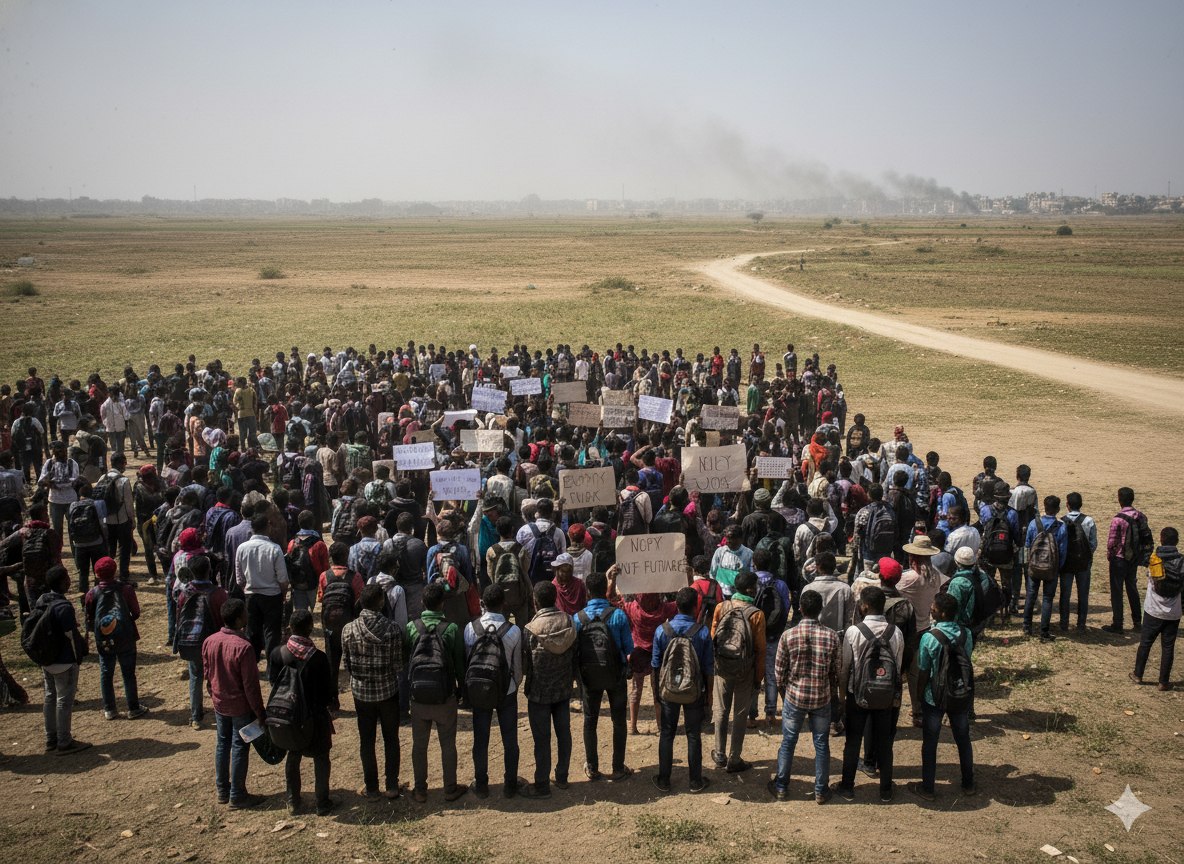
“How to create jobs for the world’s 1.2 billion new workers.”
That was the title of a post on a World Bank blog, written by the bank’s current president, Ajay Banga, on 18 February.
According to him, over the next 15 years, 1.2 billion young people from developing countries will come of working age.
Yet developing countries are only expected to generate about 400 million new jobs in that same period, leading to widespread unemployment across the developing world – a problem that is already acute in many countries.
Banga sketches out the steps that developing countries should take to handle this problem. Creating a business-friendly environment is the lynchpin of his strategy. “Clear rules and predictable regulations reduce uncertainty,” he wrote. “Jobs are generated when entrepreneurs and firms have the confidence to invest and expand. Job creation at scale depends on the private sector.”
- Sign up for Aliran's free daily email updates or weekly newsletters or both
- Make a one-off donation to Persatuan Aliran Kesedaran Negara (ALIRAN), Maybank a/c 507246118995 or CIMB a/c 8004240948
- Make a pledge or schedule an auto donation to Aliran every month or every quarter
- Become an Aliran member
The problem with this prescription is that it has been written without examining the patient – the economy – properly.
The main issue is not a lack of investment and thus job creation in developing countries. This needs to be dissected and understood in its entirety before solutions can be suggested. Banga, however, does not do so.
The demand problem
In the capitalist system, entrepreneurs invest and expand production when they are confident that the goods they produce can be sold. In other words, the economy needs an expanding aggregate demand to drive investmenst and job creation.
The problem is that most developing countries are trying to attract international capital by portraying themselves as low-cost production hubs.
One of the main determinants of production costs is the wage rate.
Malaysia’s minimum wage – currently RM1,700 a month – is a small fraction, perhaps an eighth, of the minimum wage in Western Europe and the US, and the situation is worse in most other Asean countries (except Singapore and Brunei).
If wages are perpetually kept low, where will effective demand come from?
The other main contributor to aggregate demand is government expenditure on social protection, environmental programmes and other public services.
But taxes on the richest 10% of the population and large companies have plummeted all over the world. In Asean, corporate taxes have been slashed from around 40% of profits in the 1980s to about 20% today. (Malaysia’s corporate tax rate is 24%, while Singapore’s is 17%.)
In Malaysia, government revenue as a percentage of gross domestic product (GDP) dropped from around 30% in the 1980s to close to 15% today. A similar trend can be observed in most other countries.
The export-led trap
The policy of export-led growth fuelled by foreign direct investment is the main driver of both wage suppression and the erosion of tax revenue in developing countries.
The World Bank president should have addressed this directly, since it bears squarely on the topic he is discussing – the failure of developing-country economies to generate sufficient jobs for their populations.
Profits at the biggest companies are rising. The wealthiest 1% of the world’s population are getting fabulously richer.
But they have difficulty finding sufficient opportunities to invest in the production of goods and services, because growth in aggregate demand is sluggish across the world.
This is the issue Banga needs to examine before prescribing policies such as “become even more business-friendly” – which, on deeper analysis, appears to be one of the main causes of the current predicament.
The push for higher wages and fairer taxes on the super-rich is complicated by the risk of capital flight to more “business-friendly” countries.
But these measures are achievable if implemented in concert with other nations. The global minimum tax of 15% on all multinational companies above a certain size is already being rolled out – a sign that coordinated action is possible.
Within Asean, an agreement is desperately needed to stop the ruinous race to the bottom in corporate tax rates. Surely, this is negotiable.
Developing countries may also need to build regional economic blocs and use import tariffs to protect regional production and jobs from the dumping of cheaply produced goods from other regions. (US President Donald Trump’s use of tariffs has, at least, opened the door to discussions about how this tool can be legitimately deployed by countries.)
Sharing the work
Even if higher wages and higher corporate taxes were achieved, unemployment would still be a problem in Asean – because of a phenomenon that John Maynard Keynes foresaw nearly a century ago. He called it “technological unemployment”: the relentless growth of technological capability means society can produce the same basket of goods with less and less human labour.
So, in addition to decent wages and fairer taxes, a reduction in weekly working hours is needed, so that the available work can be shared among all those who want it.
This would require hourly wage rates to rise, so that workers earn at least as much as before and can support their families. Such an arrangement would have enormous positive effects on society – giving people more time for themselves, their families and their communities. Imagine the genuine flowering of the human spirit in such an environment.
One social class, however, would be likely to be aggrieved by measures such as higher wages, higher taxes on the top 10%, and higher hourly wage rates: the top 1%.
Perhaps this is why Banga raises none of these points, pointing instead in the opposite direction.
The real role of the World Bank, it seems, has been to maintain the conditions that allow the wealthiest 1% of the world’s population to keep expanding their wealth, while pretending to be deeply concerned about global poverty and youth unemployment.
It is high time that people in developing countries start thinking for themselves, rather than remaining in awe of the World Bank, the International Monetary Fund and the World Trade Organization.
We need to resuscitate the spirit of Bandung 1955 – that great gathering of Asian and African nations that called for solidarity, self-determination and freedom from economic domination – and to work out what a pragmatic programme embodying those aspirations would look like in the 21st Century.
There is a world to win. Is this not a vision worth working towards?
AGENDA RAKYAT - Lima perkara utama
- Tegakkan maruah serta kualiti kehidupan rakyat
- Galakkan pembangunan saksama, lestari serta tangani krisis alam sekitar
- Raikan kerencaman dan keterangkuman
- Selamatkan demokrasi dan angkatkan keluhuran undang-undang
- Lawan rasuah dan kronisme
