
Nasha Khaw
When people in Malaysia think about our history, we often begin with Malacca.
Yet centuries before Malacca emerged as a great maritime power, another centre on the Malay peninsula was already tied into vast trade and cultural networks spanning the globe. That centre was Ancient Kedah.
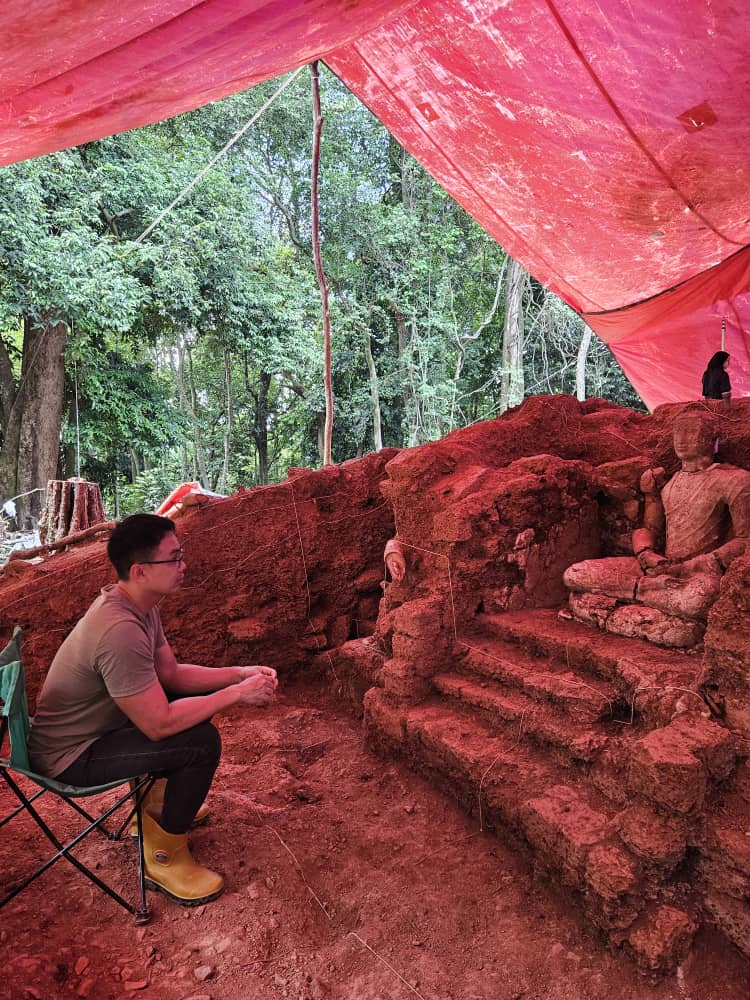
Recent digs and historical research show that Ancient Kedah held a key position within a vast maritime system linking South Asia, China, West Asia and Southeast Asia.
Its story is more than a chapter of ancient history. It offers lessons for Malaysia today, as we navigate an ever more connected and uncertain world.
- Sign up for Aliran's free daily email updates or weekly newsletters or both
- Make a one-off donation to Persatuan Aliran Kesedaran Negara (ALIRAN), Maybank a/c 507246118995 or CIMB a/c 8004240948
- Make a pledge or schedule an auto donation to Aliran every month or every quarter
- Become an Aliran member
The rise of Ancient Kedah must be understood in the broader context of early maritime Asia. From at least the Fourth Century CE, long-distance trade routes connected India, China and coastal communities across Southeast Asia. These networks moved not only goods but also people, technologies, ideas and beliefs.
The historical record reinforces this picture. Ancient Kedah appears in Arab, Indian and Chinese sources under various names: Kataha, Kadaram, Kalah and Chieh-Cha.
That foreign observers recognised and wrote about this maritime kingdom speaks to how prominent it had become. It was woven into wider religious, commercial and geographic knowledge systems across the ancient world.
Yet the significance of Ancient Kedah goes beyond its role as a trading centre. The archaeological evidence reveals a dynamic society that engaged with outside influences without simply being shaped by them.
Earlier scholars often saw Southeast Asian societies as passive recipients of foreign ideas – a process they called “Indianisation”. More recent research tells a far more complex story.
The record from Ancient Kedah shows that local communities actively chose, adapted and reshaped foreign ideas to suit their own needs.
Religious traditions, artistic styles, political ideas and technologies were not merely imported and copied. They were given new meaning within local contexts, through negotiation, adaptation and innovation.
This distinction matters. It reminds us that being connected to the world does not mean being dependent on it.
Ancient Kedah did not prosper because it surrendered its identity to outside influences. It succeeded because it was able to engage the wider world while keeping the ability to shape those influences to suit local priorities.
The settlement pattern of Ancient Kedah shows this complex picture. Rather than a centralised state with one dominant centre, the region appears to have been made up of multiple linked settlements each serving different purposes. Some focused on trade and exchange, others on religious activities, production or administration. Rivers, coastal routes and sea lanes linked these centres together.
This points to a form of rule that was flexible, spread out and adaptable. Authority was likely to have been shared among rulers, local elites and community leaders. Different centres may have had varying degrees of autonomy while staying linked through shared economic interests and political ties.
Such an arrangement can be described as polycentric. Power was distributed across multiple centres rather than concentrated under a single authority. While this may look less orderly than a modern centralised state, it also built resilience and flexibility when things changed.
Ancient Kedah’s success rested less on holding territory than on managing connectivity. Its prosperity depended on building relationships, enabling trade and other exchanges, and positioning itself within wider networks.
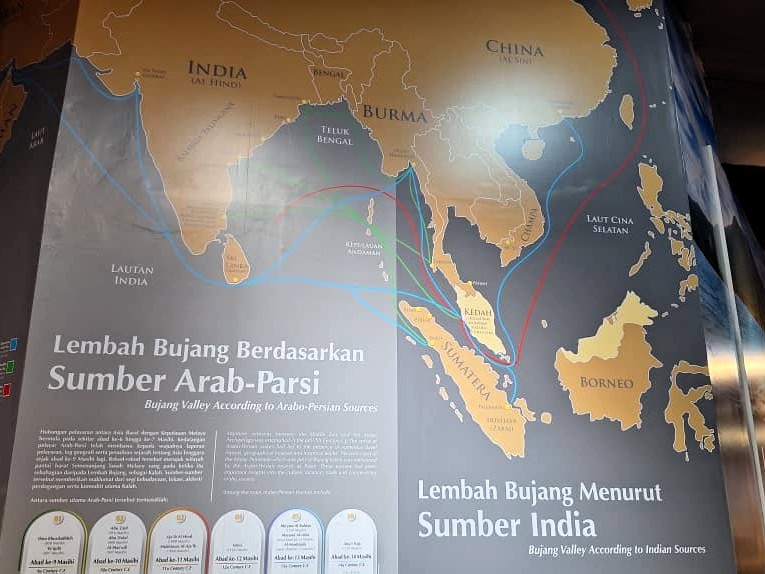
This allowed Ancient Kedah to benefit from dealings with foreign traders, pilgrims and political actors. Crucially, it never became dependent on any single outside power.
This lesson remains highly relevant today. Malaysia continues to hold a strategic place within one of the world’s most important maritime regions.
Like Ancient Kedah, our prosperity depends heavily on trade, connectivity and global engagement. We operate in a world shaped by great-power rivalry, complex economic ties and rapid technological change.
In such an environment, the story of Ancient Kedah is a reminder that openness is not weakness. Properly managed, connectivity can open doors to growth, technological progress and cultural richness.
The question is not whether to engage the world, but how to do so in ways that protect our autonomy and serve national interests.
Ancient Kedah also highlights the value of diversity. Its prosperity grew from dealings among different communities, cultures and belief systems. Far from being a weakness, diversity appears to have been one of the foundations of its resilience and strength.
Perhaps most importantly, Ancient Kedah reminds us that the Malay peninsula has long been part of wider regional and global processes. Our past was shaped by movement, exchange and interaction. Knowing this history can give Malaysia a richer and more confident sense of its place in the world today.
Ancient Kedah was more than an archaeological site or a forgotten kingdom. It was a living participant in the making of maritime Asia.
Its experience suggests that societies thrive not by withdrawing from the world, but by engaging it on their own terms.
In an age marked by uncertainty, rivalry and rapid change, that may be the most enduring lesson that Ancient Kedah has to offer.
Dr Nasha Rodziadi Khaw is a lecturer at the Centre for Global Archaeological Research, Universiti Sains Malaysia. He studied pure chemistry at USM, where he discovered his passion for archaeology. He then did a master’s on the historiography of Ancient Kedah before completing his PhD at the University of Peshawar, where he studied Sanskrit inscriptions and their cultural impacts.
AGENDA RAKYAT - Lima perkara utama
- Tegakkan maruah serta kualiti kehidupan rakyat
- Galakkan pembangunan saksama, lestari serta tangani krisis alam sekitar
- Raikan kerencaman dan keterangkuman
- Selamatkan demokrasi dan angkatkan keluhuran undang-undang
- Lawan rasuah dan kronisme








The history of Ancient Kedah is fascinating, please keep sharing!
It is an excellent historical account supported by archeology and epigraphy. Thank you.
Who is the writer of this? It seems to be AI-generated text.
It is written by Nasha Khaw, see biodata at the end.
Historically Kedah was part of siam kingdom at that time
kedah was much older than siam n ayyuthaya