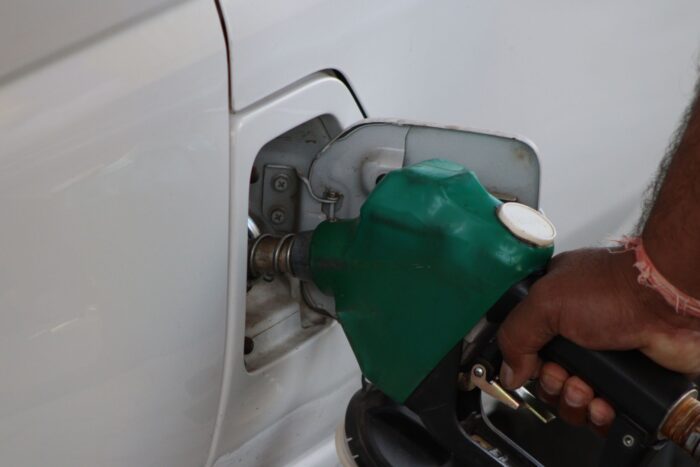
Malaysia has just struck major energy deals with Russia and Turkmenistan.
They look like wins. But they also expose how little planning sits behind the country’s own oil and gas supply.
The timing matters. Malaysia’s domestic oil fields are ageing, and the deals land just as those weaknesses become more apparent.
Maritime insurance premiums could rise sharply once the Strait of Hormuz returns to normal.
The new deals offer some short-term relief. They guarantee steady supplies of crude oil and refined products, which eases pressure on Malaysia’s costly fuel subsidy bill.
- Sign up for Aliran's free daily email updates or weekly newsletters or both
- Make a one-off donation to Persatuan Aliran Kesedaran Negara (ALIRAN), Maybank a/c 507246118995 or CIMB a/c 8004240948
- Make a pledge or schedule an auto donation to Aliran every month or every quarter
- Become an Aliran member
As Malaysia is a net importer, this protects retail fuel prices from sudden supply shocks caused by disruptions in West Asia.
With these agreements, the country can now either process this foreign oil at home, or use it to free up its own high-grade crude for export to lucrative Asian markets.
Wells running low, no safety net
But the deals also paper over a bigger problem: Malaysia’s own oil fields are ageing and depleting.
Domestic reserves are shrinking. Malaysia’s mature fields have seen production fall from over 700,000 barrels per day in the early 2000s to about 350,000 barrels per day today.
Malaysia’s fields are in structural decline. Investment in exploring new basins has not kept pace with depletion, a trend visible across years of Petronas annual reports.
The bilateral supply deals with Russia are not really a sign of strength but a symptom of dependence.
Exploring new frontiers is expensive, so Malaysia is squeezing more out of what it already has. The trouble is that much of the remaining oil sits in small, low-value pools or in deep water that is harder and less profitable to reach.
The Malaysia Bid Round is an attempt to draw foreign operators into these difficult blocks.
Petronas is also shifting more of its capital spending abroad, including to Caspian Sea blocks in Turkmenistan, to keep the country’s energy supply secure for longer.
All this raises an uncomfortable question: what happens if supply is suddenly cut off?
Unlike many major economies, Malaysia currently has no strategic petroleum reserve – a government-controlled stockpile set aside for emergencies (though the government may be studying a proposal to establish one). Instead, the country relies entirely on commercial storage run by Petronas.
That leaves Malaysia exposed in the short term. Without an emergency buffer, a global supply shock, especially one that closes off a critical route such as the Strait of Hormuz, would hit the country almost immediately.
There is also no single centralised body in charge of managing an energy crisis. Energy policy is split across several ministries and regional interests. Petronas operates mainly as a commercial company, balancing its dividends to the government against its own survival.
That leaves the country’s long-term energy planning vulnerable to sudden geopolitical shifts.
Filling Malaysia’s foresight gap
One option is regional. The Asean Framework Agreement on Petroleum Security already allows member states to share oil in an emergency.
There is room to expand this alongside Asean’s cross-border power grid.
A shared regional reserve is not a new idea. A 2017 report by the Economic Research Institute for Asean and East Asia argued for a collective approach. This is partly because building a national reserve large enough to cover 90 days of consumption is too costly for many Asean countries to do alone.
A joint reserve would buy more than time. It would let countries diversify their supply, reassure financial markets, and negotiate better terms with energy suppliers.
Perhaps the deepest gap, though, is not about oil at all. Rather, it is about institutionalised foresight.
The Russia and Turkmenistan deals are meant to secure energy supply for decades.
Yet Malaysia still has no proper system for scenario planning – the discipline of mapping out several possible futures, watching for early warning signs and deciding in advance how to respond to each. This is not the same as forecasting a single outcome.
This approach was pioneered by Pierre Wack at Shell in the 1970s and later built into Singapore’s whole-of-government planning system. It demands institutionalised pessimism, stress-testing assumptions and the setting aside of resources for contingencies.
Malaysia’s crisis management task force, under the National Economic Action Council, mostly issues reassurances – ministerial briefings and press statements – with little publicly available evidence of running the kind of rigorous scenario work that real foresight requires.
A Malaysian strategic futures unit could fill that gap, but only if it is designed for the country’s own political constraints rather than copied wholesale from elsewhere.
It would need to sit under the prime minister’s office – not inside a ministry that changes hands with every reshuffle. Its director should serve a fixed term, appointed by the king on ministerial advice, to keep it out of electoral politics.
Its findings should feed directly into the budget process and the Malaysia Plan reviews.
The unit would also work best as a partnership rather than a standalone office. It could draw on Khazanah Research Institute for economic modelling, Emir Research or the Economic Planning Unit for policy assessment, and Isis Malaysia for geopolitical scenario-building – much as Singapore’s Centre for Strategic Futures draws on a network of agencies.
Crucially, such a unit would need a mandate to stress-test uncomfortable scenarios, including structural resistance from entrenched interests that is politically difficult to examine from inside a ministry.
Scenario language would give this work some useful distance. Describing how reform sequencing meets resistance from entrenched networks is analytically just as useful – and politically much safer – than naming names.
Whether such a body could survive in Malaysia’s political system is a fair question. Malaysia’s own history of missed reforms suggests institution-building is difficult to carry out here. But that does not mean we stop trying.
Further reading: IEA, “The Middle East and global energy markets”; Brookings, “Iran war reverberations – a nadir for Asia’s economic security?”
AGENDA RAKYAT - Lima perkara utama
- Tegakkan maruah serta kualiti kehidupan rakyat
- Galakkan pembangunan saksama, lestari serta tangani krisis alam sekitar
- Raikan kerencaman dan keterangkuman
- Selamatkan demokrasi dan angkatkan keluhuran undang-undang
- Lawan rasuah dan kronisme