V Thomas
The current world order is heading towards disarray. It is time for the Non-Aligned Movement (NAM), founded in 1961, to become more proactive.
It must transform itself to tackle today’s problems facing the international community.
Recent events have shaken global stability. Efforts must be made to uphold the international rule of law. This would help prevent wars and conflicts, for the benefit of humankind.
UN’s fading power
The UN’s power and prestige have declined. Major power rivalry, especially in the Security Council, has left it ineffective and paralysed.
- Sign up for Aliran's free daily email updates or weekly newsletters or both
- Make a one-off donation to Persatuan Aliran Kesedaran Negara (ALIRAN), Maybank a/c 507246118995 or CIMB a/c 8004240948
- Make a pledge or schedule an auto donation to Aliran every month or every quarter
- Become an Aliran member
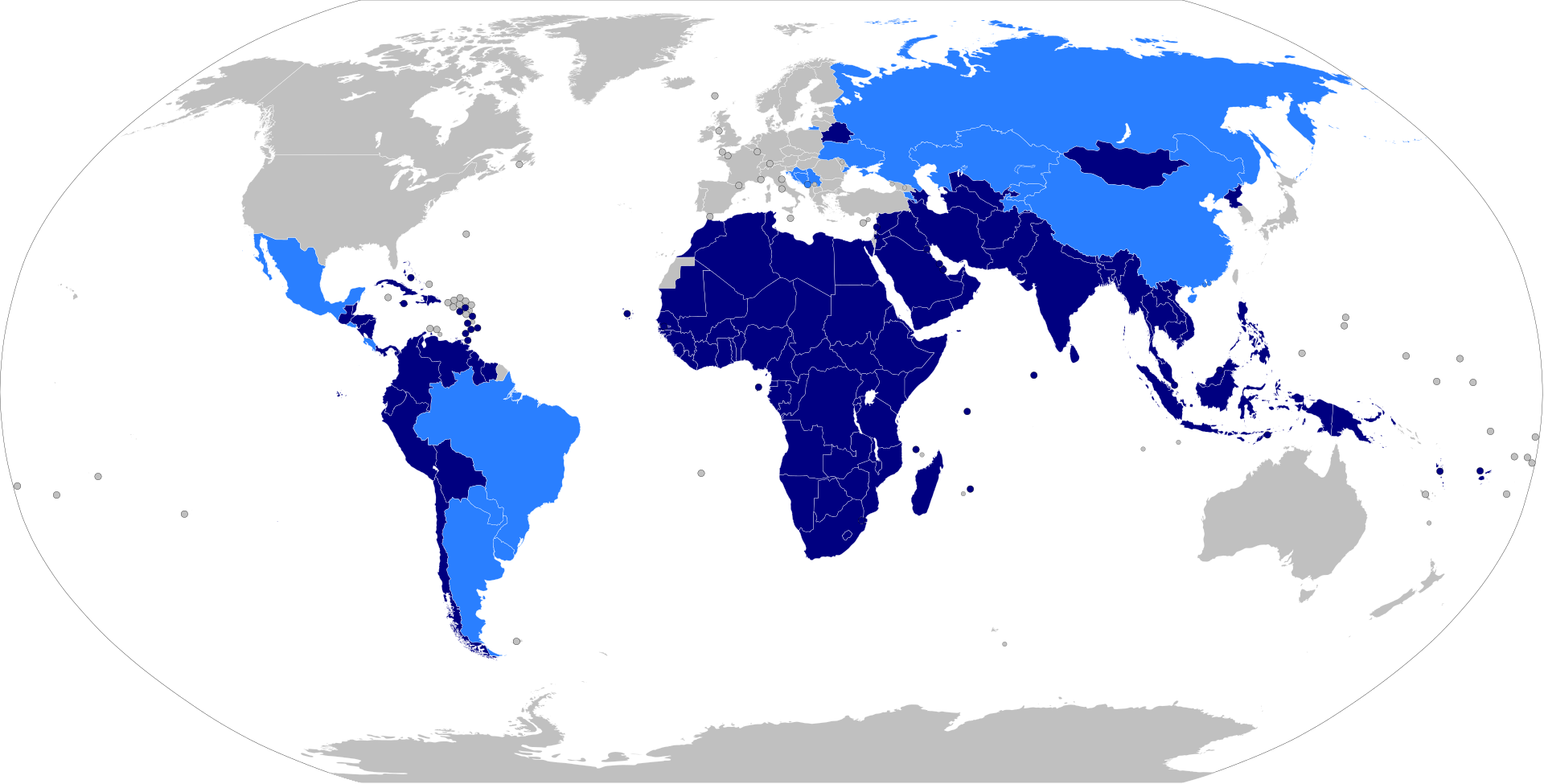
NAM, which has around 120 member nations, can offer an alternative. It could stop political and military problems from spiralling into something more dangerous – though reaching a united position may itself be hard, given that some member states have their own long-standing rivalries..
NAM lacks military muscle to enforce solutions. But it can achieve similar results through diplomacy and persuasion, backed by its large and diverse membership.
The Cold War ended ideological and military alignments in the 1990s. Russia and China could now be inducted as full members of NAM, rather than remain observers. This would give the movement more clout, though critics may argue it sits uneasily with NAM’s founding principle of staying clear of major power blocs.
A second resort
NAM could serve as a second, and last, resort if the UN Security Council fails to find a diplomatic solution. Its stature and power need to be elevated to match today’s realities.
NAM should not limit itself to socioeconomic issues and international cooperation. It must go further, into conflict resolution.
Some basic features of NAM need to change too. It needs a permanent headquarters, chosen from among its member states, with an administration led by a president and a team of competent diplomats and experts.
This would be a big change from NAM’s current ‘nomadic’ structure. Every three years, the venue rotates, and the host country takes on a temporary three-year administration. This makes it less effective. Uganda currently holds the chairmanship, under President Yoweri Museveni.
Learning from the AU
The African Union (AU) grew in stature once it moved to a permanent headquarters in Addis Ababa, Ethiopia. China funded most of the cost, as African members could not afford it.
Now, whenever a serious problem confronts African countries, the AU can meet quickly and take urgent action.
Asean has its own secretariat in Jakarta, Indonesia, which carries out year-round administrative work.
Saarc, representing South Asian nations, has its headquarters in Nepal.
There is little prospect of UN reform to make it an effective, democratic and proactive force.
So NAM needs to up the ante. It should take a united stand against unilateral, defiant actions that could spiral into war, threatening global peace – and, worse, risking the use of nuclear weapons.
The reasons for establishing NAM in 1961 are as valid today as they were then.
V Thomas is an Aliran reader based in Selangor.
AGENDA RAKYAT - Lima perkara utama
- Tegakkan maruah serta kualiti kehidupan rakyat
- Galakkan pembangunan saksama, lestari serta tangani krisis alam sekitar
- Raikan kerencaman dan keterangkuman
- Selamatkan demokrasi dan angkatkan keluhuran undang-undang
- Lawan rasuah dan kronisme