Cecilia Ng and Francis Loh
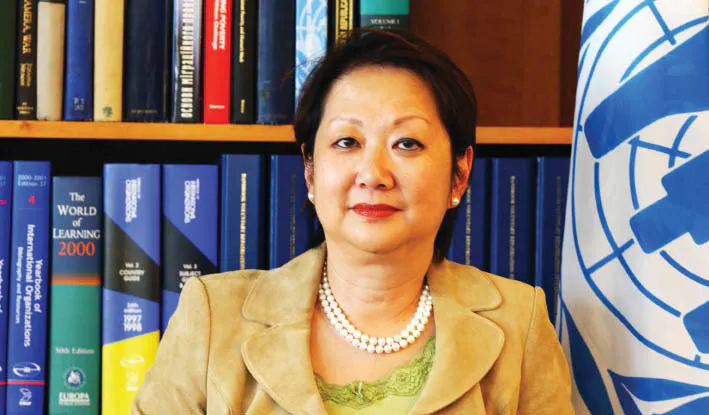
“Outwards and upwards” – that was Judy’s secret to getting where she did, she said during an interview in Penang in October 2010.
Another axiom, she added, was “to take advantage of opportunities when they present themselves… it was about fate as well as self-direction”.
Indeed, no one in relatively quiet Penang in the 1970s would have thought that Judy Cheng-Hopkins would join the UN after graduation.
But Judy was unconventional by Malaysian standards, and it was her gutsy and out-of-the-box character that pushed her to become an international public servant. She spent more than 30 years in development, humanitarian and refugee work in Africa, Eastern Europe and Asia.
- Sign up for Aliran's free daily email updates or weekly newsletters or both
- Make a one-off donation to Persatuan Aliran Kesedaran Negara (ALIRAN), Maybank a/c 507246118995 or CIMB a/c 8004240948
- Make a pledge or schedule an auto donation to Aliran every month or every quarter
- Become an Aliran member
In 2009, she was appointed assistant secretary general for peacebuilding support by Secretary General Ban Ki-moon.
That much is already well known and documented. For us, she was and will always remain a loving daughter of Penang. You can take the gal out of Penang, but not Penang out of that gal!
Cecilia remembers meeting Judy for the first time when she returned from a stint as an American Field Service student in 1969. By then, Judy had been influenced by her progressive and politically conscious host family in the US.
They hit it off instantly. Being young and fearless, they did many ‘mad and silly’ things together, hanging out with the Form 6 boys and girls from St Xavier’s Institution. Margie, her sister, was also part of the gang, and the trio spent many cherished moments at the family home on Loh Boon Siew Road.
Cecilia, Judy and Margie later left for the US to study, keeping in touch until Margie met with a tragic accident. Cecilia and Judy remained close throughout graduate school. But after graduating, they went their separate ways: Judy stayed on in New York, while Cecilia returned to Penang to teach at the university.
While working at the United Nations Development Programme (UNDP), Judy and her family came back to Penang every year, staying with her sister, Harriet. Cecilia was living in Kuala Lumpur then.
It was only years later that the pair reconnected in Penang – and it was as though they had never parted from their younger days.
It was in 2010 that Cecilia invited Judy to Penang to give the keynote address at a conference titled Gender Mainstreaming: Justice for All – an event organised by the Gender Equality and Good Governance Society (3Gs) and launched by the then Penang chief minister.
The society did not have enough funds, so Judy, ever generous, bought her own economy-class ticket to Penang and back to New York.
In Judy’s words (see Cecilia’s 2010 interview with Judy): “I was glad and honoured to have been invited to be the keynote speaker at this conference. It was really my first reconnection with Penang in a professional sense after all these years. I come back often, but on holidays.
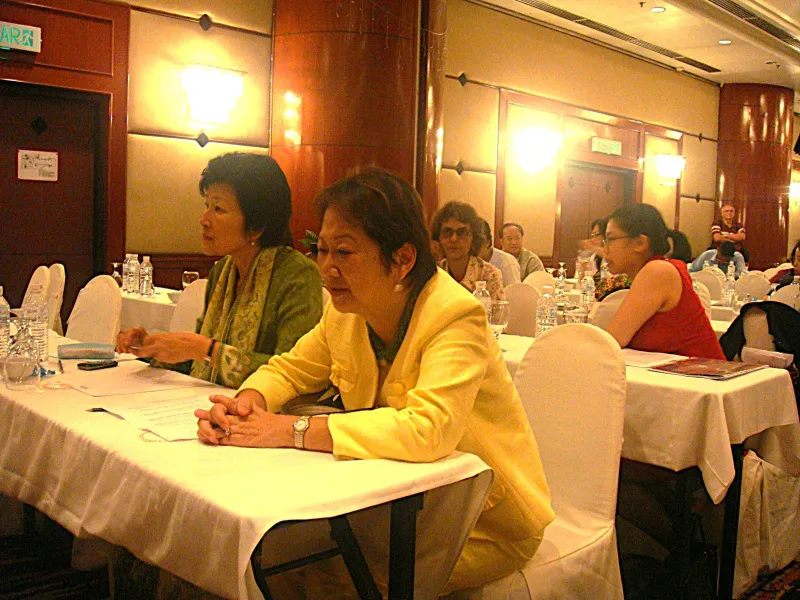
“In good Penang spirit, the meeting was well organised and no-nonsense, the messages focused and objectives clear, that is, to put pressure on the state government to take concrete actions to promote gender equality and good governance.
“I also got to meet the chief minister, many women, professionals and politicians. It was great because I immediately felt a bond with them and would love to do more with them… but when I retire.”
And retire she did, a few years later, having bought an apartment in Tanjung Bungah, Penang – facing the sea, of course. She and Tom would come back during the winter months, spending two to three months at a time.
Judy Cheng-Hopkins would link up with the various groups in Penang and share her experiences with young people, women, feminist circles, in public forums and seminars.
She was always generous with her time. Many, especially women, have written about how Judy’s honesty, compassion and sharp wit awed and inspired them.
But of course, being a Penang lang (person), food is always our passion! Judy loved eating at hawker stalls, tucking into favourites like char koay teow, roti canai, nasi lemak, hokkien mee, mamak mee and Malay curry dishes.
Judy also loved jazz. She and Tom, together with friends, would go to jazz performances, especially those by her favourite group, the Penang Jazz Society. Her joie de vivre (joy of living) was infectious!
Judy also contributed significantly to the local academic scene. At the 2010 conference, several progressive academics and feminists met, and the idea for the Asian Women’s Leadership University (AWLU) was born. The project was driven by several alumnae of Smith College, among them the Penang-born Professor Khoo Hoon Eng.
Judy became a director of the AWLU Project, Inc – the US entity, a 501(c)(3) non-profit set up in 2011-12 to raise funds in the US. She then became a member of the AWLU Project’s executive committee in Penang from 2013 onwards. Later, she was appointed adviser to the AWLU, which was to be based – where else – but in Penang.
But Judy also had to take care of her health. Saik Yoon, a friend of ours, used to walk up and down the hill with her in the evenings, with us (Cecilia and Francis) sometimes in tow. He recalls that the UN was never far from her mind through those winters in the tropics, as Judy fondly and constantly remembered her friends and colleagues in the UN community.
On her daily hikes up a nearby hill – meandering past bamboo groves, patches of ferns, tropical trees, macaques, dusky-leaf monkeys and the occasional monitor lizard – Judy would worry about international environmental programmes.
More often, she would reflect aloud on conflicts around the world: the mass displacement of people caught up in wars, and the widespread food insecurity that inevitably follows.
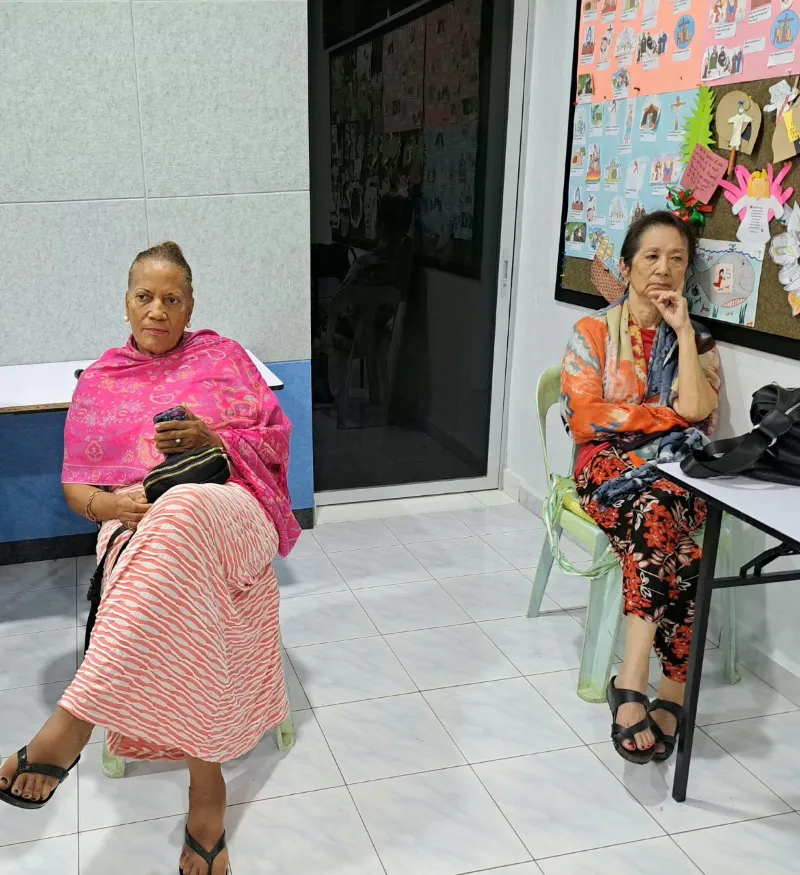
Judy often marvelled gratefully at the amazing work of her former colleagues who managed the impossible, delivering food into war-torn front lines. She described the international UN staff, national partners and community leaders she had met and worked with in Kosovo, North Korea and Afghanistan.
Judy also recalled appreciatively the hard work of her New York secretariat colleagues, whose remarkable diplomacy opened safe access for colleagues at the front lines.
On some of her last walks up the hill, she thought fondly of her more recent colleagues at the secretariat – from the “amazing” co-workers in her office to the wisdom and kindness of the secretary general.
Judy was then deeply worried about the turbulent times the UN was bravely navigating. But she always came down from her favourite hill feeling positive about the UN’s future.
Francis, her Good Samaritan neighbour, finally reminisces about their time together. As he puts it:
About 15 years ago, I received a surprising email from Judy, whom I knew from school days but had lost contact with for perhaps 30 years. After the warm pleasantries, she enquired about living in the complex in Tanjong Bungah, where my family and I have resided since 2000.
Judy was retiring from the UN soon, and was looking to buy a property in my complex.
I replied with a generally positive evaluation of the place.
Her next email asked whether she could call me to chat more…
Of course, I said yes.
Within weeks, she had bought the property. Within months, she said she was shipping everything from her Geneva home to Penang. She was decisive. I reckon, as assistant secretary of the UN charged with post-conflict rebuilding, she had to be.
Before you knew it, she was back in Penang in her new Tanjong Bungah apartment. When her belongings arrived, her home looked as though it had been lived in for years – within hours. Very homely and warm, I mean.
No, Judy had not yet retired. One day, she asked me to arrange a video call to her boss, Ban Ki-moon, the then UN Secretary General. This was a time when we did not yet have widespread broadband home subscriptions, smartphones or cellular subscriptions.
Judy said she needed to see Ban Ki-moon speak, literally, to catch every precious word the Secretary General was expressing – something to do with a Korean speaking in English to a Malaysian, a Penang-Hokkien woman, I suppose.
Thankfully, it was not difficult to persuade Universiti Sains Malaysia, which had all the necessary long-distance telecoms equipment to expedite her call. The USM technicians must have been anxious putting a direct call through to Ban Ki-moon!
Shortly thereafter, Judy and her husband Tom retired and started coming out to their apartment regularly, especially over the winter months. Tom was not the exercise type. But Judy was keen to walk up Pearl Hill every evening.
I usually walk in the mornings, and on occasion she would join me. I would also occasionally walk with her in the evenings, to suit her preference. Cecilia joined us now and again. Saik Yoon too. The chats we had while walking were interesting, sometimes gossipy!
But she was a terribly slow walker. I did not realise then, but learnt later, that she was a cancer survivor.
At some point, Judy and Tom sold their apartment and bought the penthouse in the same complex. This probably happened after their daughters and families came visiting, and they must have felt they needed a bigger place.
Alas, this was the beginning of several problems with the penthouse. It leaked after they returned to New York, and I was asked to chase the managers to fix it. There were a few other chores that needed attending to. As a good neighbour, I did not mind sharing my electrician, plumber and handyman with them. The managers made sure the repairs were done.
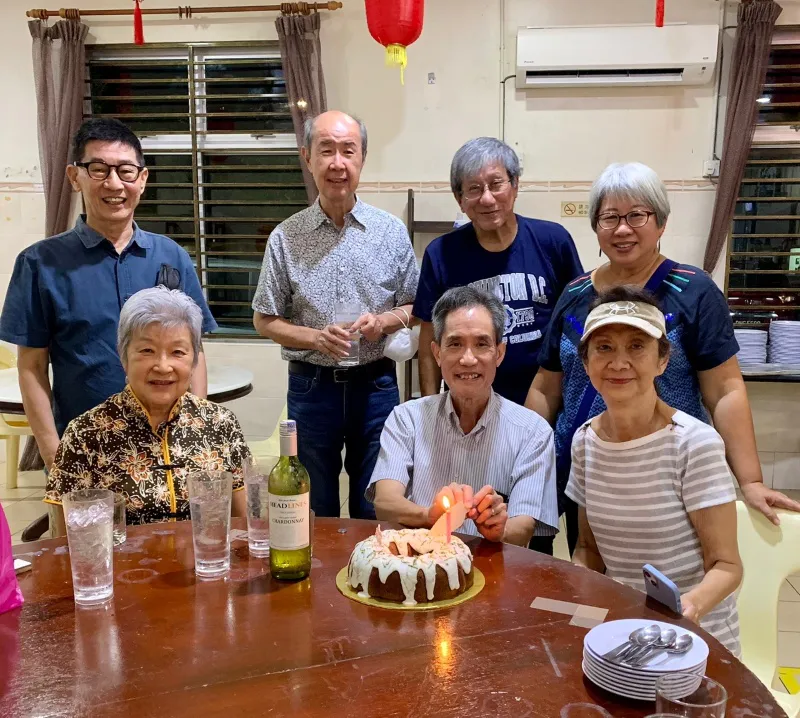
This good neighbour is especially proud to have introduced Judy and Tom to some of the best street food in Tanjung Bungah – among them Ah Soon’s char koay teow, the curry mee sold opposite Ah Soon’s stand on Sungai Kelian Road, and Ali’s satay, which is only sold at the night market on Tuesday nights.
This distinguished couple, who scaled the heights of the UN and academia, always ate out or had their food delivered back in New York. Their kitchen was kept spick and span! Neither Judy nor Tom cooked. Tom only learnt to order a “ta pao” (takeaway) after a while.
They also drove a little beat-up Proton at first. But it seemed more fitting to upgrade, so they got themselves a Mercedes at some point. Alas, this Mercedes had seen better days, and these two New Yorkers – I didn’t dare tell them – had been conned. The car gave them endless problems – unsurprising since they left it unattended for 10 months or so each time. At some point, they gave the Mercedes away, I think.
So they resorted to ride-hailing. Occasionally, I would take them grocery shopping to look for delicacies like the black seaweed leong fan (grass jelly), ais kacang and cendol, which Judy fancied often, or for pasembor or mee goreng Indian-style.
In this respect, Judy was just like the friends and relatives we know who crave these local dishes every time they return to Penang. She might have travelled the globe in the course of her UN work, but she remained, in that sense, very much like the rest of us back home.
Yes, Judy, Tom and I, plus others, would discuss geopolitics and the world’s problems. They were always keen to learn about and debate Malaysian politics.
In turn, I learnt a great deal from them about East Africa, where they had spent more than a decade. I also learnt about jazz – not the sweet, big-band type but the blues type.
I will miss Judy, who made us so proud through her efforts to bring peace, development and gender equality through UN programmes. As the highest-ranking Malaysian in the UN system at the time (alongside Jomo Kwame Sundaram, who was assistant secretary general for economic development), she came up through the ranks and put Malaysia, Penang and Tanjong Bungah on the map.
Let me know when you want your cendol, ais kacang or leong fan, dearest neighbour.
Dr Cecilia Ng is an honorary adjunct professor at the Asian Women’s Leadership University College (AWLUC). She was a school friend of Judy’s in the 1960s and they were contemporaries studying in the US in the 1970s. She saw more of Judy during her visits to Penang in recent years.
Dr Francis Loh was secretary of Aliran for 20 years and president for five years (2011-15). He was also professor of Southeast Asian politics in Universiti Sains Malaysia, Penang, until his retirement in 2012.
AGENDA RAKYAT - Lima perkara utama
- Tegakkan maruah serta kualiti kehidupan rakyat
- Galakkan pembangunan saksama, lestari serta tangani krisis alam sekitar
- Raikan kerencaman dan keterangkuman
- Selamatkan demokrasi dan angkatkan keluhuran undang-undang
- Lawan rasuah dan kronisme