Mohd Zaidi Md Zabri
As the nation marks Malaysia Day on 16 September, the wreckage at Long Lellang Airport offers a sobering starting point for reflection.
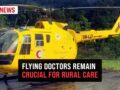
On 8 September, a helicopter carrying a medical team from the Flying Doctor Service (FDS) crashed in Ulu Baram, Sarawak. All five people on board were killed: the pilot, a medical officer, an assistant medical officer and two nurses.
The Ministry of Health has suspended all FDS operations in Sarawak, pending a review of safety, governance and the service delivery model. That decision was necessary and appropriate.
Health Minister Dzulkefly Ahmad has said the review will cover contracts, governance, operational safety, coverage requirements and the effectiveness of the existing model.
- Sign up for Aliran's free daily email updates or weekly newsletters or both
- Make a one-off donation to Persatuan Aliran Kesedaran Negara (ALIRAN), Maybank a/c 507246118995 or CIMB a/c 8004240948
- Make a pledge or schedule an auto donation to Aliran every month or every quarter
- Become an Aliran member
In the meantime, emergency evacuations will continue with the Fire and Rescue Department. Discussions are also underway with the armed forces over possible backup transport.
That response was necessary. But it also exposes an uncomfortable reality: a single incident can reveal just how thin the safety net is that rural Sarawak has depended on for more than five decades.
As of April 2026, the FDS served 97 localities across the interior regions of Kapit, Miri and Limbang. Most were visited only once a month, and some only once every two months, depending on operational capacity.
63 years of equal partnership?
As Malaysia marks 63 years since the formation of the federation, it is worth asking plainly whether equal partnership has translated into equal access to a doctor.
In Putrajaya, healthcare is often no more complicated than getting into a car and driving to the nearest hospital.
In Ulu Baram, reaching the same care can depend on a chain of contingencies. Is the leased helicopter airworthy? Does the weather allow flying? Does an operator have both an aircraft and a crew free to make the journey?
That disparity reflects a policy reality that has remained largely unchanged for decades. In some of Malaysia’s most remote communities, access to healthcare still depends on extraordinary measures rather than ordinary, resilient infrastructure.
Seen in that light, the FDS is both a lifeline and a reminder. It provides essential care to communities that might otherwise go without it, while also underscoring a problem that successive governments have never fully resolved.
A stopgap that became permanent
This is not an argument for assigning blame to any particular government. The FDS has persisted and remained necessary across successive administrations because the underlying challenge – geographic isolation without adequate road or scheduled air transport alternatives – has never been comprehensively addressed.
But the service’s longevity is itself revealing. Introduced in Sarawak in 1973 to bridge a profound gap in rural healthcare, the FDS remains, 53 years later, a principal means by which many remote communities gain access to medical care.
A stopgap can be defended in the short term. It is harder to defend after half a century. Sixty-three years of federation should have been long enough to move rural healthcare beyond a service re-tendered every few years, towards resilient infrastructure planned in decades rather than contract cycles.
Malaysia is hardly the first country to face the challenge of delivering healthcare across vast, sparsely populated terrain. The question is not whether such access can be sustained, but how a country chooses to sustain it.
What Australia got right
Australia’s Royal Flying Doctor Service (RFDS), founded in 1928 and funded by the Australian government since the 1930s, offers an instructive model – not simply for the aircraft it operates, but for the institutional architecture behind them.
For decades, agreements between the RFDS and the Australian government ran for only four years at a time. In 2022, that gave way to a decade-long strategic partnership worth close to A$1bn, covering 2022 to 2032.
In December 2024, Canberra reinforced that commitment with an additional A$75m over three years, reaffirming its long-term partnership with the RFDS.
Crucially, the arrangement requires the RFDS to conduct a formal needs assessment every three years. This helps ensure that services are directed towards documented coverage gaps, rather than having their necessity repeatedly contested through short-term budget cycles.
This approach has helped build one of the world’s largest remote healthcare networks. The RFDS records more than 345,000 patient contacts a year through clinics, air transport and telehealth.
More important than its scale, though, is what the model represents: remote healthcare treated as a permanent national responsibility, backed by a long-term institutional framework.
The lesson for Malaysia is not the size of Australia’s fleet or the scale of its budget. It is the policy discipline of planning beyond the next contract cycle.
Financing equity, not just flights
A significant first step would be to move the FDS beyond the uncertainty of short-term leasing arrangements and annual competition for funding.
In their place should be a multi-year, ring-fenced funding framework tied to published assessments of community needs.
A three-year review cycle, similar to the RFDS model, would help ensure future allocations respond to documented coverage gaps rather than shifting budget priorities. It would also give a clearer basis for judging whether existing routes, visit frequencies and transport arrangements remain adequate as communities and healthcare needs change.
This review should not rest with the MoH alone. Where access to healthcare depends on aviation, health policy and transport policy are inseparable.
The Ministry of Transport, aviation regulators, the Sarawak government, emergency services and airport operators should all have a role in assessing capacity, identifying vulnerabilities and planning for future demand.
Working with state-linked aviation providers such as Air Borneo could also be examined as part of a wider review, rather than assumed in advance.
Just as importantly, redundancy should be treated as a deliberate feature of the system, not an avoidable expense. Whether through a second operator, supplementary transport, shared access to government assets or a dedicated contingency fund, resilience carries a cost. But so does depending on a single point of failure.
None of this would eliminate the challenges of geography. Weather would still disrupt flights, remote settlements would remain hard to reach, and aviation would carry inherent risks.
But better funding, coordination and contingency planning would reduce the extent to which access to healthcare depends on a single aircraft, a single operator or the timing of the next procurement exercise.
For communities that continue to rely on the FDS, that would represent meaningful progress.
A promise still owed
Budgets, contracts and governance frameworks, however important, are ultimately means rather than ends. What matters is whether they let people in remote communities get care when they need it.
These questions matter because they affect communities that rarely feature in national debates except in moments of crisis. The five lives lost at Long Lellang were given in service of a basic promise: that everyone in Malaysia, wherever they live, deserves a fair chance of seeing a doctor.
As the country marks another Malaysia Day, that promise remains only partly fulfilled.
Malaysia does not lack the money to do better, nor examples of what sustained commitment can achieve. What has been missing is the decision to treat rural healthcare access as permanent national infrastructure – planned and funded over decades, not renewed contract by contract.
The true test of that commitment will not be another review, inquiry or statement of condolence. It will be whether a parent in a remote longhouse can seek care for a sick child with the same certainty as a parent in Putrajaya – without first wondering whether an aircraft is available, whether the weather will hold, or whether help can arrive at all.
Dr Mohd Zaidi Md Zabri is a research fellow at the Centre for Islamic Economics, International Islamic University Malaysia.
AGENDA RAKYAT - Lima perkara utama
- Tegakkan maruah serta kualiti kehidupan rakyat
- Galakkan pembangunan saksama, lestari serta tangani krisis alam sekitar
- Raikan kerencaman dan keterangkuman
- Selamatkan demokrasi dan angkatkan keluhuran undang-undang
- Lawan rasuah dan kronisme