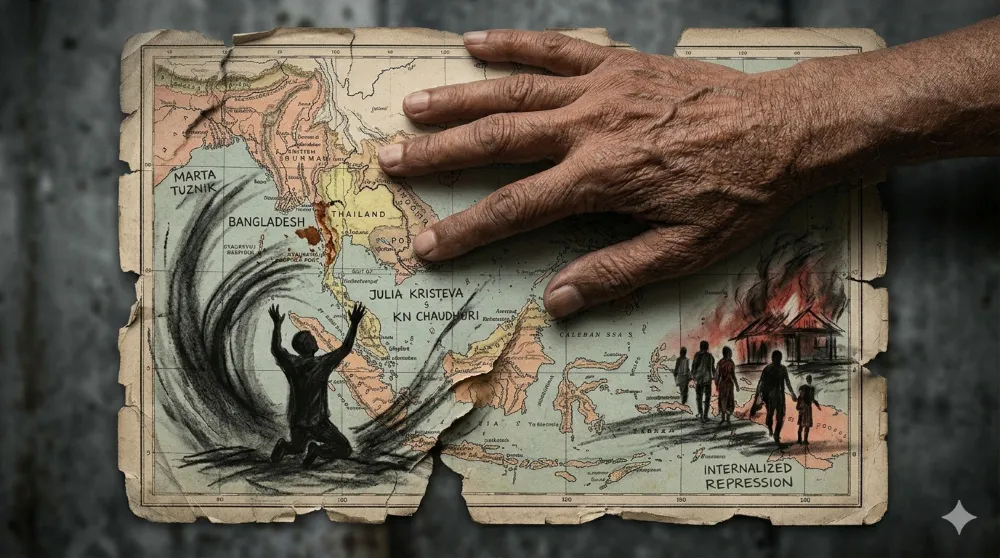
We, the 21 undersigned groups, organisations and trade unions, are appalled and condemn the action of the Malaysian government in sending back 1,473 Myanmar nationals or Rohingya, most probably refugees or asylum seekers, back to Myanmar, the very country from where they fled for fear of persecution.
This is a breach of the principle of non-refoulement which is a fundamental rule of international law that bans countries from returning any person to a place where they would face torture, cruel treatment, persecution or other serious harm.
It is also a violation of Article 14 of the Universal Nations Declaration of Human Rights, that states, among others: “Everyone has the right to seek and to enjoy in other countries asylum from persecution.”
The is the first batch of 5,000 that Malaysian plans to send back to Myanmar after an agreement was made. It was reported that:
Malaysian Prime Minister Anwar Ibrahim said Myanmar has agreed to take 5,000 Rohingya asylum seekers currently in Malaysia, where there has recently been tension between the refugees and local communities.
- Sign up for Aliran's free daily email updates or weekly newsletters or both
- Make a one-off donation to Persatuan Aliran Kesedaran Negara (ALIRAN), Maybank a/c 507246118995 or CIMB a/c 8004240948
- Make a pledge or schedule an auto donation to Aliran every month or every quarter
- Become an Aliran member
And after this statement, many including the UN, urged Malaysia to reconsider, also because, given the ongoing conflict across Myanmar, current conditions do not support the safe and sustainable return of refugees from Myanmar.
Despite calls to stop the sending of these 5,000 back, Malaysia proceeded with the sending of the first batch of 1,473 on 29 September using three Myanmar naval vessels. According to the Malaysian Ministry of Home Affairs, this included 27 children, comprising 20 boys and seven girls.
Malaysia still plans to repatriate another 3,524 Myanmar nationals, being the next phase of the repatriation programme. The date is yet to be confirmed by Myanmar or Malaysia.
What makes it worse is that this is happening when Myanmar’s military government is still actively in conflict or war with the ethnic minorities and the National Unity Government People’s Defence Forces.
On 28 September, a government military air strike on a riverside commercial hub in Kyauktaw town in western Rakhine state killed around 50 people, including “innocent passersby, market vendors, shoppers and cargo loaders”.
Why the refugees fled
The conflict with the different minority ethnic groups of Myanmar and the Burman/Brama majority ethnic group government started since Independence in 1948. The ethnic conflict, including armed conflict, is still ongoing.
It started allegedly because of broken post-independence autonomy promises. Tensions boiled over after the central government failed to fully honour the 1947 Panglong Agreement, which had promised regional autonomy and political rights for ethnic minorities.
The affected minority groups include the Shan, Karen, Rakhine (Arakanese), Mon, Chin, Kachin and Kareni ethnic minorities.
Then, in 1962, Myanmar’s military junta ousted the democratic government, and this caused many members and supporters of political parties to flee the country in fear of persecution by the state.
Even recently, on 1 February 2021, the military yet again seized power. President Win Myint, Aung San Suu Kyi, and other National League for Democracy members were detained.
This is the reality of Myanmar, and thus many refugees have fled – including those from the persecuted ethnic groups and members of democratic forces – including also supporters and members of political parties, and human rights defenders and civil society struggling to restore democracy.
Who are the Rohingya?
The Rohingya are an ethnic minority group that have long lived in the Arakan region of western Myanmar.
As Muslims in an overwhelmingly Buddhist country, the Rohingya have often experienced discrimination and persecution.
In 1982, Myanmar passed a law that removed the Rohingya from a list of ethnic groups eligible for citizenship. As a result, most Rohingya lost their citizenship, and with it, their most basic rights and freedoms.
The 2017 brutal military crackdowns by the Tatmadaw (Myanmar military) in Rakhine state forced over 700,000 Rohingya to flee into Bangladesh, resulting also in mass killings, sexual violence and village arsons.
More than a million Rohingya have since fled Myanmar into neighboring countries, notably Bangladesh. Including Malaysia.
A 2019 report from the United Nations Independent International Fact-Finding Mission on Myanmar concluded that the violence amounted to the “gravest crimes under international law”.
The International Court of Justice (ICJ) will soon rule on a case filed by The Gambia, on whether Myanmar committed genocide.
Suhakam says Malaysia has done wrong
The Malaysian human rights commission Suhakam has urged the government to halt any further repatriation of Myanmar refugees. It said it was customary international law that refugees should not be returned to their home country if they face a real risk of persecution, torture or other serious harm.
“Being a principle of customary international law, this principle binds all states regardless of whether or not they are parties to the Refugee Convention. This means that Malaysia, although not a party to the Refugee Convention, is bound to adhere to this principle.
“Hence, Malaysia is prohibited by international law from repatriating any refugee or asylum seeker to Myanmar if there is a reasonable risk that their life or freedom will be threatened on account of their race, religion, nationality, membership of a particular social group or political opinion.
“Any violation of this cardinal principle is a violation of international law,” the commission said in a statement.
No transparency on who was sent back
Malaysia to date has not revealed the identity of those sent back to Myanmar. How many Rohingya? How many of the ethnic minorities who are still in conflict with the state? How many are supporters of political parties or are fighting for democracy?
Did those sent back agree?
There is concern about what Myanmar will do with these returned refugee or asylum seekers. Will they be arrested, detained or persecuted?
Malaysia claimed that those returned had given their consent.
But this alleged ‘consent’ was never verified by any independent body, be it the UN or even Suhakam.
As such, we, the undersigned call on Malaysia to:
- Immediately stop sending back to Myanmar most likely refugees or asylum seekers, including stateless Rohingya, which is a gross violation of human rights and international law.
- Monitor what actually happens to the 1,473, including 27 children, who were already sent back to Myanmar on 29 June 2026. There is real concern over whether they may end up being arrested, detained and persecuted by the Myanmar regime.
- Respect human rights and international law, and not violate the principle of non-refoulement, which prohibits countries from returning any person to a place where they would face torture, cruel treatment, persecution or other serious harm.
- Speedily enact a law that recognises refugees and asylum seekers. Malaysian law currently only recognises foreigners who are legally or illegally present in Malaysia, and thus refugees and asylum seekers are not recognised in law. The Malaysian position on refugees now is based on the policy of the sitting government, and Prime Minister Anwar Ibrahim’s government position has now resulted in refugees or asylum being sent back to the country they fled from to avoid risk to their life or freedom being threatened on account of their race, religion, nationality, membership of a particular social group or political opinion. Policies are precarious and can change any time. Thus, a clear law enacted by Parliament is best.
- Ratify the 1951 Refugee Convention and its 1967 Protocol that defines the term refugee and outline their rights and the international standards of treatment and protection of refugees or asylum seekers.
Charles Hector released this statement on behalf of the 21 organisations and groups listed below:
- Aliran
- Malaysians Against Death Penalty and Torture(Madpet)
- Asia Human Rights and Labour Advocates (AHRLA)
- Banglar Manabadhikar Suraksha Mancha (Masum), India
- Building and Wood Workers International (BWI)
- Cambodian League for the Promotion and Defense of Human Rights (Licadho)
- Center for Orang Asli Concerns (COAC)
- Gindol Initiative for Civil Society Borneo
- Global Women’s Strike, UK
- Global Women’s Strike, US
- Haiti Action Committee
- Legal Action for Women, UK
- MAP Foundation, Thailand
- Parti Rakyat Malaysia (PRM)
- Payday Men’s Network, UK/US
- Programme Against Custodial Torture & Impunity (Pacti), India
- Tenaganita
- The Foundation Day of the Endangered Lawyer
- Vietnam Committee on Human Rights (VCHR)
- Workers Hub for Change (WH4C)
- Women of Color / Global Women’s Strike US/UK
AGENDA RAKYAT - Lima perkara utama
- Tegakkan maruah serta kualiti kehidupan rakyat
- Galakkan pembangunan saksama, lestari serta tangani krisis alam sekitar
- Raikan kerencaman dan keterangkuman
- Selamatkan demokrasi dan angkatkan keluhuran undang-undang
- Lawan rasuah dan kronisme