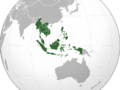
As the US and China compete for technology supremacy and AI dominance, Southeast Asian nations need not be shaped by the US-China rivalry.
The Southeast Asian economies have grown nearly ninefold since 1998, to $4.5tn today. They should now focus on building their own technological capabilities, creating quality jobs and strengthening regional cooperation.
Rethinking technology and jobs
Malaysia needs to focus on using technology for the public good. Digital public services in Singapore show how the city-state builds its own tech solutions.
For the region, the real opportunity lies in applying AI to everyday needs. These public-good applications can cover healthcare, agriculture, education and public administration. They are better than competing to build large data centres and frontier AI models.
Yet economic growth is no longer creating well-paid jobs in the region.
- Sign up for Aliran's free daily email updates or weekly newsletters or both
- Make a one-off donation to Persatuan Aliran Kesedaran Negara (ALIRAN), Maybank a/c 507246118995 or CIMB a/c 8004240948
- Make a pledge or schedule an auto donation to Aliran every month or every quarter
- Become an Aliran member
The September 2026 issue of the IMF’s Finance & Development highlights that the middle class in countries such as Indonesia is shrinking and becoming financially fragile. Despite steady economic growth, people in Southeast Asia face high living costs and insecure work.
Youth unemployment is also rising, especially among university graduates. AI models are threatening the entry-level jobs that young people need to gain experience. Technology only benefits a few and leaves the majority worse off.
With more gig labour working for invisible financial capital, public trust is beginning to collapse. Where is the welfare of informal workers?
Economic policies must therefore prioritise job quality, social safety nets and fair wages – not just investment numbers.
Education systems have to go beyond producing graduates. They must partner with employers to teach practical and problem-solving skills as well as digital skills.
Industries must also provide lifelong learning and reskilling, including for older workers.
Southeast Asian countries need new waves of research and development to tackle their biggest challenges. The aim is higher total factor productivity, so that wealth can be shared more widely.
A new economic model
The old Asian economic model – relying on cheap labour from neighbours, endless exports to the Global North and foreign investment that does not benefit the region’s people – is reaching its limits.
Populations are ageing, and global trade is fragmenting because of US-China tariffs and sanctions.
Southeast Asian countries need ‘better’ investment. This means deeper capital markets, stronger competition and heavy investment in education.
Countries must apply domestic capabilities in areas such as regenerative agriculture, sophisticated semiconductor design, renewable energy and precision manufacturing.
The goal is not just to host foreign factories. It is to ensure those factories upgrade local skills, boost local suppliers and raise national productivity, with the wealth shared more widely.
Energy security is another barrier. The rise of AI and data centres is increasing electricity demand. Southeast Asia must embrace renewable energy.
Countries should also build regional power grids to avoid expensive and polluting imported fuels.
A just energy transition would support vulnerable communities by creating new green jobs.
This urgency is more than a concern, especially as oil and gas inventories thin and pipelines face disruption.
Co-operation and capability
In a fragmented world, no single Southeast Asian country can stand alone. The region must adopt a ‘multilateral enough’ approach with flexible coalitions to tackle shared challenges.
The 11 members of Asean, home to nearly 700 million people, form one of the world’s largest economies.
Asean needs to become more cohesive, agile and effective. Together, members can get better deals on technology transfer. They can move faster on agricultural innovation, digital trade, AI safety standards and green energy.
Deeper partnerships with middle powers such as Australia, Japan, India and the EU will also help supply chain resilience. This strategy lets Southeast Asia keep its independence. It means the region need not choose between Washington and Beijing.
One of the IMF’s messages to governments in the region is about “developmental agency”.
Southeast Asia cannot control the US-China rivalry, but it can control its own domestic policies.
To succeed, governments must be transparent and accountable. Industrial policies should not become excuses for protectionism or cronyism.
Governments in the region still lack the tax revenue to fund these vital transitions. Raising domestic revenue remains difficult. It is not just a budgetary exercise – it is a prerequisite for social justice and economic resilience.
Without fair taxation and strong institutions, a privileged few will continue to capture the benefits of growth.
Southeast Asia’s true strength will not come from serving as a passive playground for superpowers. It will come from building resilient economies, empowering people with quality jobs and forging a united, independent regional identity.
AGENDA RAKYAT - Lima perkara utama
- Tegakkan maruah serta kualiti kehidupan rakyat
- Galakkan pembangunan saksama, lestari serta tangani krisis alam sekitar
- Raikan kerencaman dan keterangkuman
- Selamatkan demokrasi dan angkatkan keluhuran undang-undang
- Lawan rasuah dan kronisme