James Bayu
It’s 2026, and the haze is back again!
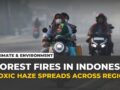
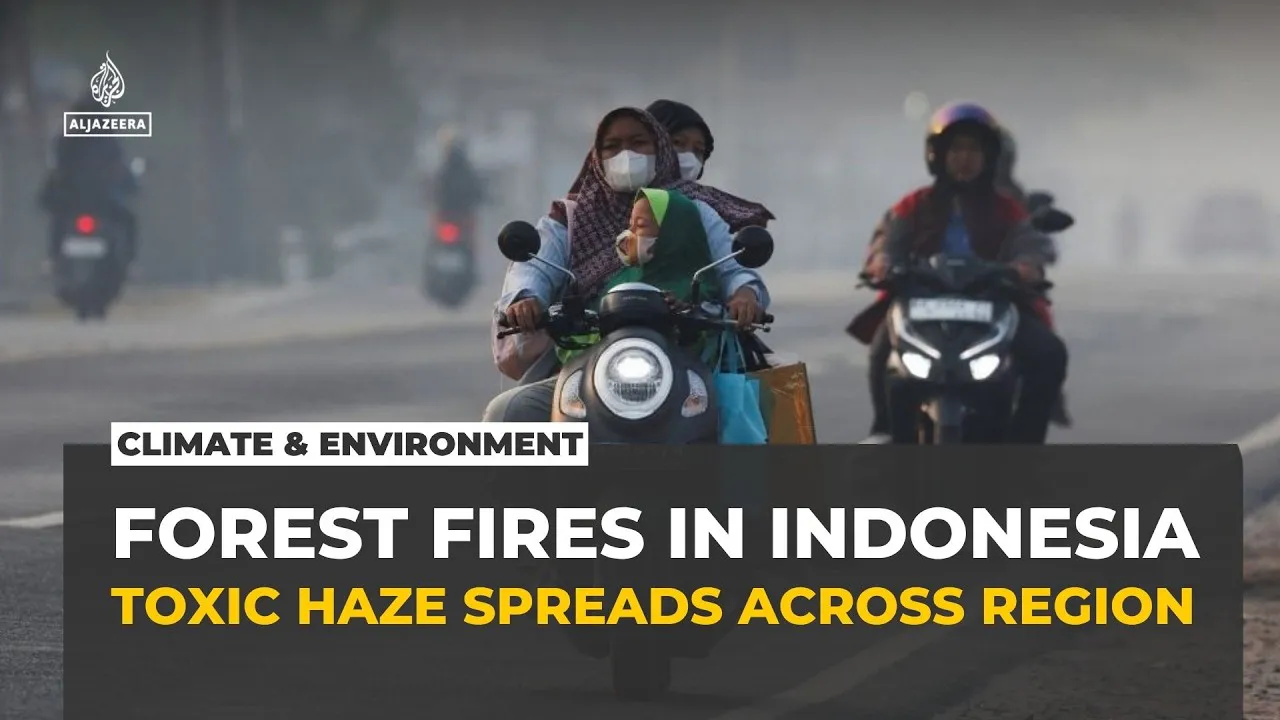
The choking, poisonous smoke from thousands of peatland forest fires in Kalimantan and Sumatra has returned. Like a supernatural spectre, it spread its ghastly white smog over most of Indonesia, Malaysia and Singapore.
From July to September, millions of people were hit hardest in West, Central, East and South Kalimantan, Sarawak and Sabah. Once again, they were forced to breathe, cough, sputter and choke on the repugnant poison.
People in Malaysia and Indonesia have inhaled this poisonous haze nearly every year since the deadly haze of 1997.
Mind-blowing APIs
- Sign up for Aliran's free daily email updates or weekly newsletters or both
- Make a one-off donation to Persatuan Aliran Kesedaran Negara (ALIRAN), Maybank a/c 507246118995 or CIMB a/c 8004240948
- Make a pledge or schedule an auto donation to Aliran every month or every quarter
- Become an Aliran member
In late August, Indonesia’s air pollution index (ISPU/API) registered a reading of 1,075 in Pontianak in west Kalimantan and 1,108 in Palangka Raya in central Kalimantan.
It then spiked to 3,540 at the Jekan Raya monitoring station in Palangka Raya on 4 September. Other readings included southeast Pontianak (737), Gunung Mas (591), Katingan (484), East Kotawaringin (458) and Murung Raya (423). Most of Kalimantan was shrouded in extremely hazardous haze for weeks.
All this is far beyond the hazardous API threshold of 300. In central Kalimantan, the API reading stayed over 1,000 for weeks. On 8 October, Palangka Raya’s API was still beyond the hazardous level, at 645!
The toll on health
Wildlife suffered too. An adult orangutan in Ketapang, west Kalimantan, nicknamed Sampurna, fell out of the trees and was found comatose in a plantation ditch, struggling to breathe. Rescuers gave it oxygen, CPR and intravenous fluids. Sampurna died a few hours later.
Many other orangutans were rescued. But conservation groups estimate hundreds are suffering silently in the forests, surrounded by smog and fires. The fate of all other wildlife (mammals, reptiles, birds, insects and more) is unknown. So is whether environmental functions and ecological cycles were affected.
What we do know is that more than 12.5 million people in Indonesia were directly exposed to the smog across seven provinces. Cases of acute respiratory infections throughout Kalimantan and Sumatra more than doubled to 113,336 in the first week of September 2026. By late September, “170,000 cases of respiratory illness were recorded across affected provinces in Sumatra and Kalimantan.”
At a news conference, an Indonesian Health Ministry official said “there were 174,694 cases of acute respiratory infections between August and 21 September in areas affected by forest and land fires”. Of those cases, “more than 40,000 of the recorded respiratory cases affected toddlers”.
To date, no death figures have been released. But it would not be surprising if many older, frail and seriously ill people have also quietly succumbed to the smog.
In Sarawak, over 2.5 million people were affected as the smog saturated and disrupted daily life. Serian district saw an API of 521 on 4 September, and the authorities declared an ‘emergency’.
Many felt the declaration was meaningless, because there was nothing anyone could do about it. N95 masks quickly sold out. And people needed to breathe anyway! To many, it looked like a gesture to show that the government was doing something. But hey, impressions count!
Thousands in Sarawak coughed and wheezed their way to clinics and hospitals with asthma and breathing difficulties. They were given ventolin, oxygen, mucolytics (to loosen phlegm), expectorants (to clear mucus) and antibiotics. As in Indonesia, no death figures from the haze have been released in Sarawak.
What research tells us
The health risks are well documented.
In 2002, a Rand Corporation research brief on the 1997 haze, written by Narayan Sastry, found that the haze “increases mortality among the frail but not the non-frail, thus leading to harvesting during the event and fewer deaths during subsequent days but not in the more distant future”. Those aged 65-74 and the frail were most at risk. The author added that the non-frail suffer impacts in the long run.
A follow-up study in 2021, also by Rand (Marlier and colleagues), noted that forest fires generate “significant amounts of fine particulate matter less than 2.5 microns in diameter (PM2.5)”. Outdoor “exposure to PM2.5 is associated with risk for ischemic heart disease, cerebrovascular disease, chronic obstructive pulmonary disease, lung cancer, and lower respiratory infections, among other adverse health outcomes”. It is the “fifth-ranking mortality risk factor, causing 4.2 million deaths worldwide, of which the highest burden falls in Asia”.
In plain terms, that means heart disease, stroke, long-term lung disease, lung cancer and serious chest infections. There have been other similar studies. All point towards haze pollution causing “long term damage to human mortality, the economy and the global environment” (Marlier et al, 2021).
Parts 2 and 3 to follow
James Bayu is the pseudonym of an analyst who is deeply concerned about the recurring haze blanketing the region.
AGENDA RAKYAT - Lima perkara utama
- Tegakkan maruah serta kualiti kehidupan rakyat
- Galakkan pembangunan saksama, lestari serta tangani krisis alam sekitar
- Raikan kerencaman dan keterangkuman
- Selamatkan demokrasi dan angkatkan keluhuran undang-undang
- Lawan rasuah dan kronisme