Rezgar Akrawi
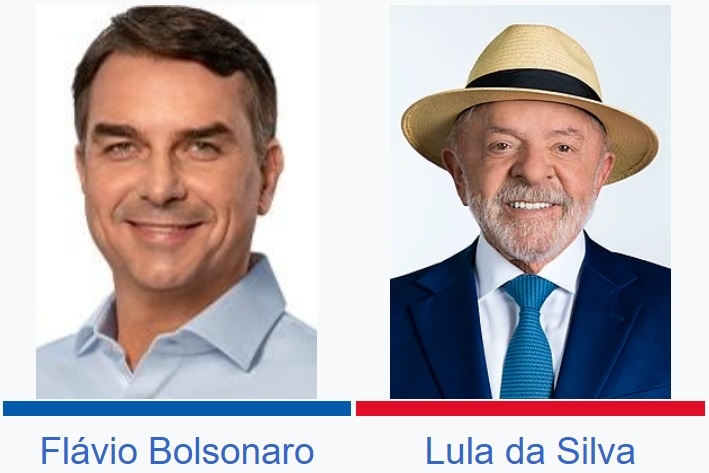
The leftist leader Luiz Inácio Lula da Silva secured a historic victory in Brazil’s presidential election on 25 October 2026.
The result came amid intense political and social polarisation and the growing influence of the far right in Brazil and across Latin America, backed by the US far right led by President Donald Trump.
The significance of this electoral victory extends beyond Lula securing a fourth term. It also lies in the political and organisational experience that helped make it possible, above all the ability of diverse left-wing and progressive forces, with different programmes and ideological outlooks, to forge a broad electoral alliance around common ground in confronting the far right.
Broad progressive alliance
Lula contested the election with the support of the ‘Brazil Ready for More’ alliance, comprising seven left-wing and progressive parties organised into two party federations and two separate parties.
- Sign up for Aliran's free daily email updates or weekly newsletters or both
- Make a one-off donation to Persatuan Aliran Kesedaran Negara (ALIRAN), Maybank a/c 507246118995 or CIMB a/c 8004240948
- Make a pledge or schedule an auto donation to Aliran every month or every quarter
- Become an Aliran member
The ‘Brazil of Hope’ federation brought together Lula’s Workers’ Party with two other parties. The second federation united the Socialism and Liberty Party, which includes socialist and radical-left currents, with the Sustainability Network. The Brazilian Socialist Party and the Democratic Labour Party also joined the alliance, alongside supportive social movements and trade unions.
Lula ran with Geraldo Alckmin of the Brazilian Socialist Party as his vice-presidential candidate.
The importance of this alliance lies in its ability to bring together the various progressive forces despite their disagreements over capitalism, the role of the state, and the limits of social reform. These forces agreed on common electoral objectives while preserving their identities and organisational autonomy.
This is one of the most important lessons of the Brazilian experience. Left unity does not require ideological or organisational uniformity. It means being able to work together on common ground while respecting pluralism and differences.
Disagreements over Lula’s economic and social policies will naturally persist, including among the forces that supported him at the ballot box.
Unity does not mean abandoning criticism or autonomy
The Brazilian experience raises an important question for left-wing forces around the world. Why do ideological and organisational differences become barriers to cooperation, despite so much common ground, even when these forces face shared political and class challenges?
Pluralism among the various progressive forces and independent leftists can be a source of strength and intellectual and political richness, provided it is managed democratically and constructively, without monopolisation, exclusion, or claims to possess the absolute truth.
Unity does not require abandoning criticism or offering unconditional acceptance of the policies of governments led by left-wing and progressive alliances.
The victory demonstrated the importance of connecting the defence of democracy, rights and freedoms, with the economic and social demands of working classes and poor and marginalised communities.
Lula drew broad support from lower-income groups and proposed expanding social assistance, improving living conditions and defending democratic institutions.
Confronting capitalism and the far right therefore cannot be confined to elections and party alliances. It requires sustained mass organisations in workplaces, neighbourhoods, universities, trade unions and social movements, together with policies that tackle class inequality and improve the lives of the majority.
Digital autonomy
The Brazilian election revealed the growing importance of the digital sphere in political struggle. Social media platforms, algorithms, and artificial intelligence have become powerful tools in the hands of capitalist interests for shaping public consciousness and steering political debate.
During the campaign, Lula’s supporters submitted complaints and evidence supporting allegations that Meta, the company that owns Facebook, Instagram, and other platforms showed digital bias in favour of his opponent.
The company acknowledged “technical problems”. The dispute reached Brazil’s electoral court, which issued a ruling requiring Meta to apply equal standards to the candidates.
The problem is not confined to Brazil. During Colombia’s most recent presidential election in 2026, journalistic investigations uncovered coordinated accounts and AI-generated fake videos targeting the left-wing camp, as well as shortcomings and bias in the platforms’ oversight of political advertising and content.
In Germany, Elon Musk, the owner of X, publicly endorsed the far-right Alternative for Germany (AfD) during the 2025 election. He used his platform to promote the party’s positions and host its leaders, while several studies found a clear bias in the reach of the party’s content on the platform.
Proving deliberate algorithmic bias is difficult because proprietary algorithms give capitalist companies exclusive control over information about how they work and how content is ranked, amplified or restricted.
Without transparency, independent public and legal oversight, and access to the data needed for investigation, it is difficult to determine whether bias arises from algorithm design or deliberate intervention. Companies can easily attribute such problems to a ‘technical glitch‘!
The Brazilian experience also highlighted the importance of combining three interconnected arenas of struggle: mass struggle on the ground, legal action to hold digital platforms accountable and regulate their operations, and organised digital activism.
Mass mobilisation in the streets was accompanied by legal challenges against Meta and the development of a wide-ranging digital campaign that used social media effectively to reach millions of voters. This experience shows that the digital left’s struggle cannot replace grassroots struggle. It can reinforce and complement it.
This is where digital autonomy emerges as the fifth pillar of the left’s independence, alongside ideological, organisational, financial and media autonomy.
Genuine political independence is no longer possible without a meaningful degree of autonomy over digital tools, platforms and infrastructure, the protection of data, and the capacity for mass communication and organisation free from the monopolistic control of capitalist companies and major powers.
Digital autonomy does not mean withdrawing from digital platforms. It means using them today with a critical, progressive awareness while working to develop open-source, democratically governed digital alternatives and to build and strengthen independent technical capacities within the left.
A left that fails to develop its digital autonomy and technological tools will remain at the mercy of its class adversaries in one of the most important arenas of contemporary political and social struggle.
Lessons for the left worldwide
The Brazilian experience cannot be reproduced mechanically. Every society has its own conditions and balance of class and political forces. The Brazilian approach to building alliances and working together can nevertheless offer valuable lessons.
The unity the left needs is neither a single party nor a centralised leadership imposing its vision on everyone. It is flexible, democratic cooperation among diverse forces, grounded in common programmes, respect for autonomy and pluralism, and meaningful participation by the grassroots, young people and women.
Such cooperation can be developed locally, regionally, and globally through different left-wing fronts and alliances on the ground, as well as digital left networks and internationals that contribute to the exchange of experience, coordinate shared initiatives and struggles, and work toward progressive digital alternatives.
Lula’s victory offers an experience worth studying and learning from. It demonstrates the possibility of cooperation among left-wing forces despite their differences, while recognising the other factors that contributed to the result.
The left does not need to erase its diversity to unite. It needs to turn that diversity into an organised and effective force, strengthen its independence across all five pillars, and pursue the struggle for freedom, equality and social justice while developing democratic, humanist socialist alternatives to capitalism. – Globetrotter
Rezgar Akrawi is a leftist writer and researcher focused on technology, AI, the digital revolution, and the development of contemporary leftist thought and practice in response to these transformations. He works as an expert in systems development and e-governance and is a theorist of the concept of the ‘digital left’.
AGENDA RAKYAT - Lima perkara utama
- Tegakkan maruah serta kualiti kehidupan rakyat
- Galakkan pembangunan saksama, lestari serta tangani krisis alam sekitar
- Raikan kerencaman dan keterangkuman
- Selamatkan demokrasi dan angkatkan keluhuran undang-undang
- Lawan rasuah dan kronisme