

By Daniele Speziale
I spent my summer with Penang’s fisherfolk, immersing myself in their lives, from their heritage to their ‘kampong-nomics’. Soon I learnt three things everyone in Malaysia should know about them.
Since I first moved to Malaysia at 17, I have always had a sort of adoptive relationship with Penang Island. The thrill of sailing on the old ferries, seeing George Town’s skyline slowly approach; soaking in the charm of old, eclectic streets and, like anyone else, savouring delicious Penang cuisine!
Last summer, as I was back on the island, I had the chance to interact with the fishing communities around Teluk Kumbar and Tanjung Tokong. I got to sail and fish with them, listen to their stories, and enjoy some tasty fresh seafood in their company.
Yet, whenever I told my Penang friends that I would travel to kampongs like Sungai Batu or visit the Teluk Bayu beach, I was often met with confusion and unawareness. “Where are these places?” friends from George Town or Universiti Sains Malaysia would ask me.

- Sign up for Aliran's free daily email updates or weekly newsletters or both
- Make a one-off donation to Persatuan Aliran Kesedaran Negara, CIMB a/c 8004240948
- Make a pledge or schedule an auto donation to Aliran every month or every quarter
- Become an Aliran member
It felt paradoxical: the nelayan (fisherfolk), who with their seafood supply are the backbone of Penang’s world-class culinary tradition, somehow represent a society unknown to the rest of the state. I believe we have much to learn from the nelayan, their lifestyle and their stories.
1. The fisherfolk keep the kampong spirit alive, and this itself is heritage worth preserving
In Penang Island, the idea of kampong is usually exclusively associated with the Balik Pulau area, and that too with strong touristic undertones.
Many Penangites I met were unaware of places such as the villages around Teluk Kumbar, where traditions such as gotong-royong (community help, the emblem, if slightly stereotypical, of kampong traditions) are still genuinely practised.
The fishers describe life in their kampong as “seronok” (enjoyable and fun) and the incessant spread of urbanisation as “mengasingkan”, an alienating lifestyle, where (to quote a fisherman) “one does not even know his own neighbours”.

Among kampong nelayan such as those in Sungai Batu, the fishing tradition sustains unique kampong-level socioeconomic institutions, which are particularly empowering for locals in what could be aptly described as kampong-nomics.
One such institution is the dana nelayan or fishers’ fund, through which profits that accrue from fishing are organised into funds and redistributed towards the more vulnerable members of society, or turned into benefits such as scholarships for underprivileged children.
When speaking with inhabitants of such villages, there was a widespread desire to preserve the “warisan nelayan” (fishers’ heritage) as part of the island’s heritage. This heritage ranges from the very material culture of traditional fishing equipment, to oral histories, to their inherited knowledge about nature and especially the sea.
In a way, this feeds into a debate many Penang heritage enthusiasts will be familiar with: is the status of heritage reserved for pompous colonial-era villas, or should it be broadened to encompass the wealth of knowledge and practices that rural communities still preserve?
2. Are the fisherfolk really ‘anti-development’? And what does ‘development’ mean, anyway?
The “Penang South Islands” reclamation project has generated a heated debate, with one side arguing that it can boost the state’s economy, and the other asserting that it will destroy the coastal ecosystem.
With this debate, a misconception seems to have spread that the fisherfolk are “anti-development”, an accusation frequently thrown at nelayan leaders and environmental NGOs alike.
Exchanging opinions with fishers on the ground, however, reveals that they have elaborate and unique perspectives on what development should be like, unsurprisingly based on a special relationship with nature and on the preservation of their lifestyle as a necessary condition for any development project.
These nelayan perspectives have been neglected or sidelined. This is probably due to the sad prevailing prejudice that kampong inhabitants, unlike the experts and consultants, are uninformed about politics and economics and incapable of making judgements.
But it might surprise many to know that the fisherfolk, on the contrary, actively discuss politics and form opinions in their circles. While they might not be able to provide the technical definitions of big words like capitalism, they still understand and criticise the concept based on their lived experiences of increased pollution, rising inequalities and the like.
Listening to fishers’ discussions raises some pointed questions. Is Malaysia’s development path universally accepted? Was there ever an effort to understand the importance of the kampong-nomics? And what is ‘development’, really?
The nelayan experience points to a need for more dialogue around these questions, a dialogue where not only ‘experts’ but also the voices of rural, nature-dependent communities need to be included.
3. In fishing villages, multiple ethnicities come together in beautiful communal harmony
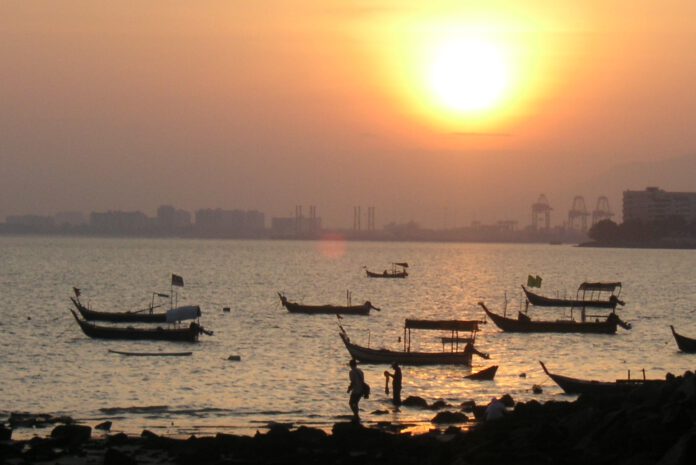
Taking a stroll through Tanjung Tokong with a Malay fisherwoman, we ran into ethnic Chinese fellow villagers, and some friendly chit-chat ensued. Talking to Sungai Batu fisher leaders, you hear how the sea makes everyone “sahabat” (comrades), and how in the fishing profession everyone is included “tak kira bangsa” (irrespective of ethnicity).
But perhaps the thing that touched my heart the most was witnessing the synergies and mutual learning between the nelayan and Penang NGOs.
When it comes to promoting fishers’ heritage, we can see ethnic Malay and Chinese fisherfolk coming together with Malay, Chinese, Indian and other activists, a collective effort which truly embodies Malaysia’s multicultural spirit.
Arguably, this was the perfect illustration of how the people of Malaysia are able to overcome ethno-religious divides and unite around common causes – of which ecologicial issues represent perhaps the most urgent example.
Spending time with Penang’s fisherfolk was an eye-opening and enriching experience me, increasing my love for the state. And I whole-heartedly believe that, if given a platform to express their unique perspectives, nature-dependent communities such as the nelayan can truly shape Malaysia’s future, for the greater good of everyone.
Daniele Speziale, originally from the small Italian town of Savona, studied at Penanti Secondary School in Bukit Mertajam as a 17-year-old exchange student and later served as an Aliran intern – and he has been passionate about Malaysia ever since. After studying political science at Leiden University in the Netherlands, Daniele did a masters in development studies at the School of Oriental and African Studies in the University of London, specialising in political ecology and alternative approaches to development
AGENDA RAKYAT - Lima perkara utama
- Tegakkan maruah serta kualiti kehidupan rakyat
- Galakkan pembangunan saksama, lestari serta tangani krisis alam sekitar
- Raikan kerencaman dan keterangkuman
- Selamatkan demokrasi dan angkatkan keluhuran undang-undang
- Lawan rasuah dan kronisme

The fishing families must not be removed from their homes, as these are part of their livelihood, hence development should not be encouraged in these areas. Finding another place for them to move out because of development, reminds me of the time of our Emergency when the Chinese farming villagers were compulsorily removed near the jungles to avoid being exploited by the local Communists guerillas. One must know that people have attachment to the areas they have lived for more than a lifetime. That is how you learn to love the country that you lived, worked, and enjoyed the comradeship of your neighbors and being citizens of the country you love.