KC Koay
Most people in Malaysia have never read Article 153. They do not need to. They can feel when a social contract is being honoured and when it is being exploited.
The Swiss thinker Ferdinand de Saussure denounced “the tyranny of the letter”: the moment the written form of a thing matters more than the living purpose it was written to serve.
Constitutions everywhere can catch this disease. The US First Amendment was written to protect the people’s right to speak against their government. In 2010 the Supreme Court read it so literally that major corporate spending on elections was deemed to be ‘speech’. The words survived but the purpose did not.
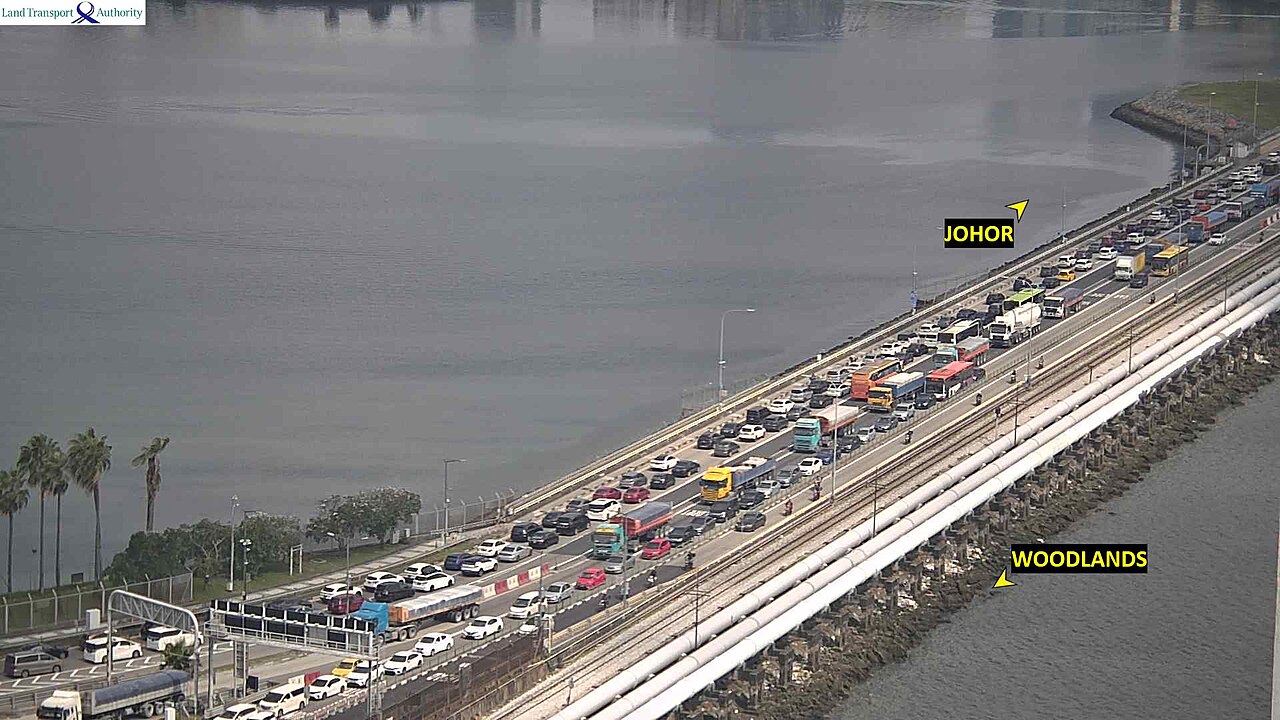
This piece looks at what the Malaysian strain has cost us. The bill can be read in a ledger, and much of it is kept in Singapore.
What the article says
- Sign up for Aliran's free daily email updates or weekly newsletters or both
- Make a one-off donation to Persatuan Aliran Kesedaran Negara (ALIRAN), Maybank a/c 507246118995 or CIMB a/c 8004240948
- Make a pledge or schedule an auto donation to Aliran every month or every quarter
- Become an Aliran member
Article 153 is a legitimate and founding part of the 1957 settlement. Nothing here disputes it. The article itself sets the terms of this piece.
Clause (1) tells the King to safeguard the special position of the Malays and the natives of Sabah and Sarawak and “the legitimate interests of other communities”.
Clause (2) allows the reservation of “such proportion as he may deem reasonable” in four areas: the public service, scholarships and education, permits and licences, and, through Article 89, reserved land.
Clause (9) forbids using the article to restrict any trade or business solely to make a reservation.
Section 3(2)(b) of the Sedition Act also says it is not seditious to point out errors in how such provisions are implemented.
The Reid Commission designed the special position as a ledger of under-representation in those four areas, to be corrected. The article in the Constitution does not say what proportion is reasonable, but the natural yardstick is the country itself.
Bumiputras make up about 70% of citizens. Yet they are about 90% of a 1.6 million-strong public service (excluding the police and military). Ethnic Chinese citizens make up 5.7% of that civil service against 22.2% of the citizen population.
The ledger has not been balanced. It has been inverted in the one place the article was written to correct.
Article 153 was written as a corrective ladder for a community that was economically behind at independence. Over time, it has grown through circulars and guidelines. Parliament never wrote these into the Constitution, and they did not face the safeguards that protect Article 153 from amendment. Critics see them as a shield for a patronage network against any audit of performance.
The vocabulary shows the drift. The Constitution never uses the word ‘bumiputra’; it speaks of the Malays and the natives of Sabah and Sarawak.
It never speaks of ‘rights’ or of superiority. Instead, it speaks of a “special position” set alongside the legitimate interests of others. This sits inside a Constitution whose Article 8 promises equality before the law.
A politics that speaks of permanent ‘hak istimewa’ (special rights) is describing something the text does not contain. Ordinary people hear the difference. They read it as a signal that the original covenant has been replaced.
The bill at home and abroad
Now for the cost, in the government’s own numbers. In March 2023, the human resources minister said 1.9 million people were part of the Malaysian diaspora as of 2022 – about 5.6% of the population. Of these, 1.1 million were in Singapore.
In August 2025 the Ministry of Home Affairs told Parliament that over 97,000 people had given up Malaysian citizenship for Singapore’s between 2015 and June 2025. The 2024 figure, 16,930, was the decade’s highest.
A further 281,000 trained professionals and degree holders are in Australia, the US, Britain and Canada.
The World Bank measured this in 2011 and named the reasons. In its survey of Malaysians living abroad, “social injustice” sat alongside career prospects and pay as a main reason for leaving. The bank also described Malaysia’s diaspora as having a strongly ethnic dimension.
Fifteen years on, the outflow has not slowed. Singapore’s skyline is, in part, a Malaysian construction. It was built by talent educated here, often at public expense. That talent left because it read the odds.
The second entry is at home, and it has a nickname. Sometimes a licence, a tender or a listing requires a fixed share of bumiputra equity. If the market cannot supply a willing partner with capital and capability, it supplies a name instead. ‘Ali’ holds the shares and the identity card. ‘Baba’ puts up the money and runs the business. Terence Gomez and Jomo KS documented its economics in the 1990s.
Look at who loses. The non-bumiputra entrepreneur pays a tax for operating in the open. The bumiputra community receives a certificate rather than a capability – the opposite of what the Reid Commission intended, which was a community able to compete on its own account.
Equity targets that breed fronting do not advance the special position. They counterfeit it.
And notice where the instrument sits: a fixed equity share in a private company is not among the four areas the article names. Clause (9) warns against exactly this. The Ali-Baba economy is not Article 153 at work. It is Article 153 exceeded.
The economist Murray Hunter, writing about Malaysia’s innovation shortfall, has argued that the useful question is not whether a society is ‘racist’. It is what “the concrete mechanisms like equity quotas, licensing preferences, public sector hiring patterns, and informal networks” are doing.
Those are the implementation layer of Article 153, and one of them lies outside the article altogether.
Singapore makes the same point in constitutional form. Its Constitution, in Article 152, also recognises “the special position of the Malays” and obliges the government to “protect, safeguard, support, foster and promote” their interests. The words are there. The quota machinery is not.
Indonesia tells the story from the other side. After 1998 it dismantled the New Order’s discriminatory rules against its ethnic Chinese minority in large part through executive action, because executive action had built them.
Malaysia’s preference machinery is also, overwhelmingly, executive. The remedy therefore needs no amendment, no two-thirds majority and no consent of the rulers. It needs a government willing to apply the article in the Constitution as written.
Four steps for Putrajaya
Four steps, every one already allowed by the Constitution:
First, audit every preference instrument against the limits in Article 153. These are the four named areas, a proportion that is reasonable by the country’s own demography, and the clause (9) ban on restricting trade. Retire what falls outside.
Second, treat fronting as a fraud on the community the article was written for. Measure bumiputra participation by who runs the firm, not whose name is on the share register.
Third, hold the periodic review of special measures that the Reid Commission asked for, now nearly 70 years overdue, and publish it.
Fourth, treat the implementation window in Article 10(4) and section 3(2)(b) as open, so that this audit can be debated in Parliament and in public without threat of prosecution.
None of all this touches the special position. All of it serves the people the special position was written for.
The bill for 60 years of drift is being paid across the Causeway. The fix is in Putrajaya, and it needs no new words – only fidelity to the ones we already have.KC Koay is a Kuala Lumpur-based independent analyst with over 40 years in corporate restructuring, crisis management and financial advisory services. A London-registered professional engineer with an MBA in finance from the University of Hull, he has spent four decades in self-directed legal study, from the University of Malaya library, while working on contractual arrangements and dispute resolution.
AGENDA RAKYAT - Lima perkara utama
- Tegakkan maruah serta kualiti kehidupan rakyat
- Galakkan pembangunan saksama, lestari serta tangani krisis alam sekitar
- Raikan kerencaman dan keterangkuman
- Selamatkan demokrasi dan angkatkan keluhuran undang-undang
- Lawan rasuah dan kronisme