
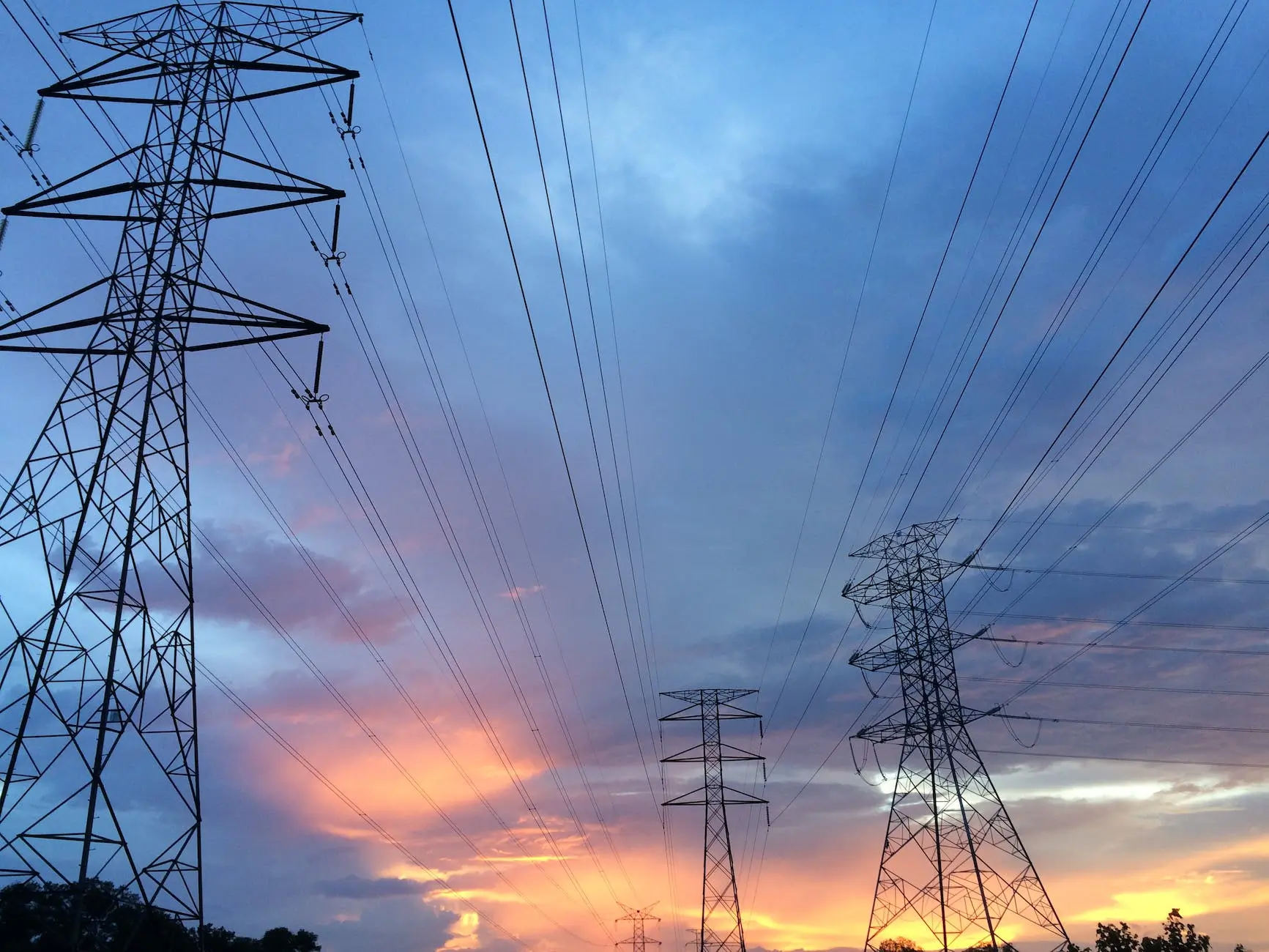
Every time we switch on a light, turn on the air conditioner or charge our phones, we depend on the power that Tenaga Nasional Berhad (TNB) delivers.
Whether that supply becomes sustainable, clean and renewable depends on the decisions TNB makes today.
In the long run, those decisions will affect each of us – our health, our environment and the stretch of the ringgit in our wallets.
Right now, TNB is facing a surge in demand, driven in large part by the rapid growth of data centres powering Malaysia’s digital economy.
To meet that demand, it has made three significant corporate moves. The question we need to ask is this: will these decisions make Malaysia cleaner and greener – or simply more dependent on gas?
- Sign up for Aliran's free daily email updates or weekly newsletters or both
- Make a one-off donation to Persatuan Aliran Kesedaran Negara (ALIRAN), Maybank a/c 507246118995 or CIMB a/c 8004240948
- Make a pledge or schedule an auto donation to Aliran every month or every quarter
- Become an Aliran member
Let’s explore three recent decisions that TNB has made, which raises serious questions about our energy transition and our energy goals for the future
The energy goals
Announced in August 2021, TNB aims to reach net-zero carbon emissions nationally by 2050 (Bernama, May 2026). Getting there requires cutting carbon emission intensity by 35% and slashing coal generation capacity by 50% – both by 2035.
That means reducing Scope 1 carbon emission intensity – that is, the CO2 released directly from TNB’s own power plants for every unit of electricity generated – by 5% every year from 2024 onwards (TNB Integrated Annual Report 2025).
To deliver on these targets, TNB is working within the government’s national energy transition roadmap through three flagship projects: a 2.5GW hybrid hydro-floating solar scheme, which places large solar installations on existing dam reservoirs; dedicated renewable energy zones with high-capacity generation, including a 500MW solar farm development; and clean technology pilots, including Project Reach, which explores green hydrogen and biomass co-firing [TNB IAR 2025].
The idea is to boost renewable energy capacity by 2050. So far, so green.
But then come the three corporate moves that complicate the picture.
TNB has secured the bid for a 1.4GW combined cycle gas turbine plant in Paka, Terengganu.
It has extended the operational life of three ageing gas-fired plants – Gelugor, Putrajaya and Tuanku Ja’afar PD1 – with a combined capacity of 1.3GW.
And it has issued a RM1.5bn sustainability sukuk wakalah through TNB Genco (Bernama, May 2026).
Together, these moves demand scrutiny beyond TNB’s official narrative of a “balanced transition”. Do they represent a genuine bridge towards decarbonisation – or do they lock in the very conditions that delay it?
Flexibility or lock-in?
The Paka gas turbine plant has a technically defensible case.
Combined cycle technology is far more efficient than conventional gas generation. Even the International Energy Agency treats gas as a transitional fuel – one that can back up solar and wind power when the sun isn’t shining and the wind isn’t blowing.
With data centre demand surging and electricity consumption growing at 4.5–5.5% this year, the case for reliable, high-efficiency thermal capacity is real (Bernama, May 2026).
But the economics and politics tell a less comfortable story. A 1.4GW combined cycle gas turbine represents a long-lived asset, typically operated for 25–30 years.
That timeline almost certainly stretches well beyond 2035 – the very window in which Malaysia must make decisive decarbonisation progress to meet its climate commitments.
Energy transition scholars call this “carbon lock-in”. The larger the upfront investment, the stronger the incentive to keep a plant running rather than retire it early.
If renewable capacity – solar, offshore wind, hydropower – is not being built at the same pace and scale, the Paka plant risks becoming not a bridge but a bottleneck.
Stranded assets or deferred risk?
The plant life extensions raise similar questions. Gelugor, Putrajaya and Tuanku Ja’afar PD1 are still running because Malaysia’s grid has not yet built enough alternative capacity to replace them.
Keeping them going may be a practical short-term fix. But it also means continuing to rely on the very thermal infrastructure that the energy transition is supposed to move us away from [Bernama, May 2026].
Extending plant life cuts upfront spending and plugs supply gaps – but at the cost of delaying the reinvestment and grid reconfiguration needed to accelerate renewables.
For communities living near these plants, where air quality and thermal pollution are felt most directly, this is not a neutral technical decision. It is a fairness issue, and it should be named as such.
Green finance or greenwashing?
The RM1.5bn sustainability sukuk wakalah deserves close examination. Green and sustainability-linked bonds have become a major global mechanism for directing institutional money towards low-carbon infrastructure globally. Their Sharia-compliant structure makes them particularly relevant to Malaysia’s Islamic finance ecosystem [TNB IAR 2025].
If the proceeds are properly ring-fenced for solar, energy efficiency and grid modernisation projects, this represents serious long-term capital deployed for real structural change.
The key catch is accountability. Malaysian green bond frameworks have faced credibility questions, including from the Securities Commission’s own reviews, over how rigorously the use of funds is verified and how meaningful the sustainability targets actually are.
A sukuk issued by TNB Genco, the same subsidiary building the Paka gas plant, invites an uncomfortable question: is “green” financing being used to subsidise continued gas dependency?
As commentators have noted, independent verification of where the money goes is not a minor detail. It is the difference between finance that transforms and finance that merely polishes a reputation.
Demand-side pressure

All three moves must be understood against a bigger backdrop: the explosion in data centre construction across Malaysia. As of early 2026, Malaysia had 36 operational data centres with another 23 in the pipeline. Together, they represent a fundamental shift in the country’s energy demand profile.
Data centres are energy-hungry, politically favoured and largely immune to demand-side management.
This creates a structural bind. Malaysia’s digital economy ambitions are pushing electricity demand towards the fastest, most scalable supply option available, which, right now, is gas.
The Memorandum of Understanding with Telekom Malaysia on green energy and digital infrastructure is a positive signal.
But the real question remains unanswered: will renewable power contracts outpace data centre construction, or will gas become the default engine of Malaysia’s AI economy?
The verdict
TNB’s three moves are a practical response to a genuine energy security challenge. None of them is unreasonable in isolation. Each has a legitimate operational justification.
But taken together, they reveal an energy transition strategy that is still largely about building more supply rapidly, is anchored in gas, and lacks binding decarbonisation timelines.
A genuinely balanced transition requires more than new capacity. It needs faster retirement schedules for old plants, independent verification of green finance claims and a serious reckoning with the electricity appetite of Malaysia’s data centre boom (Iseas, 2025).
Without these, “energy security while advancing decarbonisation” risks becoming a promise that keeps pushing the green part further into the future.
AGENDA RAKYAT - Lima perkara utama
- Tegakkan maruah serta kualiti kehidupan rakyat
- Galakkan pembangunan saksama, lestari serta tangani krisis alam sekitar
- Raikan kerencaman dan keterangkuman
- Selamatkan demokrasi dan angkatkan keluhuran undang-undang
- Lawan rasuah dan kronisme

Hi Mr Loh!
What are the alternatives to extending plant life in a landscape with such rapid demand fluctuations? As I understand solar which is the largest installed generation capacity will still need massive investments in battery energy storage systems to reliably meet demand
Keen to know your thoughts!
Hi KW Ong:
A response to your query whether solar generated power for data hub operations – central to an alternative source of power may lay on the Corporate Renewable Energy Supply Scheme (CRESS), introduced to attract investment and accelerate large-scale renewable deployment, but there are various arguments to this proposal, besides the technicality of power storage.
I shall give you a link:
https://monsoonsstorms.wordpress.com/2025/08/27/the-gentari-gamuda-cress-project-renewable-energy-or-renewable-dependency/
Cheers!
cs