Aliran Media Statement
Why are Maids Not Given Off-days?
|
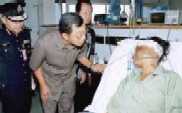
| An abused maid: Why are they treated differently from other workers? |
According to a Malaysian Association of Foreign Worker's Agencies (PAPA) Executive Council Member (The Star, 7 April 2000), Sri Lankan maids are not eligible for off-days from their work and Filipina maids will have to pay 25 ringgit for each off-day they take. Apparently, "off days are discouraged because various social problems are caused by foreign maids mixing freely." This statement, and the thinking behind it, raises a number of issues. But the basic point that maids are not allowed to have a day off (or have to pay for it) is simply unacceptable.
The legislation governing lower-paid workers in Malaysia, viz the Employment Act 1955, sets out a number of minimum rights for Malaysian workers, which include one rest day a week, paid public holidays, paid annual leave, paid sick leave, maternity leave and benefits and fixed working hours. These minimum rights are guaranteed and have been given because it is deemed that anything less would be exploitation and would severely affect workers' health and productivity. Sadly, domestic workers and foreign maids have so far been excluded from the full coverage extended by the Employment Act. This means their rights as workers (and as human beings) are neither recognised nor guaranteed. They are free to be exploited by their employers and their agencies. They have little or no protection whatsoever. Furthermore, we have PAPA saying that a certain category of maids does not deserve any rights, and another section can have them but must pay for them.
What is it about domestic work that makes a domestic worker ineligible to be covered under the Employment Act? Why should they be treated so differently from other workers? The answer lies in the way in which men, who dominate decision-making in our society, generally view women's roles. This includes the perception that domestic work (home-making) is not really work at all, which is of course utter nonsense. Because housework is seen as 'woman's work', it is regarded as petty, unskilled, undemanding and therefore undeserving of recognition. As long as the home is kept in order, the effort involved does not need to be discussed nor given any importance at all. The invisibility of the domestic worker (i.e. the woman) has also led to the invisibility of domestic work and vice versa.
Our whole social fabric depends on good home-keeping. People conveniently forget that they cannot go to work or work efficiently if home-keeping chores are undone - i.e. no-one to raise and mind the children, prepare the meals, wash and iron the clothes, keep the house clean, look after the sick, care for elderly parents and so on. We need to wake up to the fact that domestic work directly underpins the nation's economy and that the house is a full-time workplace. It certainly is for domestic workers - we pay them but we are unwilling to give them the minimum rights that workers are entitled to. Are we really saying that we are happy as a nation to make certain workers work 7 days a week, 365 days a year, without any consideration for their well-being. None of us would care to work under such conditions. What is the difference between this situation and slavery? And why is there a distinction made between Sri Lankan maids and Filipina maids? (Where do the Indonesian maids fit into this?) Is this any different from the racist reasoning used to justify and maintain the slave-trade?
Maids are human beings like ourselves. To denigrate them and deny them their basic rights, which we would never deny ourselves, is to demean ourselves. It is hypocritical. We must stop exploiting domestic workers and provide full cover for all of them - regardless of ethnicity, sex or creed - under the Employment Act 1955. In taking this positive step, we would be safeguarding the rights of the workers who come to us for employment; we would be enhancing the status of an area of work so long ignored and degraded; we would be raising the status of women; and, by doing all these things, we would be enhancing our own dignity, as individuals and as a nation.
Dr Prema Devaraj
Executive Committee member
19 April 2000