
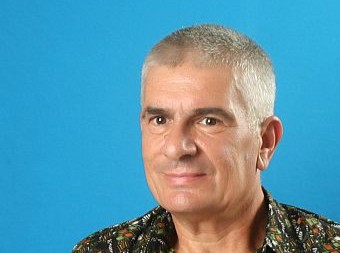
We, the 44 undersigned groups and organisations call upon Malaysian Prime Minister Anwar Ibrahim, Communications Minister Fahmi Fadzil and the Malaysian government to forthwith withdraw the strategic lawsuit against public participation (Slapp) criminal complaint and case against human rights defender and social commentator Murray Hunter, that was lodged in Thailand by the Malaysian Communications and Multimedia Commission (MCMC), a government entity.
The lawsuit has now resulted in Murray Hunter being charged and indicted for criminal defamation in Thailand’s criminal courts (The Star, 3 October).
Murray is now facing a criminal charge of defamation under Section 328 (defamation by publication) of the Thai Criminal Code. If he is found guilty, he shall be liable to imprisonment for a term not exceeding two years or to a fine not exceeding two hundred thousand baht or to both.
By reason of this charge, he was arrested on 29 September and, after a night in jail, freed on bail of 20,000 baht. His passport was confiscated and he is not allowed to leave Bangkok pending the outcome of legal proceedings (Bangkok Post, 18 November).
Murray was indicted on 17 November on four charges of publishing four articles on his Substack blog about the MCMC, which means he is liable for a maximum of eight years’ imprisonment and a fine of 800,000 baht (about $25,000) if convicted.
- Sign up for Aliran's free daily email updates or weekly newsletters or both
- Make a one-off donation to Persatuan Aliran Kesedaran Negara (ALIRAN), Maybank a/c 507246118995 or CIMB a/c 8004240948
- Make a pledge or schedule an auto donation to Aliran every month or every quarter
- Become an Aliran member
The trial is now fixed to begin on 22 December after being indicted on a charge of defaming the Malaysian government (Bangkok Post, 18 November) (Thai Lawyers for Human Rights website).
Slapp use unacceptable
It is shocking that this Slapp against a human rights defender, which is usually used by alleged perpetrators that are private companies and powerful individuals, is shockingly now used by a state – the Malaysian government, via the MCMC.
A Slapp is the use of criminal or civil suits filed to silence individuals or groups who speak out on issues of public importance. These lawsuits can be brought by various entities, including governments or government-affiliated bodies, to intimidate and financially drain critics, journalists, activists and public officials – and to deter other human rights defenders from highlighting wrongs in the future.
In international law, States assume the duties to respect, to protect and to fulfil human rights. Under those obligations, States shall not only refrain from engaging in abusive lawsuits, but also take positive measures to ensure that third parties do not use SLAPPs as tools to silence those exerting legitimately their rights to freedom of opinion and expression as well as freedom of peaceful assembly and association. – UN Human Rights Office of the High Commissioner’s report entitled The impact of SLAPPs on human rights and how to respond.
Some countries have recently rightly moved towards enacting anti-Slapp laws, which have been adopted in common law, civil law and mixed legal systems, including the United States, Canada, Australia, Indonesia, the Philippines and Thailand.
In Thailand:
the Royal Thai Government Gazette has officially published the Organic Act on Anti-Corruption (No. 2), B.E. 2568 (2025), with the primary aim of strengthening protections for whistleblowers and fostering greater public participation in the fight against corruption. The law now explicitly incorporates Anti-SLAPP principles, shielding individuals who, in good faith, report wrongdoing, provide evidence, or express opinions that aid in official duties or pertain to offences under the National Anti-Corruption Commission (NACC)’s jurisdiction. – Bangkok Post, 6 June
More anti-SLAPP laws are imminent.
Murray raises concerns, among others, over whether Malaysia’s MCMC has been faithfully carrying out its statutory duties. Concern was raised about whether there is preferential treatment of certain people or entities, including companies linked to existing MCMC commissioners.
Rightly, the MCMC and other relevant authorities should be investigating allegations and concerns raised by Murray and not ‘attacking’ such whistleblowers and those who highlight possible wrongdoings or shortcomings.
In this case, a perusal of the charges in Thailand’s Criminal Court, as found in the Thai Lawyers For Human Rights website, suggests that this case falls within the scope of the anti-Slapp principles of Thailand.
This must be considered a matter of public interest as it relates to alleged abuses, wrongdoings, failures and mis-governance of a Malaysian law enforcement body, the MCMC.
Further, the MCMC itself has a portal called sebenarnya.my, which analyses alleged ‘fake’ news and informs the public why it is false, citing credible sources.
As such, if and when Murray had published or circulated any alleged ‘fake news’, this portal ought to have been used to debunk any falsehood with credible evidence – instead of using Slapp actions against Murray. Did the MCMC even use its own mechanism when it came to Murray Hunter’s allegedly false statements, and if not, why not?
Protect rights defenders
Malaysia, as any other United Nations member state, has a duty and obligation to protect human rights defenders and their freedom of expression, including their right to raise issues of alleged wrongdoings or issues of mis-governance more so after the UN General Assembly on 8 March 1998, through a resolution, adopted the Declaration on the Right and Responsibility of Individuals, Groups and Organs of Society to Promote and Protect Universally Recognised Human Rights and Fundamental Freedoms (commonly known as the UN Human Rights Defenders Declaration)
Hunter, a former lecturer at University Malaysia in the state of Perlis, is a human rights defender, who has the freedom of expression and opinion, and also the right to highlight or “to complain about the policies and actions of individual officials and governmental bodies with regard to violations of human rights and fundamental freedoms”.
All states, including Malaysia, have a duty to protect human rights defenders. “The State shall take all necessary measures to ensure the protection by the competent authorities of everyone, individually and in association with others, against any violence, threats, retaliation, de facto or de jure adverse discrimination, pressure or any other arbitrary action as a consequence of his or her legitimate exercise of the rights referred to in the… Human Rights Defenders Declaration. – Article 12(2) Human Rights Defenders Declaration).
In this connection, everyone is entitled, individually and in association with others, to be protected effectively under national law in reacting against or opposing, through peaceful means, activities and acts, including those by omission, attributable to States that result in violations of human rights and fundamental freedoms… – Article 12(3)
The state has no “right to engage in any activity or to perform any act aimed at the destruction of the rights and freedoms” of any human rights defender. – Article 19
As such, it was wrong for Malaysia, through the MCMC, to take any retaliatory action against human rights defender Hunter, even if or when he raised issues or concerns about the MCMC, the police or even the government – as he, like any other person or human rights defenders, has the right to also raise omissions or the actions of any government body or person.
Transborder Slapp attack
The allegation of a crime committed by Murray to date has not led to any criminal charges being filed in the Malaysian criminal courts, and that means that the Malaysian police or law enforcement or the public prosecutor did not find it a crime or did not find sufficient evidence to charge him with criminal defamation or any other crime in Malaysia after the MCMC filed a police report in Malaysia on or about 24 April 2024 (MCMC Website).
According to the MCMC’s statement, it said, among others, that Murray in his writings allegedly was “accusing MCMC of acting beyond its jurisdiction for self-interest. He also accused MCMC and PDRM of intimidating the public” (“menuduh MCMC bertindak melangkaui bidang kuasanya untuk kepentingan diri. Beliau turut melemparkan tohmahan bahawa MCMC dan PDRM bertindak menakut-nakutkan Masyarakat…”)
Malaysia not charging Murray for the crime of criminal defamation may be similar to the situation that led the Malaysian Attorney General’s Chambers to issue a ‘no further action’ directive against Bloomberg, following Bloomberg’s report claiming that the MACC acted on the prime minister’s instructions in investigating certain individuals.
Minister in the Prime Minister’s Department (for law and institutional reform) Azalina Othman Said, in a written parliamentary reply, said that the directive was issued as “there was insufficient evidence in the investigation papers”. (Vibes, 5 November).
While Malaysia itself did not commence any criminal action, oddly Thailand, acting on the Malaysian government’s criminal complaint, has now charged Murray for criminal defamation. Are the legal standards in Malaysia not the same as Thailand?
Using laws of other countries?
Malaysian government and government entities should only be using Malaysian law – and never the laws or the administration of criminal justice mechanism or processes in some other jurisdiction or country, which may be also be different from the laws and rules in Malaysia.
The Malaysian Federal Constitution states that
(1) No person shall be deprived of his life or personal liberty save in accordance with law – Article 5(1)
and also that:
(1) No person shall be punished for an act or omission which was not punishable by law when it was done or made, and no person shall suffer greater punishment for an offence than was prescribed by law at the time it was committed. – Article 7(1)
The “law” referred to in the Malaysian Constitution is Malaysian Law – not the laws of Thailand or the laws of any other country. It must be Malaysian law, the Malaysian courts – more so when the alleged victim of the crime is the Malaysian government or its entity as in this case.
To use another country’s laws, which are most likely different from Malaysia’s own laws, legal standards and court processes, may be seen as an unconstitutional act, disrespecting Malaysia’s own sovereignty and Malaysian laws.
If Malaysia wanted to charge Hunter for ‘criminal defamation’, then it should do so in Malaysia, but law enforcement decided not to until now.
Remember, Malaysia could have investigated Hunter in Malaysia and even charged him in Malaysia if it was a crime or there was sufficient evidence. If Malaysia wanted Hunter in Malaysia, they could have applied to get Thailand to send Murray to Malaysia.
Even if Hunter could not be physically brought to court, Malaysian law today allows for him to be charged in the Malaysian courts. Malaysia’s Section 425A of the Criminal Procedure Code allows a trial to proceed if the accused fails or refuses to attend.
Thus, we call on Malaysia to justly stop or cause the withdrawal of the criminal defamation case against Hunter in Thailand, initiated by the actions of the Malaysian government’s MCMC.
If Malaysia withdraws the criminal complaint and informs Thailand’s courts, most likely the criminal charges against Murray will be dropped in Thailand.
Dangerous precedent
To date, no company or powerful individuals in Malaysia has resorted to using Slapp actions against human rights defenders in other jurisdictions, other than in Malaysia using Malaysia’s laws and court. As such, this criminal Slapp action is a dangerous unjust precedent by the Malaysian government.
It may lead to possible future Slapp actions against human rights defenders in Malaysia by private companies and people in Malaysia, also using the laws and courts in other countries.
Thus, we, the undersigned groups and organisations,
- Call on the Malaysian government and the MCMC to immediately withdraw the criminal complaint and criminal defamation case against human rights defender Hunter in Thailand’s criminal courts
- Call on the government of Thailand, which has already adopted anti-Slapp principlesand are enacting anti-Slapp laws, to not allow its laws and its criminal courts to be used wrongly by other nations to commence Slapp actions against human rights defenders who highlighted alleged wrongs or mis-governance issues of Malaysian government or its entities. Drop the criminal defamation charges against Hunter
- Noting that Article 39 of the Asean Human Rights Declaration 2012 already states that “Asean member states share a common interest in and commitment to the promotion and protection of human rights and fundamental freedoms”, which includes “the right to freedom of opinion and expression, including freedom to hold opinions without interference and to seek, receive and impart information, whether orally, in writing or through any other medium of that person’s choice” (Article 23), and as such, all Asean member states must do more to protect human rights defenders, by also enacting anti-Slapp laws. Malaysia, as the current Asean chair, must lead by good example
- Call on Malaysia and all governments to refrain from engaging in abusive lawsuits, but also to take positive measures to ensure that third parties do not use Slapp as tools to silence those exerting legitimately their rights to freedom of opinion and expression
Charles Hector and Ng Yap Hwa issued this statement on behalf of the 44 organisations, groups and trade unions listed below:
- Aliran, Malaysia
- Malaysians Against Death Penalty and Torture (Madpet)
- Asia Citizen Future Association, Taiwan
- Asia Human Rights and Labour Advocates (AHRLA)
- Asian Forum for Human Rights and Development (Forum-Asia)
- Banglar Manabadhikar Suraksha Mancha (Masum), India
- Building and Wood Workers International, Asia Pacific region (BWI AP)
- Center for Alliance of Labor and Human Rights (Central), Cambodia
- Citizens Against Enforced Disappearances (Caged), Malaysia
- Civicus – World Alliance for Citizen Participation
- Center for Orang Asli Concerns (COAC), Malaysia
- Community Resource Centre Foundation (CRC), Thailand
- Democratic Commission for Human Development (DCHD), Lahore, Pakistan
- Disability Peoples Forum, Uganda
- Global Women’s Strike
- GoodElectronics Network
- Greenpeace Southeast Asia
- Haiti Action Committee
- International Federation for Human Rights (FIDH), within the framework of the Observatory for the Protection of Human Rights Defenders, France
- KLSCAH Youth, Malaysia
- Legal Action for Women, United Kingdom
- Manushya Foundation, Thailand
- MAP Foundation, Thailand
- National Union of Banking Employees (Nube), Malaysia
- National Union of Transport Equipment & Allied Industries Workers (NUTEAIW), Malaysia
- North South Initiative (NSI), Malaysia
- Parti Rakyat Malaysia (PRM)
- Payday Men’s Network (UK/US)
- Persatuan Amal Progresif, Malaysia
- Programme Against Custodial Torture and Impunity (Pacti), India
- Redemption Pakistan
- Sabah Timber Industry Employees Union (STIEU), Malaysia
- Sarawak Dayak Iban Association (Sadia), Malaysia
- Second Chance Redemption, Pakistan
- Service Industry Workers Union of Peninsular Malaysia
- Setem Catalunya, Spain
- Singapore Anti Death Penalty Campaign (SADP)
- Social Protection Contributors Advisory Association Malaysia. (SPCAAM)
- Tenaganita, Malaysia
- Teoh Beng Hock Association for Democratic Advancement, Malaysia
- Workers Hub for Change (WH4C)
- Women of Colour Global Women Strike, US & UK
- Workers’ Assistance Center (WAC) in Cavite, Philippines
- World Organisation Against Torture (OMCT), within the framework of the Observatory for the Protection of Human Rights Defenders, Switzerland
AGENDA RAKYAT - Lima perkara utama
- Tegakkan maruah serta kualiti kehidupan rakyat
- Galakkan pembangunan saksama, lestari serta tangani krisis alam sekitar
- Raikan kerencaman dan keterangkuman
- Selamatkan demokrasi dan angkatkan keluhuran undang-undang
- Lawan rasuah dan kronisme
