
The Association for Welfare, Community and Dialogue welcomes Malacca DAP’s withdrawal from the state government.
The move follows a constitutional amendment allowing the appointment of up to seven unelected state assembly members.
Malacca DAP chairman Khoo Poay Tiong announced the resignations. They include the party’s one state executive councillor, two deputy executive councillors and the deputy speaker – all quitting posts in the Barisan Nasional-led administration.
He said the amendment was fundamentally at odds with democratic principles. State assembly members should be elected by the people, he insisted, not appointed.
“We do not deny the need for professionals and experts, but they should not become appointed assemblymen with the power to sit in the assembly and vote,” he said.
- Sign up for Aliran's free daily email updates or weekly newsletters or both
- Make a one-off donation to Persatuan Aliran Kesedaran Negara (ALIRAN), Maybank a/c 507246118995 or CIMB a/c 8004240948
- Make a pledge or schedule an auto donation to Aliran every month or every quarter
- Become an Aliran member
A total of 23 assembly members voted in favour of the bill. Five opposed it after it was tabled and debated.
There may be various reasons behind the move, including the electoral setback the DAP suffered in Johor. Even so, we welcomes this principled stand by the state DAP leadership.
The case for and against
Appointing assembly members has its merits. It can strengthen deliberative democracy. Specialists from academia, business and civil society could join the assembly floor, free from party pressure.
But it has a downside too. Chief ministers could use appointed seats as political currency, rewarding party donors and allies.
Malaysia has not yet come up with a law on political financing. Decades of patronage and cronyism mean the country lacks the culture needed to make appointed assembly members work well.
What Malaysia needs first is honest leadership, at both state and federal level. They must build integrity into the political system before bringing unelected officials into state assemblies or Parliament.
A fairer alternative
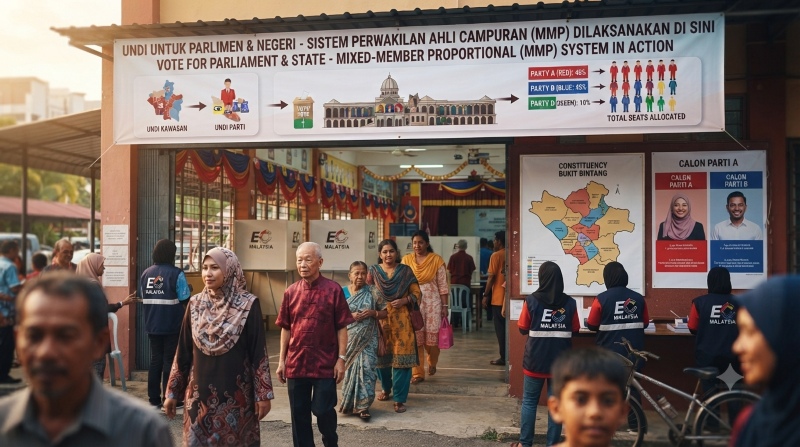
We instead propose a mixed-member proportional system. Under this model, voters choose a party, and the party fills its allocated seats from an internally compiled list.
This would guarantee representation for underrepresented minority groups, women and specialists who might otherwise struggle to win under a first-past-the-post system.
Unlike the current model in certain states, this approach would be more democratic. Seats are tied directly to a party’s proportional share of votes, not handed out by the executive. That gives the system clearer democratic legitimacy.
Germany and New Zealand both use this system today.
It is worth understanding Malaysia’s political culture before appointing assembly members to state assemblies.
What our democracy needs is elected representatives, chosen by the people. It also needs a system of proportional representation. Such a system would reflect each party’s true share of the vote. That would give broader democratic legitimacy to representation from minorities and marginalised groups.
AGENDA RAKYAT - Lima perkara utama
- Tegakkan maruah serta kualiti kehidupan rakyat
- Galakkan pembangunan saksama, lestari serta tangani krisis alam sekitar
- Raikan kerencaman dan keterangkuman
- Selamatkan demokrasi dan angkatkan keluhuran undang-undang
- Lawan rasuah dan kronisme






https://m.aliran.com/thinking-allowed-online/why-malaysia-needs-proportional-representation