
Kua Kia Soong
The irony of “pork barrel politics” is that it usually refers not to pigs, but to public spending designed to buy political support.
Yet Malaysia’s recent controversy over pig farming in Selangor brings the metaphor full circle: pork, politics, land and power entangled in a single policy spectacle.
The episode raises deeper questions about environmental governance, minority rights, economic rationality and the structural fragility of Malaysia’s food security regime.
Controversy
The Selangor pig-farming controversy did not erupt overnight. It unfolded through a series of missteps, miscommunications and political escalations.
- Sign up for Aliran's free daily email updates or weekly newsletters or both
- Make a one-off donation to Persatuan Aliran Kesedaran Negara (ALIRAN), Maybank a/c 507246118995 or CIMB a/c 8004240948
- Make a pledge or schedule an auto donation to Aliran every month or every quarter
- Become an Aliran member
In January 2026, the Selangor government clarified it was not expanding pig farming, but consolidating scattered farms into a centralised, modernised facility to improve hygiene and environmental management.
At the time, Selangor had 69 licensed operators and about 100,000 pigs supplying roughly 30% of state demand, down from 250,000 previously.
Amid public controversy and political noise in late January 2026, the Selangor government announced it would halt the Bukit Tagar project while exploring alternatives, acknowledging that communication had been premature and stakeholder engagement inadequate.
Then in February 2026, it was declared that pig farming should not be allowed in Selangor at all, citing environmental pollution risks, land scarcity and social tensions. Pork would instead be imported to meet non-Muslim demand.
Thus, a policy initiative initially framed as environmental modernisation ended in a quasi-ban, accompanied by a striking policy pivot towards import dependence.
Is importing pork rational?
At first glance, citing environmental protection, land constraints and social harmony as justifications appears pragmatic. Pig farming can generate odours, and wastewater and nutrient runoff, especially when poorly regulated.
But the leap from environmental risk to policy abandonment raises serious questions. If pig farming is environmentally harmful, then so are beef, poultry and aquaculture when mismanaged.
The solution in most other countries is not abolition but regulation: zoning laws, waste treatment mandates, manure-to-energy systems, environmental impact assessments, continuous monitoring and penalties.
Countries such as Denmark, the Netherlands and Germany have some of the most intensive livestock industries in the world, yet enforce strict environmental standards, including nutrient quotas, biogas capture and precision farming.
The problem is not husbandry; it is governance capacity.
One coherent position would be to argue that industrial animal agriculture is environmentally unsustainable and should be phased out in favour of plant-based proteins. That is a defensible ecological stance.
But that is not what is being proposed. Instead, Malaysia appears to be moving towards outsourcing environmental degradation to other countries by importing pork. This is neither ecologically sound nor geopolitically prudent.
Food security vulnerability
Malaysia already has a serious food security deficit. The self-sufficiency level for cattle and buffalo meat was only 15.9% in 2023, far below policy targets.
Malaysia imports large volumes of beef and lamb due to insufficient breeding stock and small-scale domestic production. Sheep meat imports averaged 32.8 kilotonnes annually between 2019 and 2021, with Australia and New Zealand supplying 99% of imports.
In short, Malaysia is already deeply import-dependent for red meat. Adding pork to this dependency expands its vulnerability to global price volatility, trade restrictions, disease outbreaks such as African swine fever, and geopolitical disruptions.
Indeed, Malaysia banned most pork imports from Spain as recently as December 2025 due to a disease outbreak – highlighting the fragility of import-based supply chains.
Importing meat is not just a food policy choice; it is a fiscal and macroeconomic decision. Meat imports widen the trade deficit. They increase exposure to foreign exchange risk. Domestic value chains – farmers, feed producers, veterinarians, processors – suffer.
In a middle-income economy seeking industrial upgrading, abandoning domestic agri-industries is an odd developmental strategy.
The controversy also exemplifies a deeper pattern: policy decisions driven less by evidence than by political symbolism.
Pig farming in Selangor is a minority consumption issue in a multiracial society, but its politicisation reveals anxieties over identity politics, the symbolic politics of land use and elite risk aversion in the face of moral panic.
The pig farm became a symbolic object, standing in for race, religion and governance competence – while the real policy questions of environmental regulation and food security were sidelined.
A coherent approach would instead involve centralised, regulated livestock zones with advanced waste treatment, mandatory environmental impact assessments and continuous monitoring, investment in biogas and circular agriculture to convert waste into energy and fertiliser, and transparent data on actual demand and production needs.
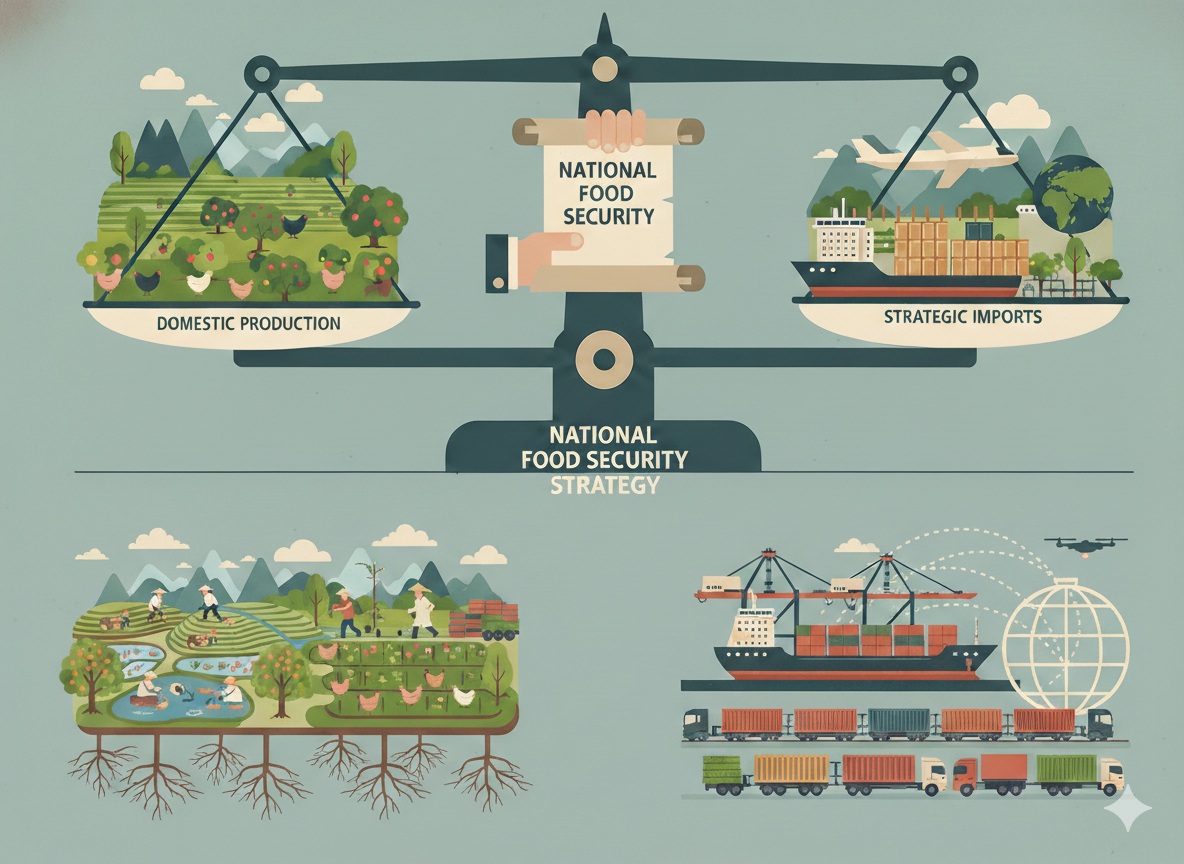
A national food security strategy must balance domestic production with strategic imports, not wholesale dependence.
If Malaysia chooses to abandon livestock industries entirely for ecological reasons, that is a legitimate ideological project – but it must be stated openly, debated democratically and integrated into a broader food system transition.
If Malaysia does not intend to abandon husbandry, then the Selangor pig-farming reversal represents policy incoherence masquerading as prudence.
Importing pork is not a solution to environmental governance; it is merely the relocation of environmental costs, economic risks and political responsibility beyond national borders.
Dr Kua Kia Soong, a former MP, is the director of human rights group Suaram.
AGENDA RAKYAT - Lima perkara utama
- Tegakkan maruah serta kualiti kehidupan rakyat
- Galakkan pembangunan saksama, lestari serta tangani krisis alam sekitar
- Raikan kerencaman dan keterangkuman
- Selamatkan demokrasi dan angkatkan keluhuran undang-undang
- Lawan rasuah dan kronisme
