Amir Hazwan Abdul Rahim and Ainol Haniza Kherul Anuwar
On our last afternoon in Semporna, as we were packing away dental chairs and folding tables, music from a portable speaker drifted through the hall.
After several long days of screenings, treatments and crowd management, our energy was flagging low.
Then, a group of children appeared at the doorway. Drawn by the rhythm, they slipped inside, laughing, dancing and pulling us into their joy as if we had always belonged there.
It was spontaneous and unplanned, yet it became the moment that stayed with us the most.
- Sign up for Aliran's free daily email updates or weekly newsletters or both
- Make a one-off donation to Persatuan Aliran Kesedaran Negara (ALIRAN), Maybank a/c 507246118995 or CIMB a/c 8004240948
- Make a pledge or schedule an auto donation to Aliran every month or every quarter
- Become an Aliran member
We had travelled to Sabah for Smile4U: Sustainable Mouthcare and Inclusive Learning for You, a corporate social responsibility initiative by the Faculty of Dentistry, University of Malaya, in collaboration with Universitas Muhammadiyah Yogyakarta and Dentistry for The Needy (DFTN).
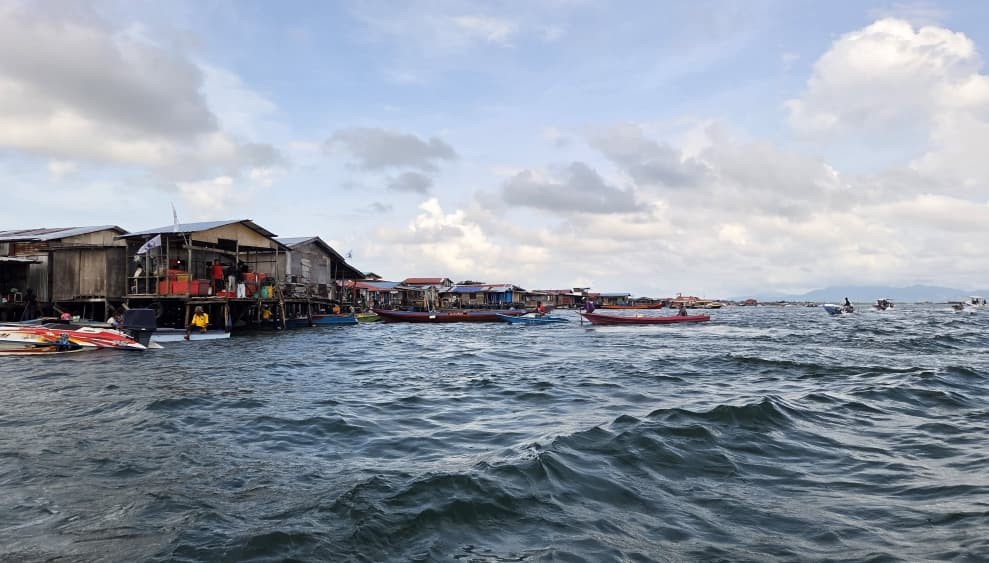
Our mission was straightforward: to provide dental screening, preventive care and essential treatment to a community with limited, and often uncertain, access. Most of our patients were from the Bajau Laut community, including children who are stateless.
Estimates suggest that more than 75% of Bajau Laut people in Sabah remain undocumented, living without legal identity, recognised citizenship or reliable access to basic services like healthcare and education.
Research from East Malaysia consistently shows higher rates of untreated decay, early childhood caries, and delayed treatment among underserved populations.
When poverty intersects with the absence of legal status, the gap becomes even more pronounced.
For many stateless children, dental care is so distant from the daily struggle for survival that it often feels like a foreign concept, mirroring the vulnerabilities faced by marginalised children throughout Malaysia.
Systemic barriers line every step of their healthcare journey, from registration issues, affordability concerns, transport challenges and the persistent fear of enforcement.
These barriers create preventable oral health crises: persistent toothaches, avoidable infections, premature tooth loss in children, and chronic pain that adults learn to live with because they have no alternative.
We knew that access to care was constrained, but even then, the turnout surprised us.
People arrived early and waited patiently. Some even returned the next day, not for treatment, but simply to express gratitude or accompany a neighbour.
Their humility moved us deeply. It reminds us how easily assumptions form when we stand at a distance, and how wrong those assumptions often are.
One colleague articulated it well: “Imagine desperately needing healthcare but never being able to reach it. For them, getting their teeth treated is a privilege, even a luxury.”
In Semporna, this was not an exaggeration; it was their everyday reality.
It made clear that the biggest barrier is often opportunity, not unwillingness or mistrust.
By the third day, the children had grown comfortable with us. They lingered around the hall, holding their younger siblings, peeking shyly at our equipment or offering small, fleeting smiles.
Their presence reminded us how powerful even simple, consistent care can be when it is delivered with respect and without judgement.
Which brings us back to that final evening. The exhaustion we carried briefly melted away when those children ran in, singing and dancing. Their joy did not erase the challenges they live with, but it pierced through our fatigue and grounded us in our purpose.
A quiet reflection stayed with us as we packed: I have enough – enough stability, enough access, enough privilege to serve. And now, a deeper awareness of how different life looks when even basic care remains out of reach.
As the equipment was loaded and the hall slowly emptied, we found ourselves wishing we could stay a little longer or at least return soon.
When care is rare, people value it deeply. Their sincerity stays with you long after you leave.
And if you are fortunate, they send you off with one last dance, one final reminder of why the work matters.
Dr Amir Hazwan Abdul Rahim is a lecturer and forensic odontologist at the Faculty of Dentistry, University of Malaya. Dr Ainol Haniza Kherul Anuwar is a senior lecturer and dental public health specialist at the same faculty.
AGENDA RAKYAT - Lima perkara utama
- Tegakkan maruah serta kualiti kehidupan rakyat
- Galakkan pembangunan saksama, lestari serta tangani krisis alam sekitar
- Raikan kerencaman dan keterangkuman
- Selamatkan demokrasi dan angkatkan keluhuran undang-undang
- Lawan rasuah dan kronisme