
By Gina Netto
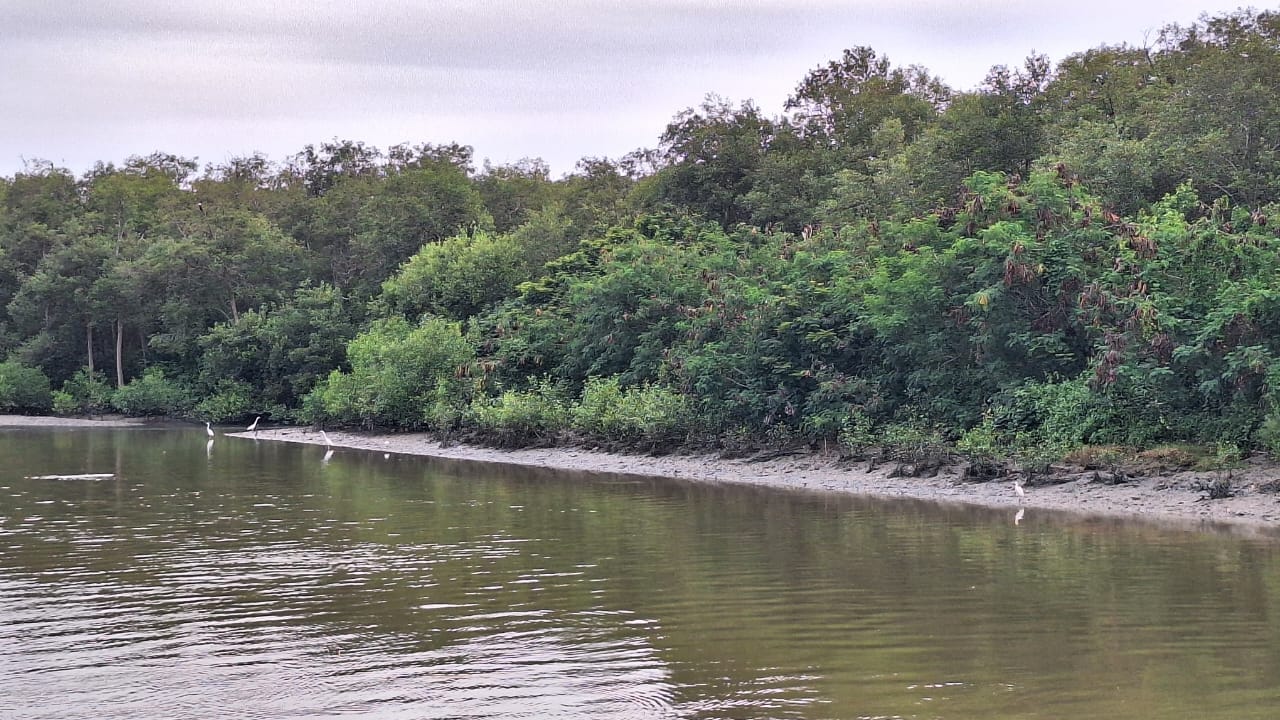
How would you like to cross the mouths of four rivers within a couple of hours to check out what’s happening in a protected habitat which attracts migratory shore birds and waders from as far away as Russia?
And stop to take in the sight of endangered and near-threatened birds along with countless white egrets?
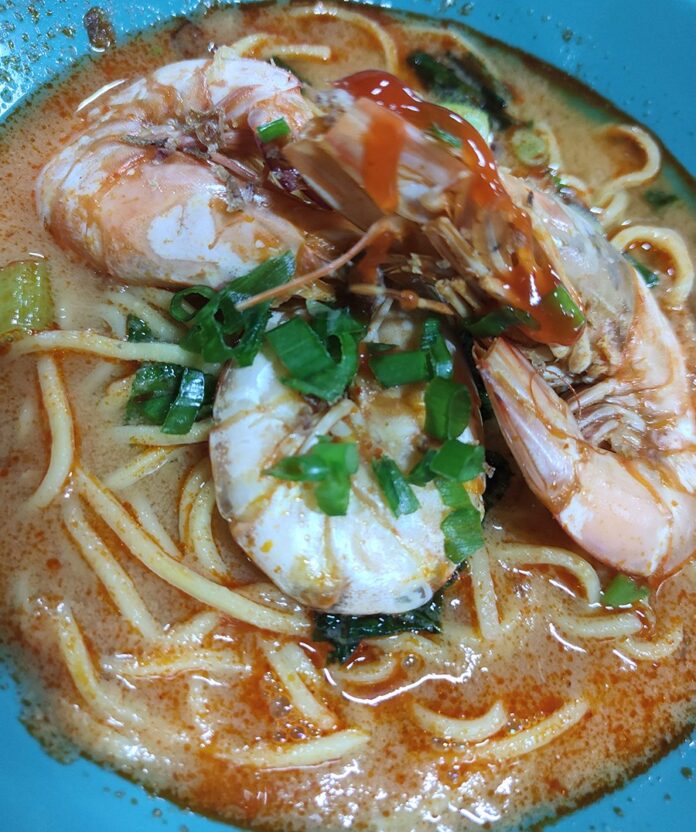
Have a chat with a local fisherman along the banks of one of the rivers, then take your pick of the many eateries for a piping hot bowl of mee udang (prawn noodles)?
And then end the day’s work watching the sun rapidly sinking behind Penang Island, just several kilometres away from an idyllic stretch of sandy white beach called Pantai Telok Malas (Lazy Bay Beach)?

- Sign up for Aliran's free daily email updates or weekly newsletters or both
- Make a one-off donation to Persatuan Aliran Kesedaran Negara (ALIRAN), Maybank a/c 507246118995 or CIMB a/c 8004240948
- Make a pledge or schedule an auto donation to Aliran every month or every quarter
- Become an Aliran member
Well, that is just part of an ordinary day in the life of plastics scientist Tan Choo Eng, secretary of the Penang branch of the Malaysian Nature Society (MNS).
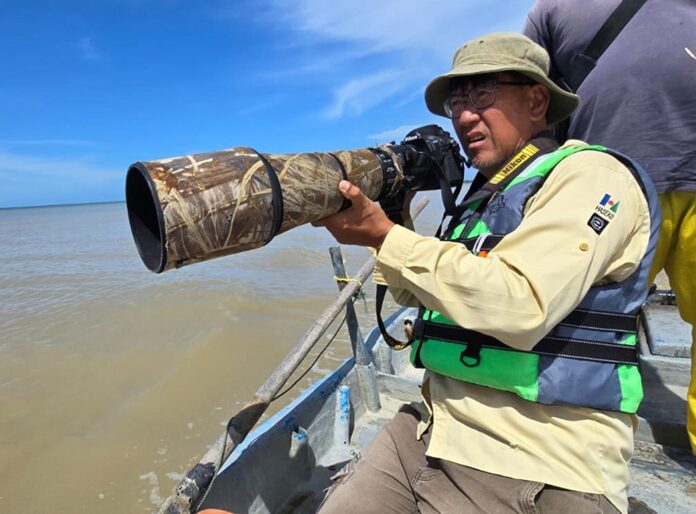
For over 20 years, Choo Eng has been regularly visiting, working in and documenting the flora, fauna and wildlife in the Teluk Air Tawar–Kuala Muda Important Bird and Biodiversity Area. Located in the northern region of mainland Penang (Seberang Perai), this coastal strip is traversed by four rivers – Sungai Abdul, Sungai Lahar Endin, Sungai Tembus and Sungai Muda.
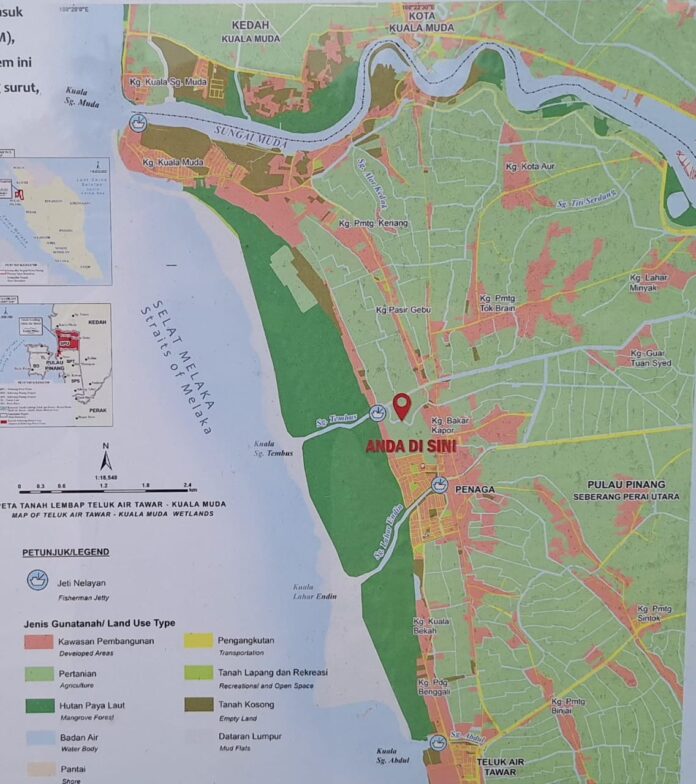
For homo sapiens, the area, which stretches for 10km, is linked by roads which pass through a string of villages. The roads are fringed by coconut, oil palm, banana and other trees of varying hues, local schools, a couple of stunning mosques and endless paddy fields, as well as many inviting and cosy eateries.
But for the migratory shore birds and waders, the mudbanks which flank the sea and the mangrove swamps of this coastal stretch are an important resting place on a much longer journey from the Russian Far East to Australia and New Zealand. A significant portion will stop here – being the terminus of their southbound migration, and “over winter” here before heading north, returning home the following spring in about six months. The route they take follows the East Asian–Australasian flyway (flyways being the term used to refer to the routes that migratory birds travel along).
The birds include shore birds and waders such as the Spoon-billed sandpiper, a critically endangered species, as well as endangered species such as the Nordmann’s greenshank and Far Eastern curlew.
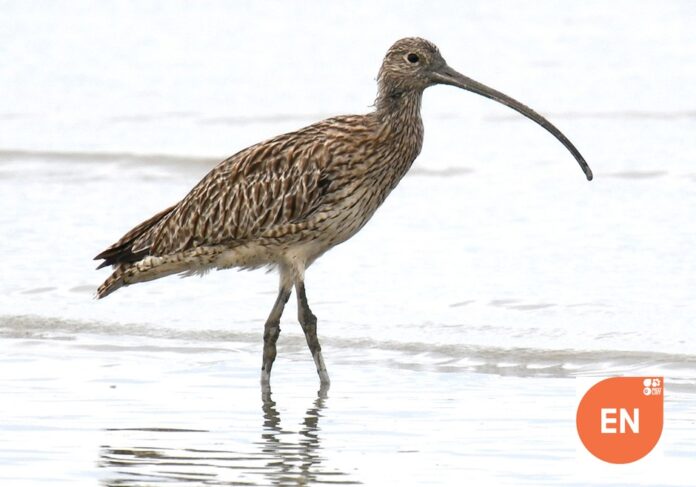
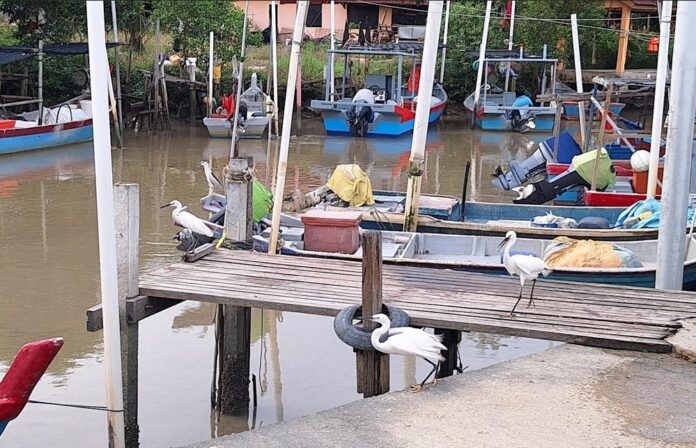
Countless white egrets, of varying species, some of which are native to Malaysia, are also part of the attraction. Along Sungai Tembus, these dazzlingly graceful creatures, whose colour outsparkles freshly laundered white clothing, can be seen fighting off each other and resident cats for small fish left by fishermen on a small pier.
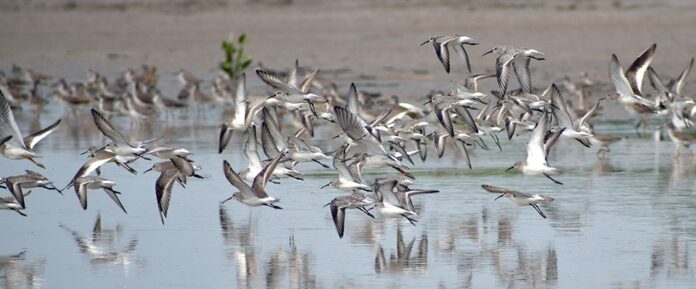
Choo Eng estimates that in peak season, the area attracts an astounding 15,000 to 20,000 birds. The areas where they can be found in greatest numbers vary from season to season and even month to month.
Why such an important bird and biodiversity area has remained nearly unknown is, in Choo Eng’s words, “puzzling”. Perhaps the limited visibility of the area is not entirely undesirable. Wetlands such as this coastal strip have been identified as among the world’s richest ecosystems, crucial for biodiversity, mitigating the impacts of climate change and human wellbeing.
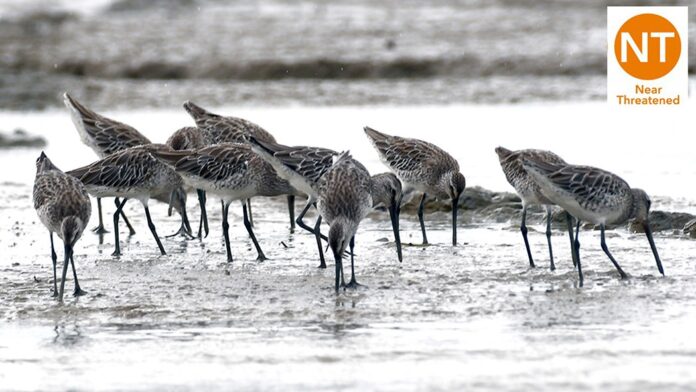
The mangrove swamps provide an essential stopping point for migratory birds to rest and feed before the next stage of their long journey. They also provide many valuable services to local residents, protecting the area from flooding and tsunamis and supporting local fishing villages.
Perhaps more than most people, Choo Eng and others at MNS are aware of the tensions between promoting environmentalism, entrepreneurship and ecotourism. They know the delicate balance which needs to be struck between conserving wildlife, protecting biodiversity, educating the public, sustaining local livelihoods and raising awareness of this strip.
‘Birding’ is a major part of the work undertaken by MNS, a membership organisation of 2,000, as part of a wider interest in the protection of endangered species and habitats, such as the mangrove swamps which make up the precious ecosystem here.
Other work which Choo Eng undertakes with members of MNS includes ID-ing (identifying) snakes, reptiles, amphibians and mammals as well as the flora to monitor the biodiversity of this strip, which encompasses forest reserves and other state land.
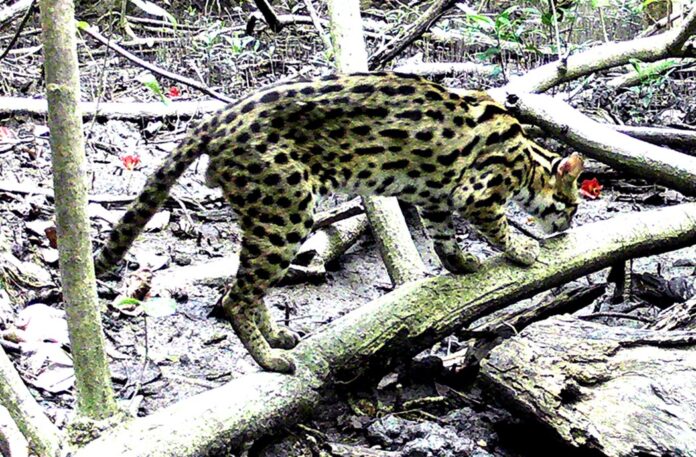
Highlighting the importance of the conservation work undertaken by MNS and others working in the area, in 2013, the area was identified by Birdlife International as being at very high risk of potential land conversion due to the lack of a ‘buffer zone’ with developed areas.
This is indeed easily apparent to the casual visitor. Barriers appear to be completely absent; instead, local residents appear to be living, working and relaxing in close proximity to the migratory and other birds.
For instance, apart from a thriving local fishing community and a popular local stall overlooking the Sungai Abdul river mouth, a small boatyard is in operation. Here, colourful paddle boats and other small vessels anchored along the river catch the eye. Some of these boats could be ideal for ecotourism activities along the coast and rivers in the area.
Sadly, elsewhere along the seafront lie heaps of unsightly plastic bottles along the high-tide mark, an insidious threat to the water, soil and diverse wildlife of the area.
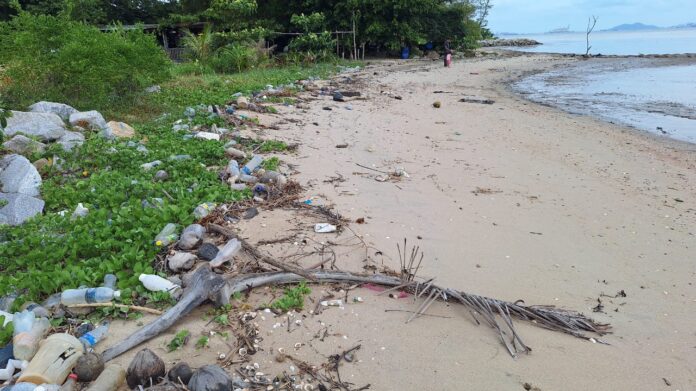
Choo Eng, a keen photographer whose drive and enthusiasm for his work is infectious, describes this rich biodiversity coastal strip as a “hidden gem”. Indeed, one does not need to be a bird lover to come to the same conclusion on experiencing the unique beauty of this special place: it’s a natural treasure, still so little known, even within the Seberang Perai area, let alone the wider region and country.
While this jewel is recognised as “Kesas” (Kawasan Ekologi Sensitif Alam Sekitar or ecologically sensitive area), further environmental support, legal protection and international recognition would help to ensure the sustainability of the area for generations to come.
Prof Gina Netto specialises in migration studies and teaches human geography and spatial planning at Heriot Watt University’s Edinburgh campus. She regularly travels between her hometown in Butterworth and Edinburgh.
AGENDA RAKYAT - Lima perkara utama
- Tegakkan maruah serta kualiti kehidupan rakyat
- Galakkan pembangunan saksama, lestari serta tangani krisis alam sekitar
- Raikan kerencaman dan keterangkuman
- Selamatkan demokrasi dan angkatkan keluhuran undang-undang
- Lawan rasuah dan kronisme

This stretch of coastal land should and must be preserved for our future generations as many nature reserves along the Peninsular west coast in other states had long been exploited a long time ago. A damaged ecosystem took decades to heal and recuperate. Once the area fell into greedy hands they can never restore its original beauty. Penang State Exco members should table an extra bill to protect this nature enclave. The benefit may be seen in the coming decades.