
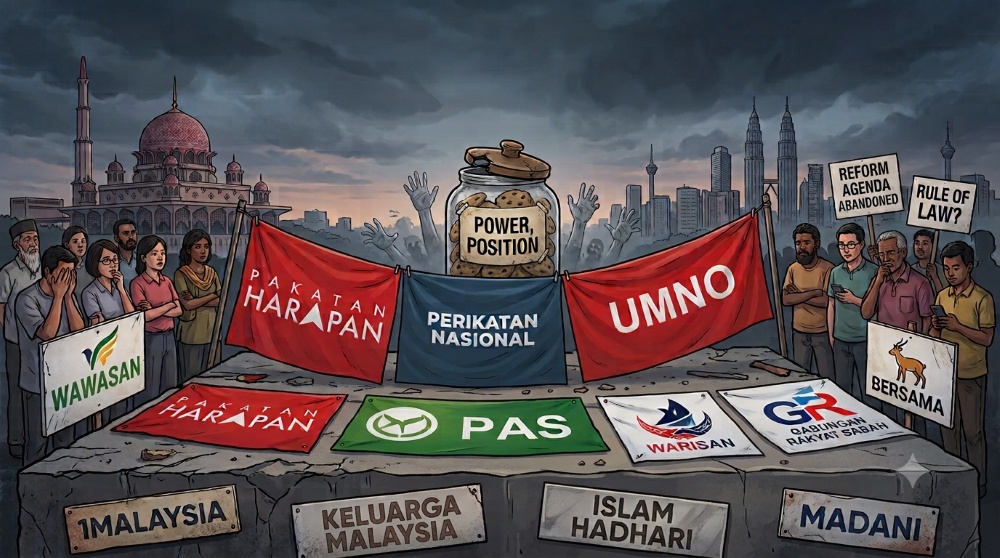
The temperature is rising as the Johor state election on 11 July draws closer.
The stakes are high, hence the aggressive campaigns by stakeholders on the ground and online.
All in, 172 candidates are contesting 56 seats in the state. They come from the three main coalitions – Pakatan Harapan (PH), Barisan Nasional (BN) and Perikatan Nasional (PN) – as well as smaller parties.
These include Bersama, fielding 15 candidates, and Muda, fielding four. Parti Orang Asli Malaysia (Asli) and the socialist party PSM are each contesting one seat, along with six independents.
The ‘unity government’ partners in Putrajaya, namely PH and BN, meet in Johor not as allies but as keen rivals, with each contesting all 56 state seats.
- Sign up for Aliran's free daily email updates or weekly newsletters or both
- Make a one-off donation to Persatuan Aliran Kesedaran Negara (ALIRAN), Maybank a/c 507246118995 or CIMB a/c 8004240948
- Make a pledge or schedule an auto donation to Aliran every month or every quarter
- Become an Aliran member
The competition becomes stiffer when the two coalitions face off in 14 of these seats in the race to seize power in Johor. In this intense contest, both coalitions must make offers that look different from each other. Each is trying to outdo the other for voters’ hearts.
To show how different Johor BN is from PH, its chief Onn Hafiz Ghazi pointed out that PH has yet to fulfil its promises to the state. Only then, he said, could PH talk about new pledges.
He was referring to delayed projects under the PH-led federal government, such as the Sultanah Aminah hospital 2 and the Pasir Gudang hospital.
In contrast, he added, BN’s manifesto simply continues the ‘Maju Johor’ agenda launched in 2022 – in other words, no big promises left unfulfilled.
However, this claim cuts both ways. It suggests that BN, a partner in the federal ‘Madani’ (trustworthy) administration, had not pushed hard enough to get those two projects built.
This is despite Umno president Zahid Hamidi being Deputy PM and Rural and Regional Development Minister.
Personal jibes turn ugly
Fierce campaigning can be politically bruising, especially when rivals’ innuendos turn cutting.
For instance, in one video clip, Zahid took a jibe at an opponent in the Johor polls. If the clip is genuine, it suggests Umno is willing to cross a line to show its resurgent defiance.
Zahid said, among other things, that his party was not born on the streets, did not hold demonstrations, and was not led by a political dynasty.
Umno members in the audience seemed to know who he meant, judging by the burst of laughter that followed.
A top DAP politician also mocked the height of a political opponent – who was alleged to have thought ‘highly’ of himself.
DAP secretary general Anthony Loke pointed out that a confrontational approach was inevitable, especially when confronted by “friendly fire”.
Although Umno information chief Azalina Othman Said insisted biting remarks would not disrupt the so-called unity government, trading barbs could still leave rivals scarred, politically and psychologically.
These frictions could spill over into the upcoming Negeri Sembilan and Malacca state elections. A triumphant party may grow bold enough to leave a trail of skirmishes that damages the fragile federal alliance.
Misuse of government resources
However, if there is one thing both PH and BN appear to agree on, it is the questionable practice of announcing government projects for the people or using government resources during the campaign period.
To be sure, PH itself opposed this practice when it was in opposition, regarding it as an unfair inducement by the incumbent to sway voters.
That is why Muda president Amira Aisya Abdul Aziz accused both PH and BN of committing election offences during the campaign by using government resources to woo voters.
For instance, she said Umno secretary general Asyraf Wajdi Dusuki, who is also Mara chairman, held a Mara TVET (technical and vocational education and training) programme together with the BN candidate for the Tiram seat.
Electoral watchdog Bersih raised concerns over the alleged use of government assets in the Johor campaign, including the broadcast of a PH ceramah on RTM.
Voters should be concerned that this suggests the ends justify the means in the pursuit of power – and that it undermines the principle of a free and fair election.
Fear as a campaign tool
Similarly, PN entered the fray with the stated aim of ensuring that Malay-Muslim leadership prevails in this election – a strategy that is potentially divisive in a diverse society.
That is why the main PN party Pas, particularly its president Hadi Awang, reminded ethnic Malays in the state that voting was obligatory, and urged them to choose only Malay-Muslim candidates.
Warning Malays not to vote for PH, on the grounds that this is the same as supporting the DAP, is tantamount to indirect ethnic demonisation.
Not to be outdone, Dr Mahathir Mohamad waded in with a similar point. Malays must act collectively to save “Tanah Melayu” (the Malay homeland), said the man who once promoted the inclusive concept of ‘Bangsa Malaysia’ (the Malaysian people).
And recently, the former chief of Umno’s youth wing, Khairy Jamaluddin, also used the same playbook, reminding the Malay community in Negeri Sembilan to vote for Umno-BN to protect its interests.
It is the tired politics of fear and victimhood peddled by fearmongers in the country.
You don’t build a confident community by instilling fear, as this could make parts of such a community vulnerable to manipulation by some of its own leaders.
PN, under Pas leadership, is vying for 33 seats, while also calling on Pas supporters to back Umno in constituencies it is not contesting.
Umno leaders were, predictably, gleeful.
This is a fluid alliance with a long game in mind.
In a sense, this overture also reflects Pas’ enduring desire to rekindle its relationship with Umno, which once bloomed under the now-defunct pact called Muafakat Nasional.
A revived MN may prove useful if Umno wins in Johor, and gains momentum in the other contests in Negeri Sembilan and Malacca – and possibly beyond.
This strategy also fits Pas’ mantra to unite the ummah (Muslim community), despite the ironic rallying cry of ‘Pas for all’.
Although Pas has officially severed ties with Bersatu, Bersatu remains a member of PN, which is why it still campaigns under the PN banner.
Although Pas is not taking part in Bersatu ceramahs, Pas campaigners appear to have quietly told Pas supporters to back Bersatu in the seats the latter is contesting.
What voters should weigh
Johor voters need to cut through the fog of confrontational narratives, electoral promises and shifting alliances to identify what matters most before marking the ballot paper.
The politicians have had their say on the hustings. It is time for voters to have theirs at the ballot box.
The principles outlined in the work-in-progress People’s Agenda, drafted and updated by Aliran, may help guide that decision.
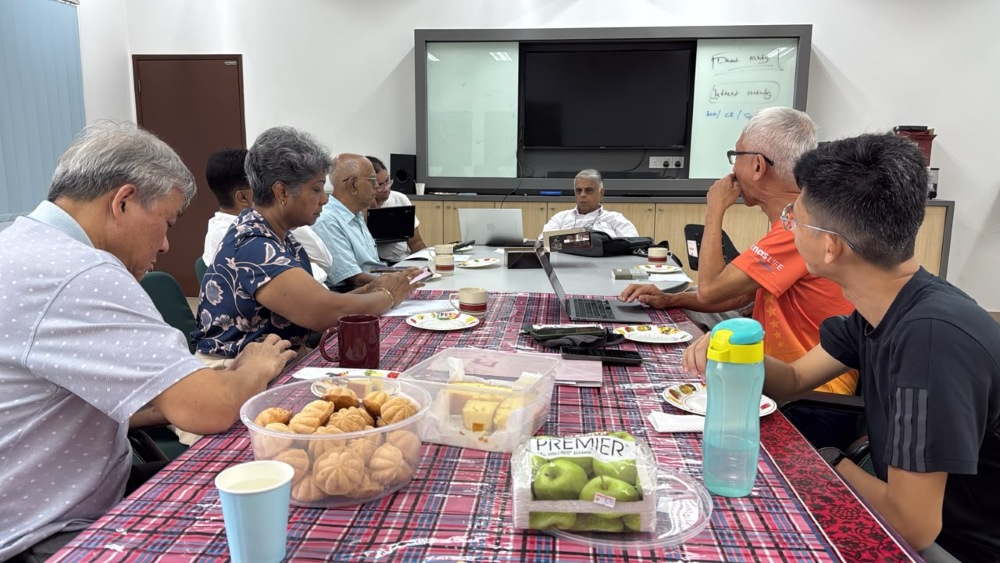
First, choose parties or candidates that put a premium on the dignity and quality of life of ordinary people.
This means creating an economy that provides jobs and empowers lower-income groups. This also means adequate healthcare, affordable housing and quality education for all.
Second, choose a government that promotes equitable, sustainable development and addresses the climate crisis. Malaysia, for instance, should opt for more solar energy instead of nuclear.
Third, the multi-ethnic nature of Malaysian society means political leaders must celebrate diversity and promote inclusivity. Discrimination and hate speech poison a harmonious, progressive society.
Fourth, there must be a genuine will to save democracy and uphold the rule of law. This means ensuring all legislation protects human rights, due process and basic freedoms, and restoring local government elections. It also means repealing repressive laws.
Fifth, there must be political will to fight corruption and cronyism. This can be done by reforming the Malaysian Anti-Corruption Commission, enacting a political financing act, and abolishing political appointments.
Please do your part to help us fine-tune the People’s Agenda by dropping a comment here.
Amid the fight for political survival, especially among the various coalitions and parties, it will be worth watching what Johor voters consider most important – for themselves and for the rest of the country.
Mustafa K Anuar
Co-editor, Aliran newsletter
8 July 2026
AGENDA RAKYAT - Lima perkara utama
- Tegakkan maruah serta kualiti kehidupan rakyat
- Galakkan pembangunan saksama, lestari serta tangani krisis alam sekitar
- Raikan kerencaman dan keterangkuman
- Selamatkan demokrasi dan angkatkan keluhuran undang-undang
- Lawan rasuah dan kronisme
