It is that season of the year again – when we celebrate Malaysia’s independence and its formation.
Beyond the usual festivities, this is also a moment to reflect on how far we have come, what we have become, and where we are heading. It is a time to be grateful for what we have, and hopeful for what is to come.
Merdeka (independence) means to free or to liberate. Over six decades on, there is still plenty of liberating left to do. That means freeing society from deep inequality, prejudice and bigotry.
At the heart of it lies the real spirit of Merdeka: multicultural, multireligious, cosmopolitan, inclusive and open. It is what makes this country special.
This spirit has long been part of our society, shaped by our strategic location at the meeting point of East and West. We have always welcomed strangers from around the world, and we take pride in our pluralistic, accepting history.
- Sign up for Aliran's free daily email updates or weekly newsletters or both
- Make a one-off donation to Persatuan Aliran Kesedaran Negara (ALIRAN), Maybank a/c 507246118995 or CIMB a/c 8004240948
- Make a pledge or schedule an auto donation to Aliran every month or every quarter
- Become an Aliran member
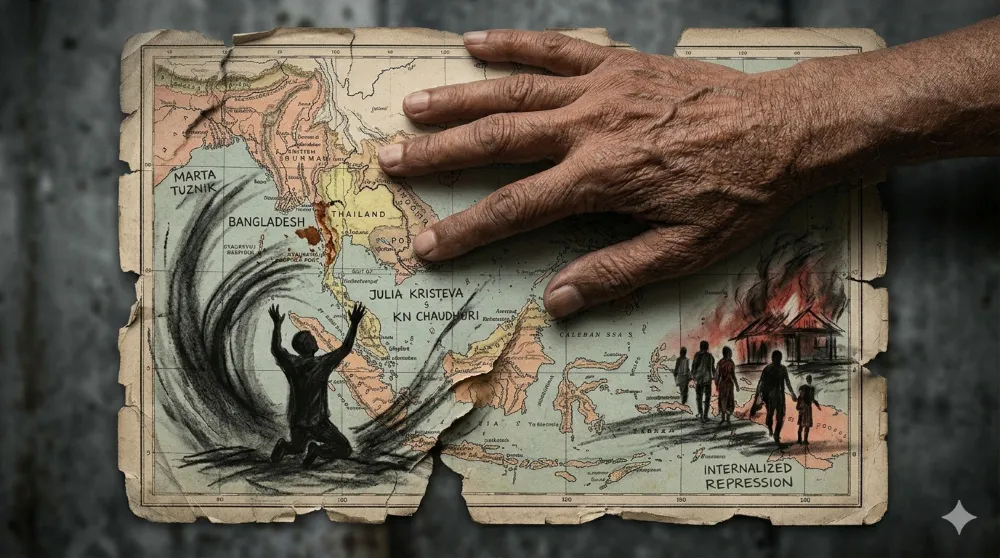
That is why the current wave of xenophobic hate against Rohingya refugees and undocumented residents is so worrying. It runs against the character of a society known for its warm hospitality.
Long before Malaysia became a country, it was a safe destination for people fleeing poverty and oppression elsewhere. The same is true for the refugees and undocumented migrants here today.
A troubling wave of hate
So why is this hate rising now? Why are Rohingya being targeted at this particular moment?
The timing points to political opportunism by certain irresponsible actors. Stirring up hate against outsiders is a tried and tested tactic, one used to deflect attention from people’s real struggles.
The cost of living keeps rising. Wages are stagnating. Youth unemployment and underemployment remain high at around 10%, even though the overall unemployment rate is just 3%.
AI’s growing presence in our lives is making things worse. Why pay people a living wage when machines can do the job faster and cheaper?
It is easy to see why the public, especially young people, feel frustrated and angry. Many see the government as beholden to the elite and out of touch with ordinary struggles.
For those in power, stirring up hate against the most vulnerable, refugees and undocumented migrants, is a convenient way to shift public anger elsewhere. It also props up flagging popularity.
We have seen this play out before. During the Covid pandemic, Rohingya refugees and migrant workers were rounded up in mass raids, accompanied by a vicious disinformation campaign. It looks a lot like what is happening now.
Back then, it distracted the public from holding the ‘backdoor’ Perikatan Nasional government accountable. That administration, which took power without a general election, refused to open Parliament and failed to support people struggling through the lockdowns and other restrictions.
The government has changed since, but the playbook remains the same.
No need to reinvent the wheel
Setting emotion aside, what should Malaysia actually do about refugees and undocumented migrants? Like it or not, they are here to stay and are already an inextricable part of our social fabric.
Those who hate lump refugees and undocumented migrants together. But they are two distinct groups with different legal statuses.
A refugee holds officially recognised status under the UN refugee agency, which comes with certain rights. An undocumented migrant is simply someone working in Malaysia without a permit.
Understanding this difference, let us look at the issue objectively, in a way that actually benefits the country.
Rohingya refugees in particular are not going anywhere until they are resettled elsewhere – a process that can take years. They are human beings who deserve basic rights: access to education, healthcare and work that lets them live with dignity. Denying or restricting these rights risks creating bigger social problems for Malaysia down the line.
So what should they do while they wait? Sending them back to Myanmar is not an option – it would amount to a death sentence.
Malaysia does not need to reinvent the wheel here. Many countries have integrated refugees successfully. Refugees are often willing to take on difficult jobs that locals tend to avoid and that Malaysia already outsources to migrant workers, documented and undocumented alike.
In turn, refugees pay taxes and contribute to the economy by buying goods and services from local businesses. Refugee children can go to school, and some may grow up to make a real contribution to Malaysia. Who knows? There could even be a future Nobel laureate among them.
When given a second chance
There are plenty of shining examples of refugees thriving when given a second chance.
Ilhan Omar, the four-term Congress member from Minnesota, arrived in the US as a four-year-old refugee from Somalia. She is now part of ‘The Squad’, a progressive group in the US Congress that campaigns on social justice and stridently opposes the disastrous policies of the Donald Trump administration.
In 2023, Ryyan Alshebl, a Syrian refugee, was elected mayor of Ostelsheim, a small town near Stuttgart, Germany. He arrived in Germany eight years earlier without speaking a word of German. Through hard work, and Germany’s integration efforts, he went on to be elected as a public servant, repaying the community that had helped him.
Success stories like these are common. Many Rohingya now resettled in the US and Australia fondly recall their years in Malaysia, the kindness and warmth shown to them by generous, big-hearted people here.
That is the Malaysia I know and love. Not one that spews venom and death threats to people who have lost everything except their lives, and whose only wish is to be treated with basic decency.
The people of Malaysia I know would not post laughing emojis under the tragic story of a Rohingya father and his two young sons who died in a house fire in Bagan Serai. Compassionate, empathetic people would not harass Rohingya children on their way to school, or force such schools to close.
In the spirit of Merdeka, I want to call on my fellow citizens: let us ‘merdekakan’ (free, liberate) our minds from the shackles of hatred and bigotry. It is the least we can do, not just as Malaysians, but as decent human beings.
Azmil Tayeb
Co-editor, Aliran newsletter
1 September 2026
AGENDA RAKYAT - Lima perkara utama
- Tegakkan maruah serta kualiti kehidupan rakyat
- Galakkan pembangunan saksama, lestari serta tangani krisis alam sekitar
- Raikan kerencaman dan keterangkuman
- Selamatkan demokrasi dan angkatkan keluhuran undang-undang
- Lawan rasuah dan kronisme