Malaysia’s political landscape is facing uncertainty for many reasons.
The royal clemency decision on a former prime minister’s imprisonment has produced a public dispute over its implementation, with the palace publicly insisting that the King’s pardon be respected while the Attorney General’s Chambers sought legal clarification.
Excitement is also brewing over structural realignments ahead of the coming general election.
The palace, Umno and the Attorney General’s Chambers have taken distinct positions on the pardon’s implementation, creating a three-cornered political and legal dynamic. Two recent essays among many – here and here – capture that dynamic.
Reading them together suggests eight further angles worth watching. None replaces the original explorations.
- Sign up for Aliran's free daily email updates or weekly newsletters or both
- Make a one-off donation to Persatuan Aliran Kesedaran Negara (ALIRAN), Maybank a/c 507246118995 or CIMB a/c 8004240948
- Make a pledge or schedule an auto donation to Aliran every month or every quarter
- Become an Aliran member
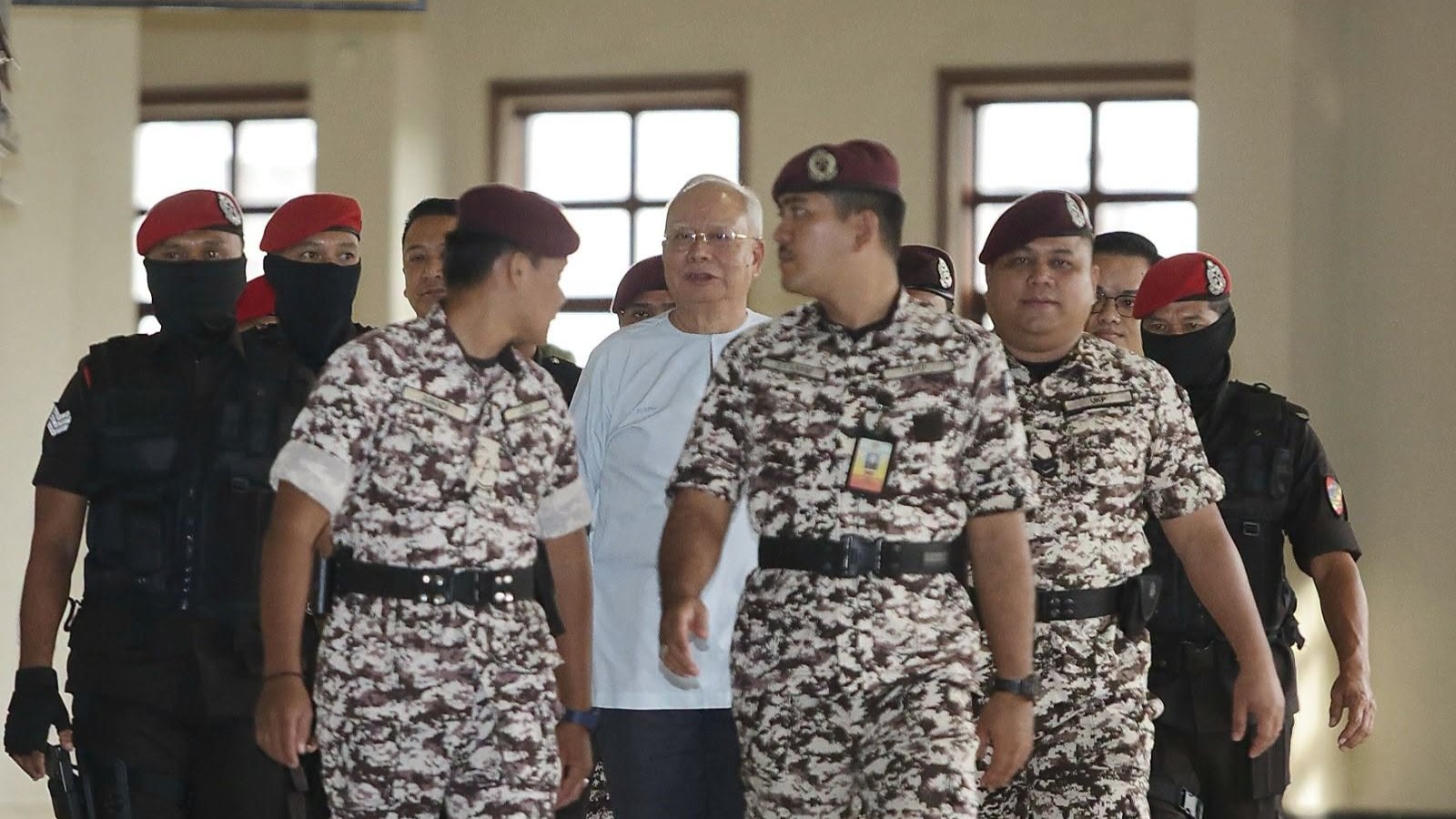
Concerned observers will offer other, deeper analyses now that the former prime minister has returned home to serve the remainder of his sentence under ‘house arrest’.
Courts, cash and the appeal
First, the courts have a say too.
Many analyses see the pardon as a tug-of-war between the palace and the Attorney General’s Chambers over how the royal pardon and the court’s ‘discharge order’ should be implemented.
But the courts have the final say on what the discharge order actually means.
If a judge reads “discharge forthwith” narrowly, the judiciary may reassert its authority over the implementation of criminal sentences.
If the court adopts an interpretation that facilitates the pardon’s implementation, it may clarify how the royal prerogative of pardon interacts with the court’s authority to determine the legal effect of its own orders.
If the court declines to rule, the uncertainty may continue.
Whichever way, the judiciary is not just a venue – it is a fourth player.
Second, a party paying a convict’s fine sets a precedent.
When Umno’s solidarity fund paid Najib’s RM50m fine, something structural happened. The convict did not pay from his own pocket. His party did. The money came from contributions collected through the Najib Razak solidarity fund, after the conditional pardon was announced.
This transfers loyalty from the individual to the organisation. It may encourage future political elites to expect a similar rescue. Any jailed politician with a factional base can now argue for similar treatment.
The worry is not only about opening the floodgates to litigation. It extends to pardon petitions too.
Third, the 1MDB appeal could change everything.
Najib still has a 15-year sentence from the 1MDB case, which is under appeal. If the Court of Appeal overturns the conviction or reduces the sentence, the sentence queue collapses.
The political picture changes completely. An acquitted Najib walking free after August 2028 is a very different figure from one still serving time. If the conviction stands, the current analysis holds.
The appeal is arguably the largest unknown. It belongs on every observer’s watchlist.
Lessons from 2018 and abroad
Fourth, the 2018 Anwar pardon worked differently.
Anwar Ibrahim’s 2018 royal pardon closed a wound and unified the new Pakatan Harapan government.
The 2026 Najib pardon arguably does the opposite. It widens the Umno-DAP split, has prompted debate over the Attorney General’s Chambers’ role and independence, and energises the opposition.
The 2018 pardon enjoyed broad cross-coalition support. The 2026 pardon does not.
The 2018 pardon was framed as fixing a political persecution. The 2026 pardon is perceived by many critics as rewarding a financial crime.
There is also concern about how to distinguish stabilising pardons from destabilising ones.
Fifth, foreign watchers are paying attention.
International bodies track the 1MDB saga through US Department of Justice proceedings under the Kleptocracy Asset Recovery Initiative. There were also the Goldman Sachs settlements.
Switzerland’s Federal Criminal Court in Bellinzona convicted PetroSaudi executives Tarek Obaid and Patrick Mahony of fraud, criminal mismanagement and money laundering in 2024.
Any domestic process that appears to short-circuit criminal accountability may weaken Malaysia’s global standing and competitive edge. Sovereign rating analysts and foreign investors are sensitive to perceived rule-of-law decline.
Not everyone in the ruling coalition bears this cost equally. Capital tied to global markets pays the reputation bill, while domestic rent captures the political upside.
Pressure and counter-moves
Sixth, civil society will not stay quiet.
The Malaysian Bar, Bersih, Projek Sama, other civil rights groups and public-interest litigants may test whether the discharge order and the party-fund payment can be challenged in court.
These actors may not hold state power. But a political landscape with only combatants and no resisters is not a real contest but a parade.
Civil society mobilisation is itself a signal. It rises precisely when the Attorney General’s Chambers and the courts seem hesitant or under pressure.
Seventh, Sabah and Sarawak may demand more.
The 56 parliamentary seats in Sabah and Sarawak are often counted as a numerical bloc. East Malaysian parties historically distance themselves from peninsular Malay-Muslim politics.
The Najib pardon is heavily peninsula-coded. If the pardon energises peninsular nationalism, it may push Borneo parties towards tougher autonomy posturing.
Those 56 seats may behave less as a swing bloc and more as a demanding one, extracting Malaysia Agreement 1963 (MA63) concessions in exchange for supporting any federal government.
Eighth, each move forces the next counter-move.
The defining insight from many blogs is this: in a coalition held together by mutual vulnerability, the side that fears losing most moves first.
Umno moved first on the fine. DAP issued its reform ultimatum. Bersatu and Pas have sought to position themselves as alternatives to, or partners of, Barisan Nasional amid the coalition’s strains.
The pardon, the fine, the discharge, the court clarification, Najib’s homecoming, the Malacca election and the timing of the next general election form a cascade, not a chain of separate events.
The Malacca election on 14 November is an early test. The 1MDB appeal is the next to watch.
The hornets’ nest has fallen.
AGENDA RAKYAT - Lima perkara utama
- Tegakkan maruah serta kualiti kehidupan rakyat
- Galakkan pembangunan saksama, lestari serta tangani krisis alam sekitar
- Raikan kerencaman dan keterangkuman
- Selamatkan demokrasi dan angkatkan keluhuran undang-undang
- Lawan rasuah dan kronisme