Ann Teoh
The lessons from the “tragedies” of the enforced disappearances of Pastor Raymond Koh and Amri Che Mat must be translated into durable reforms, the chair of Malaysia’s human rights commission Suhakam has said.
Hishamudin Md Yunus called on the government, Parliament, the courts, enforcement agencies and civil society to work together to achieve these reforms.
He made the remarks in his keynote address at a public forum held at the Bar Council auditorium on 6 December.
The forum, titled Justice for the Disappeared: What the Raymond Koh and Amri Che Mat Decision Means for Human Rights in Malaysia, was organised by the National Human Rights Society (Hakam).
- Sign up for Aliran's free daily email updates or weekly newsletters or both
- Make a one-off donation to Persatuan Aliran Kesedaran Negara (ALIRAN), Maybank a/c 507246118995 or CIMB a/c 8004240948
- Make a pledge or schedule an auto donation to Aliran every month or every quarter
- Become an Aliran member
“The judgment of the High Court is not an end but a summons to action,” Hishamuddin said.
Also present at the forum were Amri’s wife, Norhayati Mohd Ariffin, and Koh’s wife, Susanna Liew.
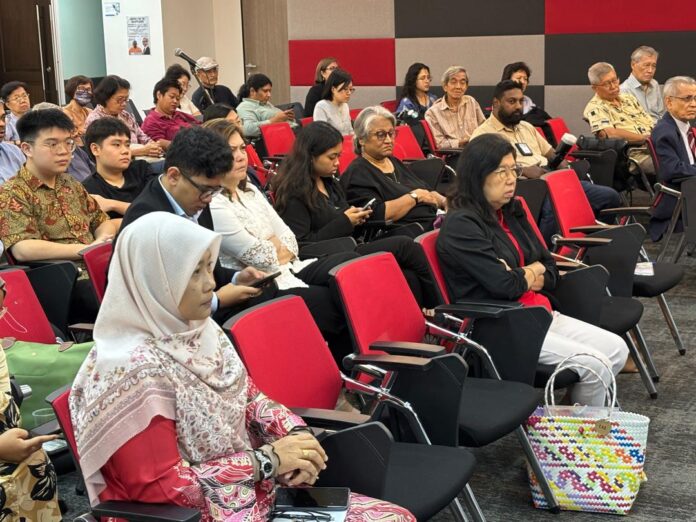
On the discussion panel were Professor Gurdial Singh Nijar, Jerald Gomez and Surendra Ananth. Also speaking was former Suhakam chair Mah Weng Kwai, who led Suhakam’s 2019 inquiry into the two men’s disappearances.
The closing speech was delivered by Hakam president M Ramachelvam.
“As a nation, we must take this moment seriously,” Hishamudin said.
“This judgment invites us to reflect on the kind of institutions we want – institutions that protect rights, uphold the law and serve the people with honour.
“It reminds us that human rights are not theoretical ideals, but living principles that must guide our actions, policies and decision-making.”
Suffering is real, prolonged
Hishamudin said the spouses and families of Koh and Amri have endured emotional hardship and uncertainty over eight years.
“Their resilience is a testament to the strength of the human spirit and the unyielding desire for truth,” he said.
“As a society, we must honour their courage by ensuring that our institutions respond with integrity, compassion and a commitment to justice.”
High Court Judge Su Tiang Joo decided on 5 November that the police and government were responsible for the abductions of Koh and Amri. Su also found that the police failed to conduct proper investigations into the disappearances.
Su’s findings aligned with those of Suhakam and a special task force set up by the cabinet.
Su awarded RM3m each in damages to Liew and Noryahati, and RM2m to Koh on top of an ongoing award of RM10,000 a day from the date of his disappearance until he is found.
Amri was abducted in Perlis on 24 November 2016, and Koh in Selangor on 13 February 2017. Both abductions used the same modus operandi, including the use of golden-coloured Toyota Vios cars and overlapping personnel.
Liew sued in her personal capacity and on behalf of Koh, while Norhayati sued only in her personal capacity.
While Suhakam’s findings are publicly available, the findings of the special task force were kept secret until the court compelled their disclosure during the proceedings.
“Let us remember that the pursuit of truth and justice is not the responsibility of the courts alone,” Hishamudin said.
“It is a shared responsibility of institutions, of public officials, of civil society and of every individual who believes in fairness and humanity.”
“The recent court judgment acknowledged something deeply human: that the suffering of families in cases of enforced disappearance is real, prolonged and cannot be dismissed as speculative.
The court made another powerful observation, Hishamudin said, that no amount of compensation can bring closure in such cases.
“Financial remedies, while important, cannot replace the truth. What families seek is not only justice, but knowledge of what had happened to their loved ones.
“Without truth, the wound remains open, and uncertainty becomes a quiet form of suffering that follows them every day. Only disclosure and a sincere effort to uncover the truth can bring dignity back to the lives affected.
He added that enforced disappearance is a “continuing violation” because the pain does not end until the truth is known.
Recommendations
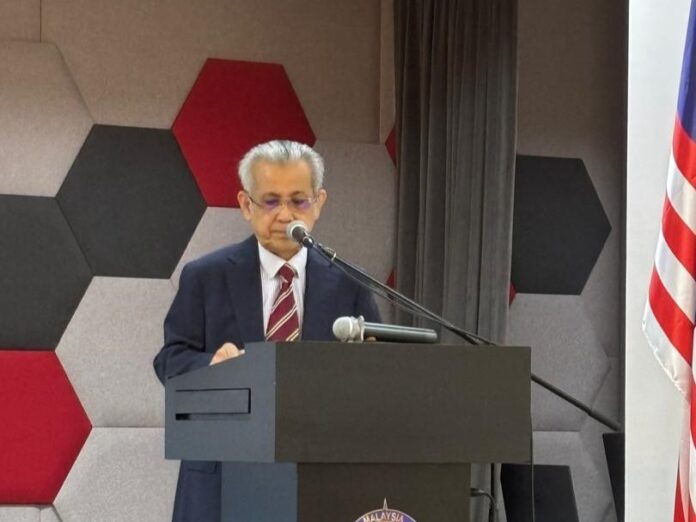
Hishamudin made five recommendations on the way ahead.
The reinvestigation on the disappearances of Koh and Amri, as ordered by the court, is to be carried out with independence, professionalism and transparency, and must be adequately resourced. This is necessary not only to ensure justice but also to restore public trust in key institutions. The reinvestigation, he said, should also extend to the disappearances of Joshua Hilmy and Ruth Sitepu, who is an Indonesian citizen, as Malaysia has a duty to safeguard the rights of foreigners.
He said reforms were needed to strengthen both internal police accountability mechanisms and independent oversight. These include improving internal disciplinary processes, strengthening command responsibility, enhancing external monitoring and boosting parliamentary oversight. Such measures, he said, were vital to closing systemic gaps that allow misconduct to go unchecked.
Malaysia should also consider acceding to the International Convention for the Protection of All Persons from Enforced Disappearance, which would signal a clear rejection of the practice in all its forms.
Hishamudin said Parliament should enact specific legislation criminalising enforced disappearance. The absence of a standalone domestic offence weakens the state’s ability to respond effectively. Such legislation should codify the state’s duties to search for the disappeared, preserve evidence, prevent concealment and provide rights to families.
Finally, he said the state must ensure protection for families, witnesses and individuals who come forward. He said Malaysia needs to create a safe environment for truth-telling, enabling victims to be heard and ensuring the justice system protects those seeking justice. Such safeguards should include protection programmes, psychosocial support and legal assistance.
Ann Teoh, an Aliran member, is a strategic communications specialist based in Petaling Jaya.
AGENDA RAKYAT - Lima perkara utama
- Tegakkan maruah serta kualiti kehidupan rakyat
- Galakkan pembangunan saksama, lestari serta tangani krisis alam sekitar
- Raikan kerencaman dan keterangkuman
- Selamatkan demokrasi dan angkatkan keluhuran undang-undang
- Lawan rasuah dan kronisme