
A Sivarajan
It was less than a month ago that Prime Minister Anwar Ibrahim spoke emotionally about the need to build a new humane international global order, referring to the hypocrisy of leaders who preach human rights while annihilating Palestinians from their land.
Anwar referred to Frantz Fanon, the psychiatrist and revolutionary thinker, asserting that even though countries have achieved independence, they continue to be subjugated because of postcolonialism. Fanon argued that colonised elites are bankrupt of ideas and ideals, as were their colonisers.
Who would have thought that he himself would display the characteristics of a leader bankrupt of ideas and courage to stand up to postcolonial subjugation by imperialist powers from the Global North.
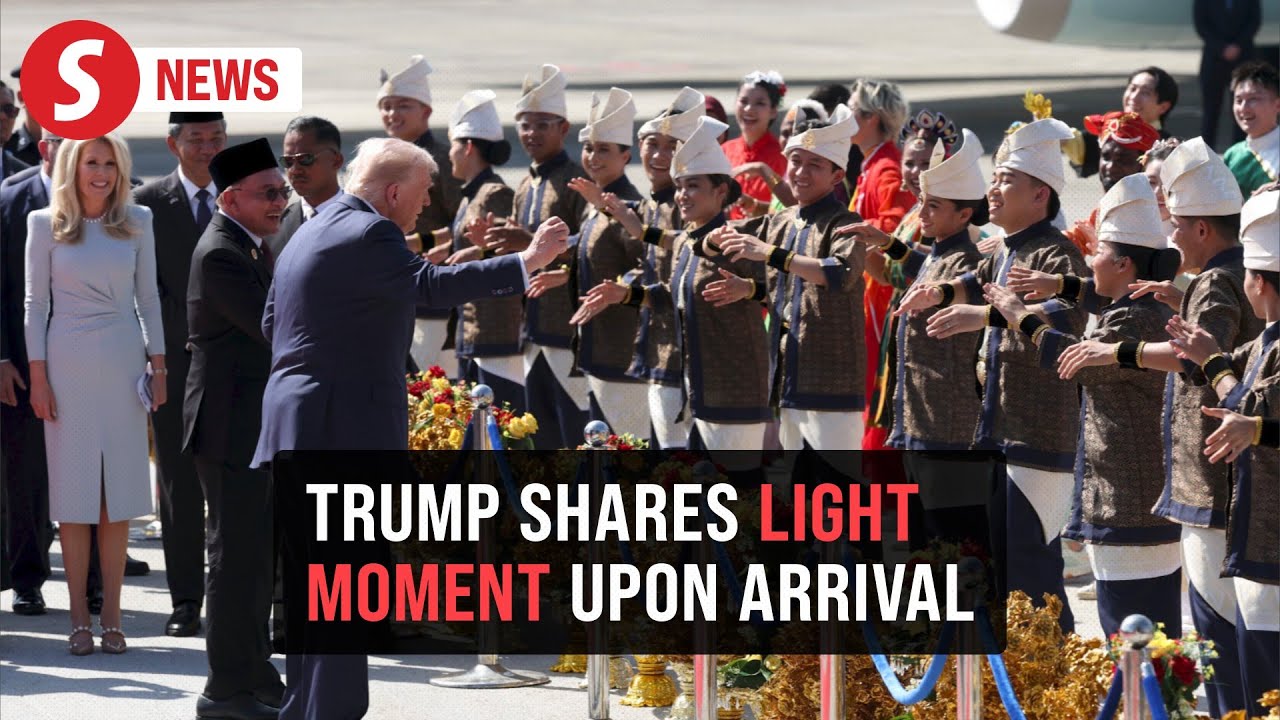
Many progressive observers watched in shock as Anwar’s appeared to capitulate when he danced along with Trump upon the US President’s arrival for the recent Asean summit.
- Sign up for Aliran's free daily email updates or weekly newsletters or both
- Make a one-off donation to Persatuan Aliran Kesedaran Negara (ALIRAN), Maybank a/c 507246118995 or CIMB a/c 8004240948
- Make a pledge or schedule an auto donation to Aliran every month or every quarter
- Become an Aliran member
Both leaders were presumably dancing for different reasons.
Trump was dancing in anticipation of signing a trade deal that sealed unrestricted extraction of critical minerals from Malaysian soil and other trade benefits for the US economy.
Anwar, for his part, was seemingly exhibiting the reality of developing countries that continue to dance to the tune of developed countries.
Trump’s bold and haughty attempt to draw the Asean chair into the US economic fold during a summit for Global South economies must be noted.
With the US-Malaysia ‘reciprocal’ trade agreement, the US appears to have sabotaged attempts by countries of the Global South to sit down and map out their own economic course, based on the mutual prosperity of South-South cooperation. It has also limited Malaysia’s economic policy flexibility.
Members of Anwar’s own party have raised concerns over the agreement, especially on issues relating to Malaysia’s trade relationship with countries that might not be aligned with the US, such as the Brics countries – Brazil, Russia, India, China and South Africa.
This disagreement is due to the contentious Article 5.1 of the agreement that explicitly requires Malaysia to adopt measures with “equivalent restrictive effect” against any trade partner when the US imposes trade restrictions for economic or national security reasons.
But Malaysia’s international trade and industry minister has defended Article 5.1, claiming it has an escape clause that requires Malaysia to mirror US sanctions only if Malaysia faces similar security threats.
However, there is no reason for trading partners to dictate such terms in the first place. Trade terms should not dictate how we treat another trading partner, as any sovereign economy has the right to negotiate varied terms that best serve its interests with different countries.
Such clauses are an extension of the problematic ‘most favoured nation’ clause that dominates US-led free trade agreements, where developed countries demand the same trade treatment that a developing country might give another developing or less developed country.
This potentially undermines Malaysia’s economic sovereignty, as it could force the government to follow US rules and regulations to discipline the Global South away from an alternative economic bloc such as Brics.
There are multiple contentious issues in the recent trade agreement. For example, the agreement requires Malaysia to accept US in-house certification, such as the US Food and Drug Administration, for food exports from the US into Malaysia. Malaysia also seems to have been pressured into agreeing to “streamline” halal certification requirements to facilitate imports of US products.
Whilst Putrajaya seemed to have bent over backwards to accommodate US requests, the agreement falls short of a truly reciprocal one that produces mutual benefits for the Malaysian economy.
Malaysian exports into the US market will still be subject to a 19% tariff, except for some exempted products (such as coconuts, bananas, pineapples, guavas, durians, coffee, ginger, turmeric, curry spices, crude palm oil, tapioca, minerals, including rare earths, pharmaceutical products, chemicals, aircraft parts, wood, stainless steel, alloy steel, electrical and electronics).
On the other hand, Malaysia has cut over 1,000 of its tariffs on US goods, providing significant preferential market access for US industrial goods exports.
The US has also compelled Malaysia to exempt all its agricultural and seafood exports from Malaysia’s sales and service tax (SST). This would mean cheaper imported fruit, nuts and seafood in Malaysian supermarkets, increasing competition for local food producers.
Furthermore, Putrajaya has allowed duty-free import quotas of up to:
- 28,783 live swine
- 500,000kg of pork
- one million US bird eggs
- two million litres of US milk and cream
It has also committed to import or buy:
- 30 Boeing aircraft (plus 30 optional) for the Malaysia Aviation Group
- three million tonnes per year of US liquefied natural gas for Petronas valued at $2bn per year
- coal worth $43m per year for power generation for Tenaga Nasional Bhd
- $119m worth of telecoms products and services for Telekom Malaysia
The US has always targeted Malaysia’s rare earth reserves to counter China’s global dominance. Malaysia’s rare earth deposits are estimated at 16 million tonnes, with valuations estimated to be as high as RM800bn.
Through this agreement, the US has explicitly ensured that Malaysia will not be able to impose any bans or export quotas on rare earth mineral exports to the US.
Without local expertise and technological knowledge to refine rare earth elements, Malaysia is forced to remain a low-value supplier of raw, unrefined minerals, missing out on opportunities to develop in-house high-value processing capabilities.
Dependency theory scholars explain this subjugation of developing economies as when “the economy of certain countries is conditioned by the development and expansion of another economy to which the former is subjected” (Dos Santos, 1970).
They argue that through hegemonic control of the world market, “core economies” (developed countries) impose surplus extraction structures that enable the transfer of surplus generated in “peripheries” (developing countries) to the core.
Thus, the continuous appropriation of surplus values provides development to the core economies because of the underdevelopment of the periphery.
Malaysian officials may remain bullish about Malaysia’s current RM120bn worth of electrical and electronic exports to the US, which accounts for about 20% of the country’s total electrical and electronic exports.
But Samir Amin, an Egyptian-French economist, explains that periphery economies like Malaysia will never be able to graduate up the global value chain because the core economies in the Global North have skilfully consolidated high-value strategic industrial activities for themselves.
This global division of labour (inherited from the colonial economic structure) is sustained when periphery economies, which previously supplied raw materials, move on to manufacturing primary components for the core’s higher-end final products. This division is reinforced by the possession of technological advancement by the core, which continues to perpetuate unequal value exchange and dependency (Amin 1976).
There is a lack of comprehension among local policymakers of the manipulative and coercive tactics of the Global North core economies that persistently subjugate and bind developing countries through such lopsided trade agreements, sustaining periphery economies as providers of cheap labour and natural resources.
Preserving our economic and political sovereignty requires ideological clarity and courage rather than captivating rhetoric at conferences. It was truly disappointing to see Anwar capitulating to Trump’s agenda just weeks after calling for “a new just and humane international order” as an alternative to the unbridled capitalism unleashed by the US.
Putrajaya must re-evaluate its commitments in this agreement, which has clearly eroded Malaysia’s economic sovereignty.
Furthermore, it has drawn us closer to the US and away from other key economies that are truly gravitating towards a plausible “new international economic order” free from US hegemonic power.
We truly need to stop dancing to the tune of the imperialists from the Global North.
A Sivarajan is a central committee member of the socialist party PSM.
AGENDA RAKYAT - Lima perkara utama
- Tegakkan maruah serta kualiti kehidupan rakyat
- Galakkan pembangunan saksama, lestari serta tangani krisis alam sekitar
- Raikan kerencaman dan keterangkuman
- Selamatkan demokrasi dan angkatkan keluhuran undang-undang
- Lawan rasuah dan kronisme
