
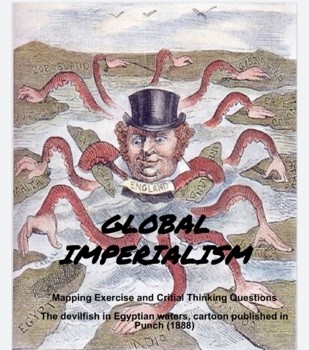
The National Security Archive’s January 2026 disclosure on the US invasion of Panama and the so-called ‘Barr Doctrine’ is not merely a historical revelation.
It exposes how executive power has been legally reconstructed to operate above international law – and why repeated claims of a “rules-based international order” increasingly ring hollow.
At the heart of these disclosures are secret legal opinions authored in 1989 by William P Barr, then assistant attorney general in the US office of legal counsel. These opinions asserted that the US president possesses “inherent constitutional authority” to act unilaterally abroad, even when such actions violate customary international law, the UN Charter, or bypass congressional authorisation.
What is revealed is not an exception, but a durable legal architecture of neo-imperial power – one that continues to shape US conduct today.
The Barr Doctrine
Barr’s 1989 office of legal counsel opinions advanced a radical proposition: international law does not meaningfully constrain US executive action.
- Sign up for Aliran's free daily email updates or weekly newsletters or both
- Make a one-off donation to Persatuan Aliran Kesedaran Negara (ALIRAN), Maybank a/c 507246118995 or CIMB a/c 8004240948
- Make a pledge or schedule an auto donation to Aliran every month or every quarter
- Become an Aliran member
According to this reasoning, the president may deploy the military for law enforcement purposes, arrest individuals on foreign soil, and override treaty obligations if deemed necessary.
These opinions were written and maintained in secrecy. Several remain classified more than three decades later. When legal doctrines governing war, regime change and extraordinary rendition are hidden from public scrutiny, democratic accountability collapses.
Law ceases to function as a restraint and becomes a protective shield for power.
This legal reasoning effectively transforms international law into a discretionary tool – binding on weaker states, optional for stronger ones.
The declassified documents challenge the familiar narrative that Panama was a one-off intervention justified by Manuel Noriega’s criminality.
CIA assessments warned that Noriega might retaliate by releasing evidence implicating US officials in the Iran-Contra affair. National Security Council minutes reveal deliberate escalation to provoke conditions for his removal.
A classified policy addendum proposing a ‘snatch’ operation to seize Noriega acknowledged that international condemnation would be severe – but predicted it would fade quickly if the operation succeeded.
This was not miscalculation. Rather, it was imperial risk management.
Panama served as a testing ground where unilateral force, legal exceptionalism and managed international outrage proved politically sustainable.
From Panama to Venezuela
The relevance of this doctrine today is made explicit by a December 2025 opinion by assistant attorney general T Elliot Gaiser, which reportedly relied on Barr’s 1989 reasoning.
That opinion asserted that the US president may use military force for law enforcement purposes without congressional approval and without regard to international law.
Context strongly suggests that this reasoning underpins discussions surrounding extraordinary rendition against Venezuelan President Nicolas Maduro – including reliance on a still-classified Barr opinion suggesting that the inadvertent killing of a foreign head of state does not pose significant legal risk.
This continuity across administrations shows that the problem is structural, not partisan. Neo-imperialism today is sustained by institutionalised legal exceptionalism embedded deep within executive governance.
The Barr Doctrine inverts the traditional role of law. Instead of limiting power, law is repurposed to legitimise it.
Prohibitions on assassination are reinterpreted. Sovereignty becomes conditional. Congressional oversight is sidelined. International law is reduced to rhetoric.
This logic mirrors broader patterns in contemporary geopolitics: targeted killings, sanctions regimes devastating civilian populations, covert destabilisation, and selective humanitarian concern – all justified through internal legal reasoning unavailable to the public.
(Source: National Security Archive, January 2026)
What this means for Asean
For Malaysia, Asean and the wider Global South, these revelations strike at the core of global governance. States are urged to respect sovereignty, non-intervention and multilateral norms. Yet the most powerful actors reserve the right to suspend these principles when inconvenient.
This legal asymmetry explains why international law appears decisive when applied to weaker states, but negotiable when Palestine, Venezuela or other non-aligned societies are involved. It also exposes the vulnerability of Asean’s longstanding commitment to neutrality in an era of intensifying great power rivalry.
If rules apply selectively, then the international order is not rules-based at all – it is hierarchy-based.
The National Security Archive’s disclosures perform a vital public service. They remind us that defending international law requires more than affirming principles. It requires exposing the legal architectures that hollow those principles out from within.
For societies committed to non-alignment, multilateralism and peaceful coexistence, the challenge is clear: international law must bind the powerful first, or it will serve only as an instrument of domination.
Otherwise, imperial prerogative will continue to masquerade as constitutional authority – and global norms will remain tools of convenience rather than foundations of justice.
AGENDA RAKYAT - Lima perkara utama
- Tegakkan maruah serta kualiti kehidupan rakyat
- Galakkan pembangunan saksama, lestari serta tangani krisis alam sekitar
- Raikan kerencaman dan keterangkuman
- Selamatkan demokrasi dan angkatkan keluhuran undang-undang
- Lawan rasuah dan kronisme
