
By Tan Wah Piow
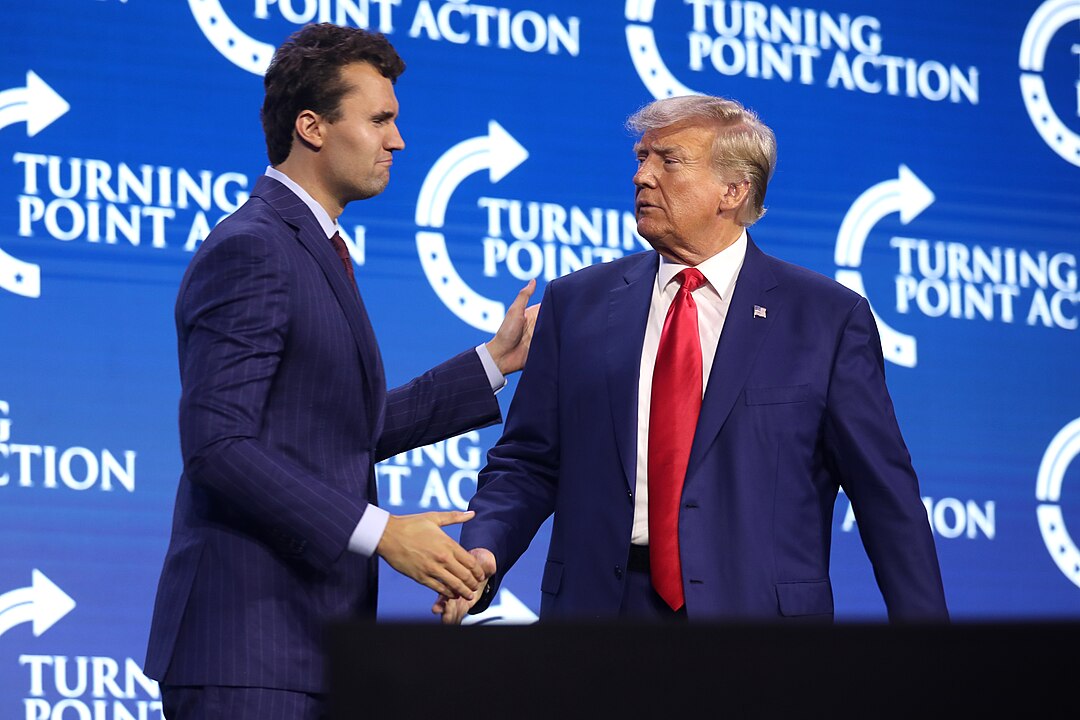
The assassination of Charlie Kirk – founder of Turning Point USA and a leading figure of the Maga right – is more than a political tragedy. It has become a prism through which both the left and the right interpret the crisis of Western democracy.
Lim Teck Ghee, the Malaysian public intellectual, argues that Kirk’s killing “marks the decline in perceived moral authority in the US and outside it. The event has also diminished the perception of the US as a beacon of stable democracy and a force for progressive social change on the international stage.”
Lim is right. A system that sells itself as the global guardian of democracy cannot easily survive the symbolism of political violence on its own soil. But the assassination is not only about America’s image abroad. It is already become a rallying point for the forces of right-wing populism, forging closer ideological links across the Atlantic.
European commentators note how the rhetoric of ‘Maga’ (Make America Great Again) is fusing with ‘Mega’ (Make Europe Great Again).
- Sign up for Aliran's free daily email updates or weekly newsletters or both
- Make a one-off donation to Persatuan Aliran Kesedaran Negara (ALIRAN), Maybank a/c 507246118995 or CIMB a/c 8004240948
- Make a pledge or schedule an auto donation to Aliran every month or every quarter
- Become an Aliran member
For the populist right, Kirk’s death is proof that the liberal establishment is willing to silence its critics by any means. Whether or not this is true is beside the point. In politics, perception matters more than fact. Kirk’s death has given populists both a martyr and a unifying symbol.
Economic roots
To see why this resonates, we need to look beyond personalities. For decades, working classes in the US and Europe benefited from the spoils of globalisation: cheap goods, easy credit, rising consumption.
That era is ending. As production and wealth shift eastward, wages stagnate, public services erode, and housing becomes unaffordable. A growing class of ‘precariats’ — gig workers, temporary staff, contract labour – face little security and few prospects.
Traditional two-party systems have proven unable to arrest this decline. Governments change, but policy direction does not. No one has offered a convincing blueprint to deal with these structural shifts.
Populist vacuum
Into this void steps populism. Migrants and refugees – statistically minor contributors to crime or unemployment – become convenient scapegoats. Petty crime is amplified into a civilisational threat.
Meanwhile, politics drifts into endless cultural battles over gender, race and identity. These debates may be real, but they do little to address the bread-and-butter anxieties of daily life.
Right-wing populists thrive in this environment. Their appeal lies not in solving systemic problems but in offering clarity in a time of confusion. They point fingers at immigrants, at globalist elites, at the liberal left. And now, with Kirk’s assassination, they can point to blood on the streets as proof that their opponents are not just wrong, but dangerous.
Two takeaways, one risk
The assassination produces two simultaneous outcomes.
For liberals and progressives, it undermines their claim to moral authority as almost as soon as the assassination happened, US President Donald Trump unfairly placed the blame on the Democrats. Lies stick. If democracy is defined by peaceful debate, then violence at the heart of the West corrodes its credibility. For the populist right, however, Kirk’s death is energising. It strengthens the symbolic bridge between Maga and Mega, feeding the sense of persecution that binds these movements together.
The greater danger is what comes next. Political violence, once normalised, rarely remains isolated. Each side justifies escalation as ‘self-defence’. What begins as one assassination may metastasise into cycles of retribution, deepening polarisation and eroding what remains of the democratic centre.
Here, Trump plays a decisive role. His partisan promise of “retribution” against the Democrats is not a solution but part of the problem – a politics of vengeance that substitutes payback for policy and punishment for reform.
If enacted, it would not heal divisions but harden them, turning the US into a battleground where power changes hands not to govern, but to settle scores.
And now comes the troubling spectacle abroad: the glittering royal reception of Trump by King Charles at Buckingham Palace, a gesture driven by Britain’s short-term economic interests.
Such a symbolic endorsement may embolden Trump further in his crusade against the liberal democratic superstructures he blames for America’s decline. It will also resonate with the extreme right in both the US and Europe, legitimising their conviction that liberal democracy is an enemy to be dismantled rather than defended.
Warning for the West
With its structural political crisis at home, made more pressing by a deepening economic malaise, it is time for the US and Europe to put their own houses in order.
For the moment, they should learn to eat humble pie, step back from preaching governance abroad, and recalibrate their foreign policy objectives. Before teaching the world how to govern, they must relearn how to govern themselves.
Tan Wah Piow is a former Singapore student leader who, since 1976, has lived in political exile in London.
AGENDA RAKYAT - Lima perkara utama
- Tegakkan maruah serta kualiti kehidupan rakyat
- Galakkan pembangunan saksama, lestari serta tangani krisis alam sekitar
- Raikan kerencaman dan keterangkuman
- Selamatkan demokrasi dan angkatkan keluhuran undang-undang
- Lawan rasuah dan kronisme

Well said article Aliran.