Miguel Enrique Stédile
Recently, before the first round of Brazil’s presidential elections, the US embassy and consulates in the country remained closed, following a generic order from the State Department regarding ‘security concerns’.
Elections in Brazil proceed peacefully. There are no civil conflicts or military threats, no records of political violence above normal levels, nor any threats to American citizens or diplomatic structures.
But the decision, followed solely and inexplicably by the Australian embassy, is part of a set of actions by Washington to attempt to interfere in the Brazilian elections.
The actions began more than a year ago, when the US linked increased tariffs on items imported from Brazil to the ongoing process to try former President Jair Bolsonaro for an attempted coup d’état.
- Sign up for Aliran's free daily email updates or weekly newsletters or both
- Make a one-off donation to Persatuan Aliran Kesedaran Negara (ALIRAN), Maybank a/c 507246118995 or CIMB a/c 8004240948
- Make a pledge or schedule an auto donation to Aliran every month or every quarter
- Become an Aliran member
The relationship between political pressure to prevent the conviction of an ally and economic measures was publicised by the White House itself, as well as used to persecute the Supreme Court Justice responsible for the trial, blocking financial movements in the US and preventing his entry into the country, and with ministers of the Lula da Silva government.
A document delivered to Brazilian diplomats presented 21 demands to the Brazilian government including, among them, guaranteeing freedom for what the US calls ‘political dissidents’; advantages for the US in accessing Brazilian critical minerals; and not regulating big tech firms.
The list of demands is instructive for understanding why the Brazilian elections are so important to Trump.
Brazil is rich in minerals, especially those fundamental to the technology industry, used in chip manufacturing and data centre installation. It also has numerous sources of renewable energy, especially hydroelectric and solar. It is beginning to prospect a new oil region in the Amazon area, near the blocks explored by ExxonMobil in Suriname and Guyana.
Furthermore, Brazil’s largest trading partner is China, and both are part of the Brics bloc.
Brazil is also not a signatory to the Shield of the Americas, the contemporary version of Operation Condor, and chose the Chinese initiative for AI cooperation instead of the US proposal.
Additionally, on the map of South America, Brazil is one of the few countries not governed by a Trump ally. And it is not a small country, but a regional leader with presence in international articulations.
Therefore, one understands not only the economic and public actions, but also the clandestine ones unleashed from Washington.
On 30 September, the British newspaper The Guardian revealed that Donald Trump’s government allocated $1m to a project called ‘Combating Weaponized Litigation and Censorship in Brazil,’ aimed at funding civil society organisations that challenge the actions of the Supreme Federal Court.
The funds are part of a package of 43 grants totalling $177m, destined for conservative projects in various countries. The same State Department that remains silent about its own foreign influence scheme now sponsors the ‘defence of freedom of expression’ in Brazil.
Before that, in July, Trump tried to send two State Department officials to meetings with authorities and civil society entities to question the electronic voting machines used in Brazilian elections.
This is one of the main narratives of the Brazilian far right that – despite having elected a president and most parliamentarians – insists that elections are fraudulent and illegal.
This was, in fact, one of the motivations for the attacks on the Presidential Palace and Supreme Federal Court buildings on 8 January 2023, by Bolsonaro supporters, which would be the civil spark for a frustrated coup d’état.
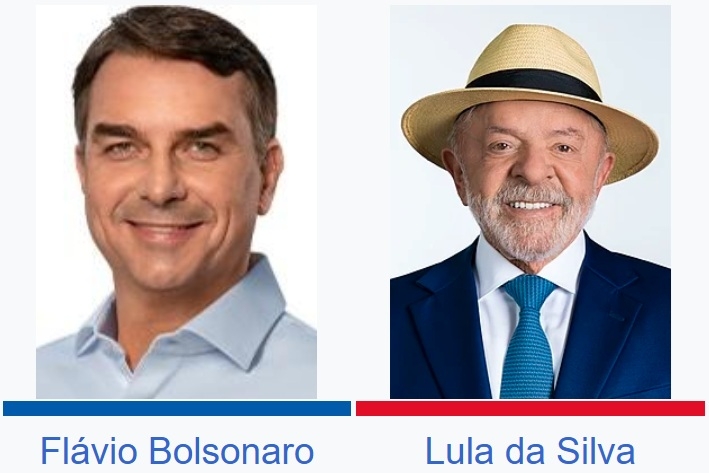
Another common mechanism of US interference is the use of NGOs. The Rockbridge Network – a network of conservative funders founded in 2019 by US Vice-President JD Vance and businessman Chris Buskirk – tried to establish itself in Brazil with a plan that included creating a technology council of 23 businessmen to directly advise Flávio Bolsonaro’s campaign. Of the 23 executives listed, 19 are foreigners.
Brazilian law is clear: candidates and parties cannot receive, directly or indirectly, money, goods or services from foreign entities or governments.
Funders of the Rockbridge network are Rebekah Mercer, conservative mega-donor and heiress of the Mercer hedge fund fortune; Peter Thiel, a fascist billionaire tech investor and financial supporter of Vance, as well as Cameron and Tyler Winklevoss, the cryptocurrency enterpreneurs.
They see themselves as a right-wing venture capitalist firm that will turn the Americas into a far-right paradise for the billionaires.
It is no coincidence that in May, Flávio Bolsonaro met with Trump, Vance and Secretary of State Marco Rubio in Washington.
In September, Trump himself declared that he is following the Brazilian elections “very closely”.
Additionally, Bolsonaro’s advisors have stated in the press that they intend to carry out a “Marco Rubio reform” within the Brazilian diplomatic service.
The Brazilian Intelligence Agency (Abin), Brazil’s intelligence service, has already informed the Presidency of the Republic and the Superior Electoral Court about the possibility of US interference in the electoral process.
The attorney general’s office has also notified the Supreme Federal Court about foreign resources used in Bolsonaro’s campaign.
A few days ago, President Lula da Silva, the candidate for re-election, used his speech at the UN General Assembly opening to warn that interference will not be tolerated and that “Brazil will not be anyone’s backyard”.
At this moment, the known actions to block US interference remain in the political and narrative field. But they may not be sufficient.
Latin America after 3 January 2026, is a territory surrounded and under constant threat from the ‘Donroe Doctrine’.
The US’ decision to classify two Brazilian organised crime factions – the Comando Vermelho (Red Command) and the Primeiro Comando da Capital (First Capital Command) – as terrorist organisations opens precedents for US forced interventions on Brazilian territory.
If Lula wins, it is possible to expect non-recognition or silence from Washington about the Brazilian electoral process. Minimally, this would keep Bolsonaro’s supporters cohesive and mobilised, who, at another time, already tried to retake executive power through a coup.
If Lula da Silva loses, it is already known that Brazil would complete the map of subordinates, giving up its sovereignty and natural resources out of mere ideological loyalty.
If Lula wins, the first years of his new government, at least until the next US elections, should remain tense, threatened, and resistant to the Trump project on the continent. – Globetrotter
Miguel Enrique Stédile is co-chair of the Department of Historical Sociology of Tricontinental: Institute for Social Research.
AGENDA RAKYAT - Lima perkara utama
- Tegakkan maruah serta kualiti kehidupan rakyat
- Galakkan pembangunan saksama, lestari serta tangani krisis alam sekitar
- Raikan kerencaman dan keterangkuman
- Selamatkan demokrasi dan angkatkan keluhuran undang-undang
- Lawan rasuah dan kronisme