Guillermo R Barreto
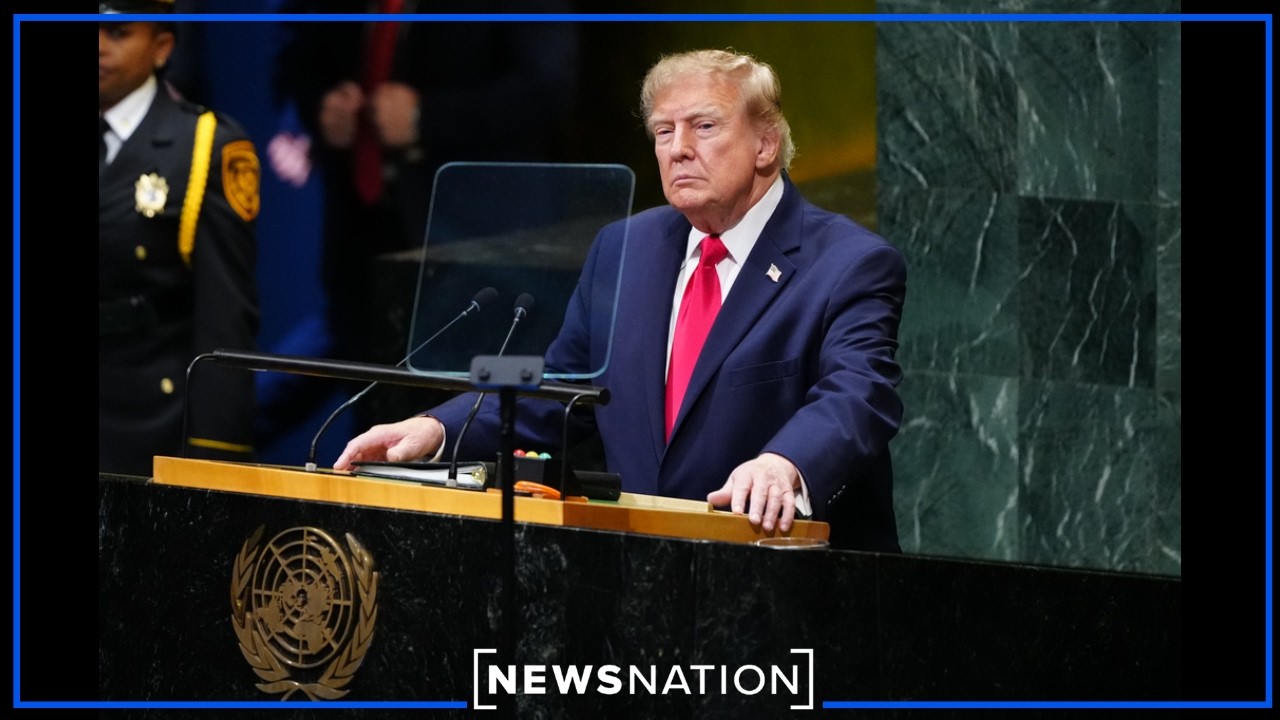
In September, like every year, the UN General Assembly commences.
Heads of state take the floor to send messages to the world. These messages are broadcast on TV, transcribed, and recorded in official documents and the press.
We have heard denunciations of violations of international law, calls for peace and coexistence, and also cynical remarks from leaders of genocidal entities.
It is a month of speeches that surely generates revenue for the media and benefits the local economy of New York City. It is month that also entails significant expenses for the delegations of the 193 UN member nations, in addition to the numerous NGO delegations present at or around the event.
- Sign up for Aliran's free daily email updates or weekly newsletters or both
- Make a one-off donation to Persatuan Aliran Kesedaran Negara (ALIRAN), Maybank a/c 507246118995 or CIMB a/c 8004240948
- Make a pledge or schedule an auto donation to Aliran every month or every quarter
- Become an Aliran member
The UN was founded in 1945 following the end of the Great Anti-Fascist War, referred to as World War Two, by the Eurocentric narrative. Its purposes, principles and structure are set forth in the UN Charter, signed on 26 June 1945, in San Francisco and enforced since 24 October of that same year.
As stated in Article 1, its purpose is to maintain international peace and security and to promote friendly relations among nations, based on respect for the principle of equal rights and the self-determination of peoples.
Fundamental freedoms, respect for human rights, and universal peace – these are legitimate principles worth fighting for.
The history of the UN, however, does not show that it has been capable of defending the principles for which it was created. Let’s look at three examples of this.
In 1993 amid the war in the former Yugoslavia, the UN Security Council adopted resolution 819, which required the parties to the conflict (in this case, Serbia and Bosnia and Herzegovina) to treat the city of Srebrenica and its surrounding areas as safe areas, free from armed attacks or any other hostile acts.
At that time, Bosnian Serb forces were carrying out an operation to displace and exterminate the Muslim population of Bosnia, thousands of whom sought refuge in Srebrenica, where they expected protection from the UN through its protection force Unprofor.
This protection never materialised, and the Bosnian Serb army attacked, resulting in the massacre of 8,372 people. Even today, hundreds of bodies have not been located.
Rwanda is another tragic case. There, the United Nations Assistance Mission (Unamir) was established to mediate the conflict that had been brewing and that led, in 1994, to the massacre of the Tutsi population by the Hutu army and militias.
The reality is that, while the Security Council debated whether to use the term ‘genocide’ to describe what was happening, Unamir’s blue helmets were restricted in their actions, their personnel reduced to 250 troops, and the slaughter continued, leaving hundreds of thousands of people unprotected; they were ultimately murdered before the eyes of a world that watched without reacting.
The words of the peacekeeping force commander, Romeo Dellaire, speak volumes: “I know that the mourning for all those Rwandans who placed their faith in us and believed that the UN Peacekeeping Force was there to stop the extermination, to stop the killings, and to guide them toward peace will never end. That mission, Unamir, failed.”
Another UN failure is reflected in the United Nations Stabilisation Mission in Haiti (Minustah). A blue helmet intervention was launched to “maintain peace and security and support a political process leading to elections in 2010”. The mission remained in place until 2017, when its continued presence was deemed unsustainable.
The conduct of Minustah soldiers has been heavily criticised, with numerous cases of rape and abuse of women and children. The introduction of a cholera epidemic (due to negligence in the management of wastewater from the blue helmets’ camps), caused some 9,792 deaths and affected about 820,000 people between 2010 and 2019.
To date, the UN has not provided any form of compensation, and there has been no restorative justice for these cases.
These are just three examples.
The reality is that the UN was born with fundamental flaws:
- A General Assembly where all parties have a voice and a vote and pass resolutions that are merely deliberative in nature and not legally binding
- A Security Council composed of five permanent members with veto power and 10 non-permanent members – five of whom are elected each year for a two-year term – who, although they can make decisions, are severely limited by the veto power of the permanent members
This is a self-perpetuating structure that, day by day, seems to be turning into an empty shell, powerless to transform an increasingly cruel reality.
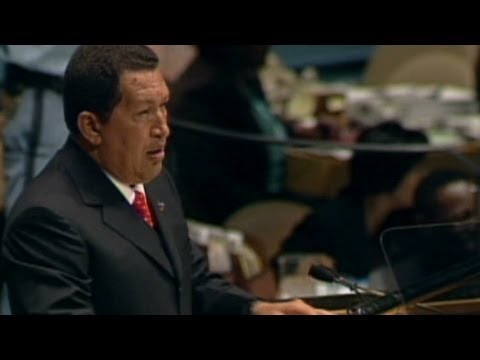
Twenty years ago, in an iconic speech before the UN General Assembly, the then-president of Venezuela, Hugo Chávez, said: “The United Nations system that emerged after World War Two has collapsed, shattered, it does not work anymore.”
In that speech, Chávez called for the re-founding of the UN and put four proposals on the table:
- The expansion of the Security Council in both the permanent and non-permanent categories
- The implementation of effective methods for addressing and resolving conflicts
- The immediate abolition of the veto power
- The strengthening of the role and powers of the secretary-general
Chávez added that it was necessary to move the organisation’s headquarters to another country that, unlike the US, would respect the host country’s norms by not imposing visa restrictions on delegations that are entitled to participate in the General Assembly and in the organisation’s own meetings and activities.
For this year’s 2026 Assembly, the State Department is preventing the Palestinian delegation from attending.
The General Assembly reminded the US government of its commitment to respect the host country agreement and voted in favour of Palestine’s participation.
President Mahmoud Abbas will, however, have to participate via videoconference.
Thus, we are currently witnessing increasingly aggressive and shameless actions by the US administration. This is an administration led by a narcissist surrounded by religious fanatics for whom international law holds no value and who act consistently to weaken the UN system and the principles of multilateralism. This is an administration that relies solely on military might to impose its will and uses unilateral coercive measures (neither contemplated nor endorsed by the UN) to force countries to submit to US influence.
“The devil came here yesterday. Yesterday, the Devil was here in this very place. This rostrum still smells like sulphur.” This is how Hugo Chávez began his speech before the UN General Assembly exactly 20 years ago, on 20 September, one day after the speech by US President George W Bush – a phrase that echoed through the halls of the UN and made its way around the entire world.
In that speech, Chávez unequivocally denounced the US’ ambitions to dominate the world, to install a ‘world dictatorship”, and to impose a “very original” democracy “through explosions, bombings, invasions and bombs”. Without hesitation, he labelled Bush a cynic for speaking to nations with hypocrisy while expressing his desire to control everything.
Today, the US imposes its will even on its allies, wields a deadly military apparatus, and has no qualms about expressing its expansionist and controlling ambitions.
The UN, on the other hand, appears to be an organisation incapable of curbing those ambitions or stopping the genocide of the Palestinian people, the massacres in Sudan, or the imperialist aggressions against Venezuela, Cuba or Iran.
Can we expect anything from this 81st UN General Assembly?
In his speech, Chávez spoke of the need to rebuild the UN. This need remains more relevant than ever.
He also left room for hope by expressing reasons to be optimistic: “Streams, alternative thoughts and movements, youths with different ideas are rising.”
That is where hope lies – in the capacity of organised peoples fighting for a different future – and not, for now, in the hallways and rostrums of the UN, where the air still reeks of sulphur. – Globetrotter
Guillermo R Barreto is Venezuelan and holds a PhD in science from the University of Oxford). A retired professor at Simón Bolívar University in Venezuela, he served as the country’s deputy science and technology minister, president of the National Fund for Science and Technology, and ecosocialism and water minister. He is currently a researcher at the Tricontinental Institute for Social Research and a visiting scholar at the Center for the Study of Social Transformations-Ivic.
AGENDA RAKYAT - Lima perkara utama
- Tegakkan maruah serta kualiti kehidupan rakyat
- Galakkan pembangunan saksama, lestari serta tangani krisis alam sekitar
- Raikan kerencaman dan keterangkuman
- Selamatkan demokrasi dan angkatkan keluhuran undang-undang
- Lawan rasuah dan kronisme