
Bleak Hari Raya in Kamunting After a long, tiring journey from out-of-town, the detainees' families had to wait for hours before they could meet their loved ones. By Aliza Jaffar
My children and I left Kuala Lumpur at 3.30 pm on the eve of Hari Raya together with a family friend who was returning home to a village in Alor Star, which is farther away than Kamunting. My children drove this time as our friends who had accompanied us in the past were unable to make it on this occasion as they too were returning to their respective kampongs to celebrate Hari Raya.
This year, Kamunting has become our kampong as we have been faithfully heading there every week to meet my husband - what more on Hari Raya.
We expected the journey to take the usual three hours, but as the roads were congested, it took us nearly seven hours to reach Taiping. We spent the night there at the home of a friend, who was kind enough to transform the house into something of a hotel for my children and me.
Three Gates
After Hari Raya prayers at the Taiping mosque, we headed for the Kamunting Detention Camp to meet my husband. On this day, the process of entering from the main gate to the second gate took almost two hours - especially on the second day of Hari Raya - as many visitors had arrived to meet the detainees.
The visitors� identity cards were inspected and the details noted at the first counter.
After that, we were allowed to proceed to the second gate, where there is a waiting shelter. This time, a television had been placed at the waiting area - again, something unusual. We had to wait there for one to two hours. The officers at the gates tried their best to handle the situation, but because the rules of the visiting procedure had to be adhered to, we were forced to wait for hours before we could go through the second gate.
When my husband and five other detainees were first admitted to the Kamunting Detention Camp, there were only two gates for us to pass through before we could meet him in the visiting room.
Two months later, a fence and another gate were built. The camp officers on duty at the second gate now cannot pass through the third gate when accompanying us to the visiting room. Perhaps because they have been designated to handle the detainees� families � there might have been concern that they would sympathise with the families and the detainees.
Lemang in Kamunting
It was only after we had been called again that we were able to enter the second gate. As usual, all the food and reading material were inspected and the details recorded. I was requested to sign to confirm that I was fully responsible for the safety of the food that I had brought for my husband.
On this occasion, we were allowed to bring Hari Raya dishes - we brought rice, fried chicken, and mixed vegetables as these were the dishes my husband had requested. It had been almost three months (since 11 September 2001) that he had not eaten rice properly due to his boycott of camp food to protest against his detention, which was illegitimate and politically motivated.
The camp authorities had set up a tent with tables and chairs in front of the building where the usual visiting room is located - the area resembled a wedding reception - for the detainees to meet and have a meal with their families.
We were surprised that on this day we didn�t have to meet our husband in a room where we would have been separated by wire mesh. Actually, we don�t need to be separated by wire mesh as my husband is not a convicted criminal.
This is one of the demands (which have not yet been resolved) that my husband along with five other political detainees has made to the Home Minister.
In all, it took us a tiring seven hours on the road to reach Kamunting and two hours of tedious waiting inside the camp - after all this, we were only allowed 45 minutes for the visit. Despite putting us to such hardship, the authorities seem incapable of showing us compassion by allowing us a longer visit for Hari Raya.
One of the detainees, Dr Badrulamin, has since been released under a restriction order, which confines him to Gombak, Selangor, and imposes other restrictions on his freedom of movement and involvement in political activities. Although he is under restricted residence, Badrulamin was surprisingly allowed to celebrate Hari Raya at his kampong in Sabah. This clearly vindicates our belief all along: that he does not pose any threat to national security as alleged.
The same goes for my husband and his four colleagues who are still imprisoned on the basis of the same allegations. We believe that these six detainees are not a threat to national security and they are merely Barisan Nasional political detainees.
At the end of November, the books that my husband had written, �Suara dari Kamunting 1� (Voice from Kamunting 1) and �Suara dari Kamunting 2� were successfully published. These books contain his arguments that were put across to the Kamunting Advisory Board on 6 and 11 September 2001. He exposed the alleged improprieties of the police, who had been allegedly manipulated by government political leaders.
My husband and his colleagues will continue to struggle for justice and to expose even more abuses by the ruling parties. Those responsible within the Royal Malaysian Police should not remain silent and allow a group to tarnish the name of the organisation. Resolute and effective action must be taken to improve the people�s confidence in the institution of the police, who have been entrusted with safeguarding the nation�s and the people�s security. Don�t allow yourself to be manipulated.
Pray for Strength
Although we, the families of those detained under the cruel ISA, are forced to sacrifice, we urge the people and those struggling for justice not to let our tears and suffering be in vain. We pray that everyone will continue to struggle to uphold justice on Malaysian soil and to demand an end to oppression. Let us together pray for the strength to continue working to expose oppression and to demand that justice be upheld without any consideration for rank and position.
We pray that the people of Malaysia will have the courage to call a spade a spade and to proclaim the truth, as this nation is our responsibility. The future of the country depends on those of us here now, who must ensure that our country continues to be peaceful and that the rights of every citizen are guaranteed by the Malaysian Constitution.
We will continue to pray so that all ISA political detainees will be speedily released. We demand that the Home Ministry releases them all � their detentions violate human rights and are illegitimate, cruel and politically motivated.
We have suffered enough! Give us back our loved ones now!
|
||||||||||||||||

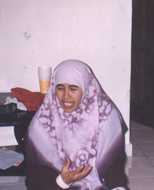 Our weekly visit this time was somewhat more special than usual because it was to mark Hari Raya Puasa, the end of Ramadan. The families were allowed to meet the detainees during the first three days of the festival. For us, the families of the reformasi detainees - we were allowed to meet them on the first and second days of Hari Raya.
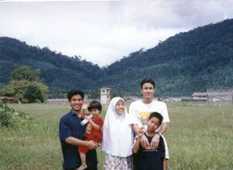 We had also brought along some lemang (glutinous rice with coconut milk cooked in bamboo), serunding daging (a meat dish), and cakes and biscuits so that we could share a meal with him. This time, he was allowed to take the unfinished food back to his dormitory but it had to be transferred into a plastic bag provided by the camp.