
|
|||||||||||||||
| Dr Mahathir and the Public Sector Unions
From a popular labour movement to
a top-down managed organisation
by A H Ponniah
Please support our work by buying a copy of our print publication, Aliran Monthly, from your nearest news-stand. Better still take out a subscription now. We also welcome donations.
The Tunku's Era In the 1960s, it was not uncommon for government workers to hold rallies, marches, and to go on strike (the big ones involved railway workers, teachers, and forest employees). Law and order was not disturbed by these industrial actions and issues were resolved quite amicably. Even the International Labour Organisation (ILO) was permitted to send a study mission to investigate the Malaysian trade unions situation and to make recommendations on improving industrial relations. Union members were proud of their unions and their leaders. Union activists came out in the hundreds to work voluntarily and freely. There was true unionism. Independence gained its true meaning, and goodwill and faith in justice and fair play prevailed. The relationship between the unions and the government was also one of mutual respect, even trustthough they adopted different approaches and strategies to promote the people�s interests. Many in the labour movement also saw the Tunku as a leader of the workers. Enter Mahathir Mahathir�s first encounter with the public sector unions was when he represented UMNO at a CUEPACS forum in 1968 in Port Dickson. He presented a prepared speech and made it known that if he spoke his mind his opinions would be different from what was contained in the prepared speech. In point of fact, he held rather negative views of trade unions, as can also be seen in his book �The Malay Dilemma�, which was published later. He did not think that trade unions, which offered protection and security to workers, were useful in getting workers to work hard and to increase their productivity. Following his expulsion from UMNO, Mahathir was absent from the mainstream political scene. However, he subsequently returned to politics and rose to become the Education Minister (still later, the Deputy Prime Minister). While in charge of the Education portfolio, he was instrumental in putting the brakes on the students movements. Anwar Ibrahim was among the student leaders who were detained in Kamunting. Thanks to him, the �troubles� posed by the students, as well as their independent movement came to an end.
Slogans A-Plenty The first slogan that the Mahathir-Musa team propagated when Mahathir took over as premier was �Clean, Efficient and Trustworthy�. It held good promise for the future of Malaysia. But there was fear about the price that would have to be paid and suspicion about the judgment to be relied on when action was taken. Slogans were plentiful. The next was �Leadership by Example�, then �Masyarakat Penyayang� (Caring Society). This was echoed by the Public Services Department with the slogan �Perkhidmatan Penyayang� (Caring Service). There were others: The �Look East Policy� brought in laws to encourage in-house unions, productivity measurement drives and wage systems. One meaningful demand Mahathir made on civil servants was that they should be at work and not waste time unnecessarily seeing off or welcoming VIPs at airports. In fact, the clock in peninsular Malaysia was pushed forward by 30 minutes so that workers could take part in after-work sporting activities in their own time before it got dark. Excitement over the slogans generated too much anticipation that Malaysia would become a model of a corruption-free country. The Mahathir team was expected to carry its aims through. But it has not produced that end result. Corruption remains rife and complaints and reports surface all the time that it is rampant at all levels. What makes it worrying is that international rating organizations have claimed that corruption in Malaysian has got worse. If there was any leader of our time who had the potential to put it right it was Mahathir. But he had his hands full on everything national and international. Many politicians in the Barisan Nasional were accused of corruption, but they survived and prospered. As Deputy Prime Minister, he was appointed Chairman of the Cabinet Committee on Salaries of Public Employees in 1975. He was asked to review the Ibrahim Ali Commission Report, which the government hesitated in implementing. He efficiently produced a substitute report that revised the salaries and terms and conditions, which had previously existed separately for teachers, civil servants, statutory boards and local authority employees. He produced the report with his team within the year. The terms for civil servants, teachers, statutory board employees, local government servants and state employees were all standardized ensuring that one size fitted all. He introduced a general clean wage system whereby universal allowances were also integrated into salaries. Mass Protests The arbitrary changes were bound to invite union disputes and industrial action demands. He wanted no talks on the report. CUEPACS led a mass protest and suffered further setbacks with the suspension of the collective bargaining machineries in the public sector, which had been revised in 1973 and agreed to by the then premier, Tun Abdul Razak. The scope for raising issues was left to a restricted Tribunal comprising panel members appointed from previous managerial officers in the government. In 1979, five new joint councils were introduced without collective bargaining rights. Henceforth, the scope of the union�s role was limited and it merely assumed consultation status vis-�-vis the government. In essence, the government would solely decide on most matters affecting the workers and unions. The same year witnessed the Malaysian Airlines employees� industrial action, which received solidarity support from international workers� organizations. This provided the pretext for more restrictive trade union and labour relations laws to control public and private sector unions. Malaysian unions took the government to task and braved a strong challenge. They wanted to retain at least the status quo. There was unity and it was gathering strength. The government had already suffered bad publicity with drastic measures taken to break the airlines employees� industrial action. There was a bigger threat on their hands now. Leaders of public and private sector unions went to parliament house to demonstrate their opposition. That was also an opportunity to meet and mix with government leaders. Unions Divided About the same time, CUEPACS deputy president A. Ragunathan and secretary general Jamaluddin bin Mohd. Isa had also visited Mahathir and, within two weeks, the bickering between CUEPACS leaders and the Malaysian Trades Union Congress (MTUC) became public. Meanwhile, the MTUC had called on the Tunku to intervene in the dispute with the government over the amendments. A workers� group meeting was subsequently held at the Jaya Puri Hotel (now PJ Hilton) on 12 May 1980. A clash ensued followed by CUEPACS leaders, led by its President T. Narendran withdrawing their affiliation from the MTUC. MTUC secretary general V. David, who had always taken a good stand on labour rights but who was poor in administrative finesse, details and follow-up, had an open dislike for criticism regarding his administration and at the material time gave Narendran the excuse to initiate the break-up. A press article in The Star just before the MTUC meeting was indicative of what was to follow. David also did not seek ways to stop their departure as he had assumed that the CUEPACS leadership was already on the verge of pulling out from the struggle against labour laws when they went to consult Mahathir. In a matter of days, the Malaysian workers� representation was divided. Internationally and in all local bodies, labour was divided into public and private sectors. A small group of public sector unions tried to prevent the break up but it was not strong enough to prevent this. Significantly, public sector employees managed to get a good salary revision in July 1980. At the same time, the government violated the clean wage system by introducing new universal allowances. The introduction of a corresponding basic salary to be used for pension calculation made no sense for pensioners because salary revisions and perks would be outside the realm of equal benefit for pensioners. Consequently, under the non-clean wage salary system, pensioners lost the gains they had been awarded previously i.e. receiving a pension worth at least half their salary (paid to a post they had last served). Operasi Isi Penuh In 1980, the government, faced with a pressing need for employment creation, launched a massive recruitment in the public service called Operasi Penuh. Since 1979, it had often been declared that there were 880,000 public sector employees. I believe that there were 1.12 million employees after Operasi Isi Penuh was conducted. Strangely, non-bumiputeras were generally bypassed in this exercise. After that general recruitment in the public sector - except for teachers and nurses - this policy was reversed because of an austerity drive, resulting in a very small presence of non-bumiputeras in the public service. It is difficult to rectify this disproportionate employment of the non-bumiputras in the public sector now. During festive holidays at the end of Ramadhan, when there are mass leave applications by bumiputera employees, most government departments are under-staffed, virtually non-functioning. Although this results in public dissatisfaction, the unions have no choice but to defend the rights of their members to go on leave to be with their loved ones during the Muslim festive times. Loyal Cuepacs Come 1987, Mahathir faced leadership challenges, splits within the political leadership, and a drop in popularity. Faced with a strong challenge from �Team B� comprising Tengku Razaleigh Hamzah, Musa Hitam, Abdullah Badawi and Rais Yatim, Mahathir contended that even if he won by one vote, he would still be the winner. CUEPACS, then under the leadership of A. Ragunathan, was one of the few strong organizations that stood loyal to him. As we know, Mahathir made a strong comeback. Since then, CUEPACS has been his close ally. He was charitable with his patronage as long as the leadership did not create problems for him. A number of easy settlements of claims from public servants seemed based on this continued relationship. Anyone who tries to make it work differently including demanding collective bargaining rights may not get the red carpet. It was not the usual union�employer relationship that was at work. The Threat of Privatisation Opportunity knocked on Mahathir�s door, as Reagan and Thatcher succeeded in setting an international agenda to push for economic liberalization through structural adjustment programmes. Mahathir was the notable disciple of this programme and pioneered the privatization of public services, thus becoming a model for developing countries. One reason Malaysian workers were restrained from resisting, unlike workers in other countries, was the additional official criteria of privatization: the provision of opportunities to increase equity participation of bumiputeras in the capital market. The workers ignored the view that bumiputeras would not have greater control of these privatised entities in the long run (compared to the situation when these entities were in government hands) Most believed that the programme was Mahathir�s innovation because of his past struggles and strong nationalist�s image and the benefits must surely accrue to improve bumiputera status. How this can hold over the years with our membership in international trade and financial institutions is a challenge for Malaysia. Under GATT procedures, an industry can avoid opening up to international market forces if it remained a government department. WTO and GATT rules will now decide what happens to national control on ownership of such privatized industries. It need not have been so if these entities had remained as government departments. Consumers have little power to fight multi-nationals whether originating locally or elsewhere. Politicians have thus also lost their power to guarantee the common people�s interest. After the Asian Financial Crisis, Mahathir was on record as calling on the International Financial Institutions to stop their international agenda of liberalization and leave the domestic economy in the hands of national governments to decide what reforms and structural adjustment programmes they consider appropriate for themselves. In fact with this and his fight against international currency traders, he shared the same stand as international trade unions that have been arduously labouring for this over the years. The International Confederation of Free Trade Unions (ICFTU) thanked him and also sought his intervention on labour forums in APEC. The Union Network International (UNI) invited him as their special guest at their regional conference followed by an ILO invitation for a special guest speech at their annual conference. At the two latter forums, Mahathir attacked NGOs for their irresponsible behaviour. Even then, there has been no let-up on his privatization policies in the public sector and reforms, the latest target being the banks and healthcare services. Personal Meetings It is again true of Mahathir�s style to deal with unionists on a personal basis. Usually he meets the presidents on a one-to-one basis before meetings on claims take place on a collective basis. However, even if one criticises such top union leaders for engaging in a one-to-one meeting with Mahathir (without the presence of other union leaders) as a betrayal of collective strategy and union discipline, in the public sector it now appears that what the Prime Minister wants, he gets. Very few leaders want to miss such an opportunity for a face-to-face meeting, which bolsters their status. They contend: who would dare question them after that? What is sad is that at the union leadership level some indoctrination has been going on. They consider that such high-level meetings are a great privilege for their organization and fear that if that is prevented they might lose out, as they don�t have the strength and leadership to confront and win through bargaining and struggle. Besides, there are other privileges as well. When CUEPACS president Ragunathan retired in 1989, he was made director of Time Engineering, an UMNO-owned company, by Mahathir. Since then every CUEPACS president is believed to have approached their management or the Prime Minister directly for some form of opening as a reward for them for having served the government and the workers well. Trade unionism in the public sector today is somewhat neutralized, shorn of all the usual characteristics of a genuine trade union movement. Unionists have lost interest in their inherent right to make demands and seek collective bargaining. The big industrial entities are all privatized and consequently the recruitment of blue-collar workers by the public sector has dropped. White-collar workers, teachers and some uniformed staff are too closely associated with race-based political parties; many are too individualistic and therefore unable to rally for solidarity action and challenge for the benefit of workers� rights and welfare. And without the presence of blue-collar workers of some size in the public sector unions, there is a serious need for labour education before union officials can be expected to stand up for ordinary workers� rights. Most of the public service unions are also not affiliated to the MTUC and therefore lack education and understanding of workers� rights, thus thwarting efforts to promote a stronger trade union movement. The few who are holding firm to workers� solidarity are defeated in spirit and have taken a back seat. Top-Down Approach What remains of public sector unionism is a top-down managed movement with the top waiting to lend immediate individual support for the Prime Minister as the only easy means of getting some benefits for their unions. It seems a victory of sorts for the Mahathir way of dealing with the unions - but at what expense? Without safeguarding the dignity of workers and the rights of unions, what does this achievement amount to? What is unionism without rights? There now prevails a �top-down� psyche in the union movement. This approach excludes the participation of ordinary members in the decision-making process, thus violating a basic principle of trade union rights The influence of the Prime Minister in dealing with the top filters downwards powerfully for a one-way, unopposed acceptance. In CUEPACS, unfortunately, there tends to be only one-person�s voice because of the new top-down approach adopted. In MTUC the voice heard is somewhat similar - that is of its president, Zainal Rampak, since he was chosen senator by Mahathir�s preference. Before that, the press had sidelined him. But at least there is an alternative voice in G Rajasekaran, who continues to speak out loudly for workers� right. No equivalent union leader exists within CUEPACS. The newspapers of today appear to want news from labour that is palatable to government leaders. There is no analytical reporting and there appears to be no space for wider union expression in the media to get across the true position of all workers. The challenge for trade unions is how to resuscitate the trade union movement, to reinstil the noble and traditional characteristics of unionism, to restore its dignity and to recapture its lost labour rights. What should they demand from the next Prime Minister?
Now e-mail us and tell us what you think. | |||||||||||||||

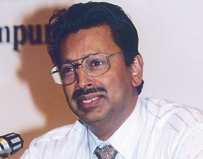
 What remains of public sector unionism is a top-down managed movement with the top waiting to lend immediate individual support for the Prime Minister as the only easy means of getting some benefits for their unions.
