
|
|||||||||||||||
 Aliran mourns the passing of its veteran member, the indefatigable freedom fighter and historian Desmond J Muzaffar Tate, who died of a heart attack on 3 January 2004. He was 74. A prominent figure in the reformasi struggle, Desmond frequently wrote passionate articles on justice, freedom and democracy for Aliran Monthly. This was his last article for Aliran Monthly. Aliran mourns the passing of its veteran member, the indefatigable freedom fighter and historian Desmond J Muzaffar Tate, who died of a heart attack on 3 January 2004. He was 74. A prominent figure in the reformasi struggle, Desmond frequently wrote passionate articles on justice, freedom and democracy for Aliran Monthly. This was his last article for Aliran Monthly. The Mahathir legacy
The bottom line is that Mahathir does not believe in democracy
by Muzaffar Tate Aliran Monthly 2003:8 Please support our work by buying a copy of our print publication, Aliran Monthly, from your nearest news-stand. Better still take out a subscription now. We also welcome donations.
These twenty-two years have left an indelible mark in the history of this nation. Whatever his detractors may say � and there will be plenty � Mahathir has put on a virtuoso performance, right up till the last minute. For starters, taking an overview of that period Malaysia has undeniably been a success story. Its greatest success has been to survive. It is probably fair to say that of all the new nations that emerged from the colonial womb after the Second World War, Malaysia has made the most progress in ridding itself of its colonial imbalances and becoming a viable state in its own image. Mahathir did not lay the foundations of this achievement, but he can take credit that during the period of almost half the nation�s existence as a sovereign state, he managed to consolidate and consummate it. Mahathir himself, of course, would be the first to agree with this assessment. The success is all the greater since despite all the complexities of managing such a disparate, volatile society as Malaysia�s, national unity has been preserved. In fact, Mahathir has recently told us that he regards the preservation of national unity as his greatest single achievement as prime minister. They have been a tumultuous twenty-two years. In general, the country has made spectacular economic progress. When Mahathir came to power, the transformation of the economy from a typical colonial one based on the export of raw materials into one based on the export of locally manufactured goods was virtually complete. The country then went on to weather two major global recessions � the first in the mid-1980s with a little bit of help from the coming on-stream of the recently discovered offshore oil-fields in the South China Sea, and the second in the late 1990s with Mahathir�s bold refusal to follow orthodox IMF remedies. Economic development has been further galvanized by the privatization of state-owned enterprises � in this case following a general world-wide trend. The country seems set to achieve its goal of becoming a fully developed nation by the year 2020.
He has also put through projects that sceptics would never have dreamed possible, by means of his own personal determination and intervention � our first national car (for export), our state of the art international airport, our Formula One Race Track and the Multi-Media Super Corridor, etc. And for good measure he has made Malaysia (himself) the champion of the Third World. This then is the shiny model of a progressive, dynamic and united multi-racial society that Mahathir has presented in the showplace of nations. Inside the kitchen But one cannot judge by appearances alone. It is necessary to go behind the scenes and see how it has been done, just as when checking on a restaurant and its tasty fare to have a look at the kitchen to see how clean it is. So, to start with a closer look at the nation�s economic affairs, which provide the grist for all other forms of progress, at face value the economy has done well over the past 22 years. But could it have done better? No and yes. In terms of handling global recession, its performance could not have been bettered. In terms of public expenditure and allocation of funds, its performance has been literally scandalous. Those of us whose memories stretch back further than 24 hours may recall a series of mammoth scandals involving highly-placed corporate figures in the 1980s, including that of Bank Bumiputra Finance and the murder of Jalil Ibrahim, one conscientious employee of the bank; the costly attempt to corner the London Tin Market; and equally costly forays by Bank Negara on the foreign exchange market resulting in the loss of billions of Malaysian Ringgit. Things were no better in the 1990s � another stream of scandals and cases of corruption, amongst which perhaps the fiasco of Perwaja Steel and its missing chairman is the most spectacular, and at the height of the global recession of the late 1990s, some very questionable government bail-outs of corporate figures in distress. One cannot hold Mahathir solely responsible for any of these outrages, but the fact remains that there has been a chronic lack of accountability and transparency in the handling of the nation�s financial affairs which should never have been allowed to occur. But at the end of the day, the country�s chief executive must be held answerable. The country has weathered these major abuses of power and responsibility because it has been able to put its hands on extra cash - thank the Lord for off-shore oil and PETRONAS. In the meantime, the wave of corruption at all levels has risen to unprecedented heights. One wonders why. To leave the sleazy record of economic and financial mismanagement to one side, a glance at the social side of the picture is yet more depressing. There is a better distribution of wealth amongst large sections of the population. However, at the same time deep pockets of poverty remain, a problem which despite official assurances to the contrary, is still being handled on a communal basis. On top of this, the gap between the rich and the poor is widening substantially, and much of Malaysian prosperity, as in the wicked colonial days, still rests on the exploitation of cheap foreign labour. Accompanying this is a soaring crime rate and a horrific growth in child abuse, drug addiction and other social ills that clearly show that government measures to deal with the root causes of these problems remain completely inadequate. When we come to our much-touted racial unity, how deep does that go? Judging by the lop-sided racial distribution of major races in the Civil Service, the Police and the Armed Forces, only skin-deep. Subsidized patriotic rallies at which flags distributed free of change are wildly waved are not indicators of true patriotism. Benevolent despot Finally, we turn to the political scene. As a politician Mahathir is hard to beat. If politics is the art of the possible, Mahathir is the supreme politician. As a result politically Malaysia today presents a rare picture amongst nations of political stability. But there is a link between politics and morality, or at last there should be. According to our Constitution this country is based on the democratic ideals of fair and just government through the medium of elected representatives who are ultimately responsible to the citizens who have elected them, and to no one else; and alongside this a country governed by the Rule of Law which provides fair and impartial justice to all its citizens. Alas, the political arena will reveal a string of political crises as frequent and as damaging as those in the economic sphere (often with a close correlation between the two), indicate how far we have moved from fine democratic ideals to the shoddy pragmatism and horse-trading that characterize the political scene today. 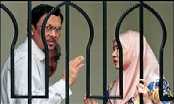 And yet it would appear that for most of us with our politically correct attitudes and conveniently short memories, the shameful dismissal of the head of the Judiciary, Tun Salleh Abas, in 1988, and the sordid trial and imprisonment of Anwar Ibrahim, which disgraced our nation, are best forgotten.
But these and a whole host of other authoritarian abuses of power are not things of the past, but form part and parcel of the living present that we ignore at our peril. Whatever Mahathir has achieved, was achieved by the use of authoritarian methods. Repressive legislation not only continues to exist but has been fine-tuned and extended. The uninhibited use of the mass media by the Government to propagate its own point of view and muffle that of others is blatant enough for all to see. A seemingly free society is not really free. The insidious culture of being �politically correct� has penetrated all levels of our society � to the point that a schoolmaster can be hauled before a magistrate and asked to explain why he set a question in a school examination paper designed to make his students think. The bottom line is, Mahathir does not believe in democracy. He has said so on various occasions in so many words. He is undoubtedly a �benevolent despot� � like the 18th century autocratic monarchs of Russia, Prussia and Austria who were so styled � full of good intentions but with bad ways of carrying them out. Mahathir is by no means an Idi Amin, Marcos or Mugabe. He has been inspired by great visions and great dreams of a mighty Malaysia. But for anyone of a liberal, democratic persuasion, the price is intolerably high. Nor is there any guarantee that once the hand of the master puppeteer has been removed unity and stability will survive. Now e-mail us and tell us what you think. | |||||||||||||||


 Mahathir is by no means an Idi Amin, Marcos or Mugabe. He has been inspired by great visions and great dreams of a mighty Malaysia. But for anyone of a liberal, democratic persuasion, the price is intolerably high.
