
|
|||||||||||||||
| Book review Isn’t the grass greener on our side?
by Khoo Boo Teik
Please support our work by buying a copy of our print publication, Aliran Monthly, from your nearest news-stand. Better still take out a subscription now. We also welcome donations.
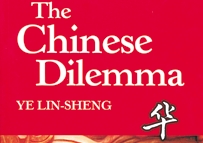
At 70, when a man might justifiably produce a memoir for his first book, Ye Lin-Sheng boldly chose to write a political analysis of a ‘sensitive issue’. In so doing, he adds to a local literary genre that is less lively in English than in Malay or Chinese. I don’t mean the genre of character assassination whose practitioners traffick in overly long surat layang. I refer to polemical writing that conveys sober analysis and personal reflection in a popular style. Its most prolific exponent is Tun Dr Mahathir Mohamad. Indeed Mahathir inspires Ye to no small degree and Ye’s book admits to echoing The Malay Dilemma. Two Qualities When it’s well presented, this form of writing displays a native wit and direct language more accessible than turgid academic prose. Even or especially when it’s brash, it breathes life into an art of political argument alien to a media too servile to air controversial opinion. Two qualities account for much of the genre’s attraction. It’s attentive to grouses and grievances, and prejudices and biases. It recovers ‘grassroots debates’ from the coffeeshop and the warong, or the kenduri and the dinner party. To that extent, the genre’s typical author, politician or no, is a penceramah. These traits of genre and author are evident in The Chinese Dilemma. A ‘trawl through friends and acquaintances’ nets Ye diverse ‘real-life cases of [Chinese] grievances’. In their general outline, these cases are the very stuff of ‘Chinese politics’ here. For Ye, they amount to a Chinese ‘predicament’ of feeling ‘aggrieved’ although the Chinese in Malaysia, in his judgement, fare better than immigrant communities elsewhere (or the Chinese in China). As a formulation, Ye’s ‘Chinese dilemma’ hasn’t the sharpness of Mahathir’s ‘Malay dilemma’. It’s enough, however, for Ye to fasten on a ‘residual’ Chinese unease and its political expressions. He hastens to plead with the Chinese that ‘home’, with its ‘warts and all’ Malay domination and New Economic Policy, is the best of all possible worlds. The Chinese Dilemma addresses principally the Chinese, and indirectly Malays and ‘westerners’ over their attitudes towards the NEP’s achievements, ‘snags’ and ‘adverse effects’. The book anchors its arguments in reflections on domestic ethnic relations but also takes international excursions into areas of minority rights and affirmative action.
Ugly Malaysians Ye isn’t timid or blindly partisan. He tackles what others shun as ‘sensitive’ issues. At heart, he’s aware of a pervasive Chinese sense of ‘hurt’. Still, he refuses to excuse the ‘crassness, dirtiness and corruption’ of the ‘Ugly Chinaman’, or, more apropos, his ‘tendency to belittle Malay capability and achievement’. He praises Malay leadership. Yet he scorns the antics of the ‘Ugly Malay’ who ‘threatens politicians and officials, thumping tables to make Bumiputera claims on contracts, licences, concessions and land’ or ‘wish[es] to be seen as being tough on the Chinese in order to gain a Malay following’. Ye effectively falls back on the diagnoses, solutions and tone of The Malay Dilemma. Urging ‘balance’ to temper Malay-Chinese mistrust, he notes that, ‘If the dominance of the Chinese in Malaysia was exaggerated, the ability of the Malays was underestimated.’ For him, ‘both misconceptions – about Chinese dominance and Malay laggardness’ have no place on a ‘playing field … probably now about level in many of the important sectors of the economy’. No Heresy Like much of local polemical writing, The Chinese Dilemma skirmishes on shifting terrain. Its arguments move from Malaysia to the rest of the world, from political economy to culture, and from personal accounts to theoretical generalities. To such skirmishing, the typical response is an impatient dismissal or a point-for-point rebuttal. A third way, of raising two important questions, is preferable. First, is Ye’s ‘take’ on the ‘Chinese social condition’, so to speak, ‘heretical’ or ‘treacherous’, as he himself wondered? I don’t believe so. Ye began the book in 1990. With assistance from Lynn Pan, a former Far Easter Economic Review editor who has written on ‘Overseas Chinese’, Ye completed the book in 1994. He reworked it through the crises of 1997-99, and published it ahead of the 2004 general election. Ye disavows having a ‘political agenda’ or a ‘political axe to grind’. But, insisting that the Chinese must search their collective conscience to find the right ‘way forward’ – Mahathir’s way! – he meant to caution the Chinese against being anti-UMNO after November 1999. Such fears as Ye entertained of an oppositionist Chinese swing helping to render UMNO ‘irrelevant’ were unfounded. By 1995, most Chinese voters had clarified their predicament. As the 1999 and 2004 elections showed, they’d relegated ‘Chinese politics’ to a ‘minority politics’ favouring Barisan Nasional. If post-NEP politics is anything to go by, they bet on a future in which many dimensions of globalization hold possibilities beyond their declining demographic and political influence. In that, they may hold up Ye’s profile as a mirror of their expectations. Born of immigrant parents, Ye lived the transition from British to Malay rule, a kind transition in Ye’s experience of race relations. In the 1960s, he left the civil service for the private sector. It was a successful switch way ahead of Mahathirist privatization. Now an international investor, he makes hardnosed comparisons of the costs and benefits of living in different places. He’s loyal to home but not uncritical of domestic defects. He’s ‘global’ but not seduced by ‘western’ hypocrisies. Surely this is the profile of a growing Chinese social type who pragmatically and sincerely rejects any suggestion that the grass is greener on many other sides. If I’m correct, Ye’s (Chinese) readers, even if they’re stung by his strictures, will find The Chinese Dilemma to be confirmatory of the times in which they live. Final Question Ye doesn’t address a second question that The Chinese Dilemma provokes: Are Malaysians condemned to imagine the future in terms of Malay dilemmas and Chinese predicaments? Both The Malay Dilemma, and its revisting via The Chinese Dilemma, admit of no alternative to scenarios of Malay political power and Chinese economic power accommodating each other. That logic leaves in a quandry citizens who are non-Malay, non-Chinese and not powerful. By what name would one call their dilemmas?
Now e-mail us and tell us what you think. Your comments might be published in the Letters section of our print magazine, Aliran Monthly.
| |||||||||||||||

 That logic leaves in a quandry citizens who are non-Malay, non-Chinese and not powerful. By what name would one call their dilemmas?
