
|
|||||||||||||||
|
Rights, justice, and solidarity across oceans The campaign against devastating mountain top removal coal mining in the US should be linked to the larger global struggle for justice and human rights
by Bryan McNeil
Please support our work by buying a copy of our print publication, Aliran Monthly, from your nearest news-stand. Better still take out a subscription now. If you prefer to read our web-based edition, please support our work and make a donation. For a US$10 donation (via credit card)  For a US$25 donation
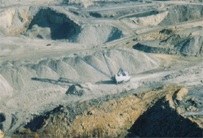
I work very closely with an activist coalition called Friends of Mountains (FOM) in the U.S. state of West Virginia. FOM works to end an abominable practice called mountaintop removal coal mining (MTR). The Appalachian Mountain region in the eastern United States is a rich coal-mining region that has been exploited by big energy corporations for more than 100 years. Large corporations still control the region: they own most of the land and dominate the region�s politics. The curse of coal Coal mining has changed over the years from a labour-intensive to a capital-intensive industry. Mountaintop removal uses huge machines and powerful explosives to blast away mountains. Where rugged mountains once stood covered with the most diverse temperate hardwood forest in the world, MTR operations dump rock and soil into valleys, creating vast areas of flat, barren land that resemble the surface of the moon. Mountaintop removal is devastating not only to mountains and forests, but also to people and communities. Small towns across Appalachia have completely vanished and others tremble (literally and figuratively) as MTR advances around them. Around the turn of the 20th Century, coal companies brought thousands of people into the sparsely populated Appalachian Mountains to work in mines. Over the century, coal miners including my own ancestors rode the economic ups and downs of the coal industry. My grandfather mined coal for 36 years and has suffered black lung disease since 1974.
As MTR has become the preferred mining method in Appalachia, people�s homes have fallen victim to powerful blasts. Across the region people tell the same story: foundations broken, walls and doors cracked, wells losing water, communities flooded and livelihoods wrecked. The coal industry either buys people�s land or forces people to move by making their lives unbearable. State and federal regulations not only allow, but also facilitate the process. For example, regulations require all workers and equipment to be moved at least 400 feet (about 120 metres) from the site of an explosive blast. The same requirements allow mines to blast within 100 feet (about 30 meters) of a citizen�s home. Historically, Appalachia has been a relatively poor region: a backwater often ridiculed by �mainstream� America as �yesterday�s people� or �our contemporary ancestors.� Since the 1970s, scholars have described the economics of coal as an internal colony. A colonial relationship prevents the economy from maturing and holds Appalachia�s people in poverty. Mountaintop removal has made this situation worse. While the United States enjoyed a great economic boom during the 1990s, Appalachia�s economy actually got worse despite producing more coal than ever before. This trend is reflected in the relationship between jobs and production. At the end of the 20th century, West Virginia�s mines produced more coal and employed fewer people than ever before. Joining together Reacting to the spread of mountaintop removal and its tentacles of injustice, Appalachian people began to organize. Friends of Mountains is a coalition of many environmental and social activist groups, including the Ohio Valley Environmental Coalition, the West Virginia Highlands Conservancy and Kentuckians for the Commonwealth. My PhD research focuses on a group called Coal River Mountain Watch (CRMW). CRMW is made up of people who have lived around coal mines all their lives. They are the daughters, wives and sisters of coal miners; some are retired coal miners themselves. It was in the Coal River Valley where explorer John Salley first discovered coal in West Virginia in 1763. Activist Bill Price often says, �If John Sally could see what coal has done to these communities, I think he would have covered it back up and kept his mouth shut.� In a region that has been so dependent on coal for so long, it is no small act for people to speak out against the industry that has fed and clothed them all their lives. Activists face harassment and intimidation from industry officials, workers, and even their neighbors. Because coal companies are very wealthy, they make large contributions to politicians and produce fancy advertising campaigns to create a good image. Few people are fooled: the majority of Appalachian people oppose mountaintop removal. That does not mean, however, that activism is common. Few people are willing to risk intimidation or reprisal to speak out for what they believe. Coal River Mountain Watch is remarkable because they bring the fight over mountaintop removal into the heart of the coalfields, or, as activist Julia Bonds says, into �the belly of the beast.� Exporting our plague Appalachian activists are most immediately concerned with the injustices of coal production that affect their lives. They are, however, very much aware that coal leaves a black mark on everything it touches from the mine to the furnace, to the air to the water. Emissions from coal-fueled electricity generators are one of the largest sources of pollution in the United States. The U.S. still produces over 50 per cent of its electricity by burning coal. Coal contributes to smog, acid rain, atmospheric mercury and global warming. Coal consumption, like all energy sources, is an intense international issue. Everyone knows that George W. Bush�s administration is closely connected to the oil industry. The administration is equally well connected to coal. Former mining attorney Gail Norton serves as Secretary of the Interior, and former mining lobbyist J. Stephen Griles is a Deputy Secretary of the Interior. These are the top officials that oversee mining regulations. James �Buck� Harless, a West Virginia coal and timber executive, ranks among Bush�s top campaign fundraisers. Bill Clinton�s administration did little to regulate the coal industry, but the Bush administration has actively dismantled coal mining regulations. Without a doubt, connections to the coal industry influenced Bush�s rejection of the Kyoto Protocol on greenhouse gas emissions. Meanwhile, other nations continue to mine and burn coal. American coal companies have opened mines in the South American nations of Colombia and Ecuador to take advantage of poor environmental, labour and human rights conditions. Coal from South America should start to penetrate fuel markets in the U.S. in the near future. China already produces more coal than the United States and production will increase to fuel the nation�s rapid development. China�s health, safety and environmental regulations are terrible. Of course, labour and human rights issues are not even considered. Several American companies that have long serviced the Appalachian coal industry have begun doing business in China, offering machinery, maintenance and engineering services. Solidarity around the world Around the world, coal victimizes workers, residents, air quality, water quality, democracy and human rights. For their efforts, activists at Coal River Mountain Watch are called environmental radicals. Appalachia has a strong tradition of interaction with the beautiful mountains, forests and streams that characterize the region. Environmentalism itself is a dirty word in Appalachia because it is associated with middle class activists who want to restrict many of the activities that Appalachian people enjoy, like hunting and fishing. One of the main points of my research is that environmentalism is not only about the environment. In the United States, groups like CRMW are sometimes called the environmental justice movement. While it does deal with mountaintop removal�an environmental nightmare�CRMW�s activism is equally about class, democracy and human rights. Theirs is a moral stance on how decisions affecting communities, industry and the environment should be made. Human rights face very similar threats around the world. Aliran fights against the Internal Security Act (ISA), a relic of British colonialism that allows virtually indefinite detention without trial. One Aliran member indicated the similarity of threats around the world when he said that, unfortunately, the U.S. copied the ISA in the Patriot Act.
Now e-mail us and tell us what you think. Your comments might be published in the Letters section of our print magazine, Aliran Monthly. Alternatively, post your comments to the message board. | |||||||||||||||

 Whether it is FOM�s fight to stop mountaintop removal, Aliran�s work against the Internal Security Act, or Sisters� in Islam fight for women�s rights, people fighting for justice face similar struggles.
