
|
|||||||||||||||
|
HEALTH
When the virus comes knocking on heaven's door
The government must be totally transparent in handling avian flu
by Gustri Ayuka
Please support our work by buying a copy of our print publication, Aliran Monthly, from your nearest news-stand. Better still take out a subscription now. If you prefer to read our web-based edition, please support our work and make a donation.
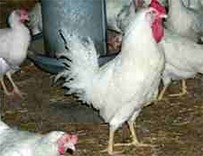
What is avian flu? Why is avian flu a big issue? In this Homo sapiens-centric world, everything revolves around us, humans. We only feel threatened and get hyper when a disease hits our species. SARS is evidence of how afraid some people can get although the fatality rate is much lower than that of HIV/AIDS, which has been a major concern in the African continent. Although avian flu is spread through direct contact with infected live poultry, there is a fear that the flu could mutate and be passed on to humans, resulting in the next human flu pandemic. Normally, avian influenza viruses only affect birds and pigs and not other species. In 1997, however, the H5N1 strain, which was responsible for an outbreak among birds, was also found to have caused severe respiratory disease in 18 people resulting in 6 deaths. This incident marked the first documented infection of human beings by an avian flu virus causing severe illness and high mortality, which naturally alarmed public health authorities. Previously, in February 2003, the public was further alarmed by an outbreak of H5N1 strain avian flu in Hong Kong, which reportedly claimed one life. So why is the H5N1 strain such a big deal? Apparently, the highly publicised avian influenza virus variant H5N1 is a deadly variant that was responsible for 19 deaths in Vietnam and eight in Thailand earlier this year. There are 15 subtypes of avian flu virus but a lot of attention has been given to H5N1 due to several factors. Studies have shown that H5N1 mutates rapidly and has the capacity to mutate by acquiring genes from other viruses that infect other animal species. With two documented incidents of its ability to cause severe disease in humans, further laboratory studies have conclusively supported the belief that this particular strain is indeed highly potent to humans. It is also of concern that the virus is spread through saliva and faeces by birds that have survived an infection for at least 10 days. This contributes further to the transmission of the virus at live poultry markets and, in the wild, among migratory birds. That said, it is obvious that the chances of infecting humans are increased with the spread of the virus amongst birds. As H5N1 has the tendency to mutate by acquiring genes from other viruses, hypothetically, when a person is infected by both human and avian flu viruses, the exchange of genes by the two viruses occurs. This exchange, in turn, could bring about the emergence of a new potentially fatal strain that is easily spread from one human being to another. If this happens, it could be the beginning of a major flu outbreak or pandemic. Government's approach in handling it The government�s handling of the avian flu fiasco has been rather inadequate. For instance, the government should be more transparent in dealing with the avian flu cases. The local media were reportedly barred from publishing any reports related to the avian flu in Kelantan through a directive from the Prime Minister�s Department to the media via the national news agency Bernama. This directive resulted in some newspaper publishers having to retract their headlines while one ended up with two different front-page stories. The Prime Minister�s department later issued another statement through its state-owned Bernama denying that it had made such a directive. The Deputy Prime Minister later announced that the government would be transparent by revealing all facts related to the detection of avian flu in the country to avoid �suspicion among some members of the public�. One can of course argue that the reason the government controls the information is that it fears that the people will not be able to handle the disseminated information, which can cause public panic. The government is, thus, acting like parents who ignore sex education among their children so that their children end up getting pregnant without understanding the reasons for their ballooning abdomen! Regardless of whether there was such a directive to banning reports of avian flu in our country, we just want the truth and we have every right to expect the truth to be told. We Malaysians have been disillusioned for too long that we now wish to live in the real world, no matter how scary the truth may be. No doubt, there are still a lot of us who are schizophrenic, living in the illusion created by the government, and perpetuated by the schizophrenic political parties. It is therefore, the government�s social responsibility and moral obligation to inform the public of any findings so that the people can contain the �outbreak� by taking extra precautions and keeping a lookout for the signs and symptoms of the disease before it spreads to other livestock. Instead of wasting time denying the presence of the virus in the country, the government should have put the public on alert stressing the possibility of the virus being transmitted to our country and getting veterinary departments ready for more regular checks on livestock. This move might keep the departments well prepared to contain such incidences in the future rather than �stumbling� upon cases and being caught flatfooted. The government should also include the wildlife department in its effort to monitor the incidence of avian flu in the country as there are a few sites in the country that have been identified as stopovers for migratory birds. Samples should be taken from birds in the wild from time to time to remain ahead of the outbreak. The government must also look into the fate of the affected farmers whose livestock had to be culled due to the detection of the virus H5N1. The outbreak led to massive losses among poultry farmers in Peninsular Malaysia who supply livestock to Singapore and other neighbouring countries when the import of live birds from their Malaysian suppliers was banned. In fact, according to Malaysia�s Federation of Livestock Farmers Associations, the poultry industry lost staggering RM10 million daily following import bans by Singapore and other countries. In a media statement, officials claimed that the avian flu virus was spread to Malaysia through the smuggling of exposed fighting cocks and chicken meat. Following this, a meeting between Malaysian and Thai authorities was planned to resolve ways to strengthen border security and to curb the spread of the virus. The Agriculture and Agro-based Industries minister, reacting to the outbreak of the virus in Kelantan, suggested that the Internal Security Act be used against poultry smugglers to curb rampant smuggling across the border. There is indeed no necessity to resort to such a drastic and repressive law to curb the smuggling problems as there are already existing laws that can be used to tackle these smugglers. Reactions and attitudes It is natural that whenever there is an outbreak affecting our livestock, the sale of the livestock will suffer. However, it is strange that some people are afraid of eating chicken but not duck amidst the avian flu outbreak. While the virus was reportedly detected in chickens in a farm in Kelantan, avian influenza virus, which means bird flu virus, can be also transmitted to ducks and other birds. It is a misconception to think otherwise and people should be aware of it. I might be deemed as paranoid for pointing this out but we should not dismiss the possibility of the virus being transmitted by other birds, including those in the wild. This is however not a suggestion that all birds are to be killed/culled to contain the problem. Some people�s appetite for fried chicken and roasted duck has not at all been affected by the avian flu outbreak. It is notable that chicken lovers are still frequenting fast food chains selling fried chicken and tucking in chicken rice and duck rice like there is no tomorrow (and I am definitely one of them). So is it safe to eat chicken (and duck and all other birds under the sun)? Unless you are a huge fan of chicken-sushi, chicken umai or any raw chicken dishes, you are all right.
Now e-mail us and tell us what you think. Your comments might be published in the Letters section of our print magazine, Aliran Monthly. | |||||||||||||||

 The government is, thus, acting like parents who ignore sex education among their children so that their children end up getting pregnant without understanding the reasons for their ballooning abdomen!