
|
|||||||||||||||
|
SCIENCE AND SOCIETY
Browsing through book fairs
How do we fare in promoting technological knowledge?
by Lim Tiang Wei
Please support our work by buying a copy of our print publication, Aliran Monthly, from your nearest news-stand. Better still take out a subscription now. If you prefer to read our web-based edition, please support our work and make a donation.
The number of visitors to the book fair can tell us something about prevailing reading habits. Knowing which section of the book fair draws the largest crowd allows one to pick out current areas of public interest Even the range of subjects of the books on display may indicate levels of intellectual and technical development. In Penang, book fairs have not been large, international or exciting. Most book fairs here are hosted by local distributors showcasing school texts, examination guides, sentimental love stories and popular magazines. This is dismal but not unexpected since Malaysians on average, according to national statistics, read only one book a year. Small but thrilling One annual book fair in Penang, however,, offers some excitement to Chinese language readers. This is the book fair organised by the Eu Ee Book Company, a sizeable Kuala Lumpur-based distributor of books published in China. Eu Ee�s most recent fair was held on 2-11 July 2004. It was a small affair, merely occupying the function hall in the Cheah Kongsi. Yet the books covered a wide range of subjects: art and crafts, music appreciation, feng shui and fortune telling, medicine and health, games and hobbies, kung fu, contemporary Chinese and international politics, leadership, management, self-motivation, literary works, dictionaries, science, and mathematics and technology. My attention was drawn to the books on science and technology which I have been following for some years. In science and technology, the publishing trends in China seem to have followed a path previously adopted in Taiwan. Taiwan�s path was distinctive for its effort to support Taiwan�s leap from being an agricultural economy to attaining technology-based developed nation status. Translating technology Taiwan�s industrialisation began in the late 1950s and early 1960s, not much earlier than Malaysia�s. Today Taiwan�s technological achievements are far superior to our own. How that came about is a complex story. But technical publications played a role from which we might learn some useful lessons. Taiwan�s early technical publications were almost all translations of university texts from the UK and USA. Mostly academic works, such translations held little interest outside student circles. Yet the overall effort at translation was huge, as if every important title published in English had a Chinese translation, and one that was affordably priced. Later Taiwanese translations drew upon Japanese technical publications that focused on practical applications of technological knowledge, including hands-on guides for hobbyists or were aimed at fostering homegrown product design and development. This effort in translation made information and knowledge available and affordable and helped create a large pool of knowledge workers. It meshed with an entrepreneurial spirit and a determined government policy to contribute to Taiwan�s development of advanced technology. By the 1980s, indeed, Taiwanese technical writers were publishing original technical writing. Then came China China since the 1980s has trod a similar path linking the diffusion of knowledge to the development of technology. In an earlier period, China depended on the translation of technical publications from the Soviet Union. Subsequently, China�s government-backed language and literature institutions rapidly expanded their translation efforts. Interestly, Taiwan-translated materials themselves provided an abundant source of reference for the `mainland�. At Eu Ee�s July 2004 book fair, one could see from the range of technical publications from China the rapid pace at which advanced technology is utilised and developed in China. There were translations of established western works, such as a series of Harvard Business School Case Studies, and original writings in all disciplines of engineering and advanced technologies. Of special note were the following original publications:
The Eu Ee book fair in Singapore, I was informed, is ten times the size of the Penang event. From this one can roughly gauge the volume of reading materials published in China today. With so much information being affordably available, it would be a crime for the public in China not to learn! It�s no wonder China has made such great strides in advanced technologies that Chinese corporations, such as Huawei, TLC, Haier and Legend, are now internationally known. Where are we? What have we in comparison? Our national policies and programmes don�t seem to link language and knowledge to scientific and technological development. For about 30 years now, lectures in our public universities have been delivered in Malay while students depend almost exclusively on English language references, which they can�t competently read or even afford to buy. Why haven�t we adequately and cheaply produced our own academic material and knowledge crucial to our advancement? Why is the effort to translate such materials into the Malay language so unimpressive, judging by the exhibits at the typical Dewan Bahasa and Pustaka book fair? Our politicians and bureaucrats love to argue emotionally over language issues and to lament the decline in our command of English (`the world language�). Hardly any one of them has anything thoughful to say about the practical and critical relationships of language to technological knowledge and development. Instead they give us language and education policy swings that are politicised in counter-productive ways. From time to time our leaders preach to us which lingua franca we should master � now English, now Malay, now English again, at least for Science and Mathematics. Learning from the experiences of other countries, we should ask, `And now what?� Will we have international-grade book fairs that truly display our `knowledge products� to back our claims of having `centres of educational excellence�? Or must we (as in Penang, let alone remote places) simply see `fairs� of textbooks and revision notes? If the latter is the case, we�d be better off preserving the traditionally family-run book shops and the second-hand bookshops now endangered by competition from big chain distributors.
Now e-mail us and tell us what you think. Your comments might be published in the Letters section of our print magazine, Aliran Monthly. | |||||||||||||||

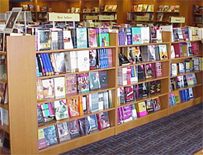
 Why is the effort to translate such materials into the Malay language so unimpressive, judging by the exhibits at the typical Dewan Bahasa and Pustaka book fair?
