
|
|||||||||||||||
|
HEART TO HEART
Remembering and re-living Romero An unexpected hero, he paid the ultimate price for speaking up for the oppressed in El Salvador
by Martin Jalleh
When Oscar Romero was installed the Archbishop of El Salvador in 1977 he was no hero. He was then a compromise candidate, a conservative, and a comfortable mouthpiece. He was also predictable, a pious bookworm, politically cautious and one who was expected to protect the status quo. No one, for sure, had called him a prophetic voice in his early days. A Jesuit, Salvador Carranza, called him (in Mar�a L�pez Vigil�s book �Oscar Romero: Memories in Mosaic�) �an insignificant being... a shadow that went by clinging to the walls.� Carranza added that Romero was one who �stayed on the margins of all� that was happening in the country. He remained timid in the midst of the�terrorism� committed by the military. The Latin American Catholic bishops had gathered at Medell�n, Colombia in 1968 to speak of �institutionalized sin� and to call on the whole church to a �preferential option for the poor�. Romero preferred none of that or of the community-based pastoral projects, nor did he support the progressive liberation theology clergy aligned with the poor. He remained �buried in his books� when a major protest of election fraud ended in bloodshed after a crowd of protesters was attacked by soldiers in the town square of the capital. Dying and rising The hinge that turned Romero from a �harmless priest� into an outspoken voice of the voiceless people was the murder of his friend, Rutilio Grande, a Jesuit priest, together with a 72-year-old layman and a young boy. He was on the way with them to celebrate Mass. Grande had been particularly outspoken in denouncing the injustices against the 30,000 peasants working on 35 sugar-cane farms in his area and in helping them towards self-determination. Romero questioned why there was no official inquiry into the deaths � and he never stopped questioning after that. What had brought about the growing unrest, great social injustices and gross human rights violations in his country? He discovered that it had very much to do with the ruling oligarchy of 14 families who were so powerful as to control most of the wealth in that poor country and who wanted, by whatever means, to maintain and protect their interests. He was also confronted by the disturbing fact that the wealthy and powerful few who had supported him in being the archbishop were the very same people who tacitly sanctioned the violence that preserved their positions. Summoned by the authorities to view the remains of the three � a clear lesson on what would happen to meddlesome priests � he in turn summoned the whole of the Archdiocese to the funeral Mass the following Sunday and prohibited the celebration of Mass everywhere except in his Cathedral. More than 100,000 people turned up. They �were applauding him, and you could see him grow stronger. It was then that he crossed the threshold. He went through the door. Because, you know, there is baptism by water, and there is baptism by blood. But there is also baptism by the people,� related Inocencio Alas in Oscar Romero: Memories in Mosaic. Romero learned, as has been aptly put by Renny Golden, a co-author of his life, that: �the church is more than the hierarchy, Rome, theologians or clerics � more than an institution � but that night he experienced the people as church.� �God needs the people themselves,� he said, �to save the world�The world of the poor teaches us that liberation will arrive only when the poor are not simply on the receiving end of hand-outs from governments or from the churches, but when they themselves are the masters and protagonists of their own struggle for liberation.� Speaking the truth On another occasion he would declare: �If some day they take away the radio station from us . . . if they don�t let us speak, if they kill all the priests and the bishop too, and you are left a people without priests, each one of you must become God�s microphone, each one of you must become a prophet.� In the three short years of his life as archbishop (which was often likened to the three years of Jesus� public ministry), he became their Good Shepherd. They heard and recognized his voice when they became convinced that he was ready and willing to lay down his life for them. All Romero could do was speak the truth and that he did fearlessly and freely: �The criterion that will guide the church will be neither the approval of, nor the fear of, men and women, no matter how powerful or threatening they may be. It is the church�s duty in history to lend its voice to Christ so that he may speak, its feet so that he may walk today�s world, its hands to build the reign of God�� (6 Aug 1977). He was very clear about his role: �To try to preach without referring to the history one preaches in is not to preach the gospel. Many would like a preaching so spiritualistic that it leaves sinners unbothered and does not term idolaters those who kneel before money and power. A preaching that says nothing of the sinful environment in which the gospel is reflected upon is not the gospel� (18 Feb 1979). In an audience in May 1979, Romero presented the pope with seven dossiers which documented deaths, disappearances, and damning evidence of human rights abuses in El Salvador. It made a lot of powerful people at home furious and he received increasing threats to finish him off. The following year, Romero wrote to US President Jimmy Carter: �You say that you are Christian. If you are really Christian, please stop sending military aid to the military here, because they use it only to kill my people.� Romero�s letter went unheeded. Two months later he would be a victim of the violence he had denounced. (In spite of the UN Truth Commission having called the violence in El Salvador �genocidal�, the U.S. sent $1.5 million in aid every day for 12 years.) Parable of the wheat Oscar Romero�s martyrdom was not something that he had personally, carelessly or egoistically sought after. This was confirmed in his conversation with Jorge Lara-Braud, a Presbyterian friend and a leader among Latin American theologians: �I�ll tell you the truth, Doctor, I don�t want to die. At least, not now. I�ve never had so much love for life! And honestly, I don�t think I am meant to be a martyr. I don�t feel that calling. Of course, if that�s what God asks of me, then there�s nothing I can do. I only ask that the circumstances of my death not leave any doubt as to what my true vocation is: to serve God and to serve the people. But I don�t want to die now. I want a little more time...� But like the grain of wheat in the parable he preached on, just minutes before he was felled to the ground during Mass (a Catholic celebration of Christ�s giving of himself), he was ready to yield, so that he, in his very own words, would �be resurrected in the Salvadoran people.� May God grant us the same grace He gave to Oscar Romero - to be freed of our comfortable and safe religious practices and/or our comfortable middle-class lifestyles and to rise to a new life for others. May we be a voice to the voiceless � the communities (whatever their colour, creed or culture) in Malaysia who are displaced, deprived, dispossessed and disempowered. May we dare to risk speaking up for those disillusioned by the empty and broken promises of politicians, demoralised by the slow grinding wheels of justice, and drowned in a vicious cycle of poverty and violence, and who end up with their young, dysfunctional � and turned into subject matter to be documented and eventually damned into oblivion!. May we be courageous enough not to take the path of compromise or convenience laid out by the powerful but be on the side of those who have no cash, credit, clout, �cables� or connection. May we learn to overcome our fears and rise in boldness to denounce unjust laws such as the Internal Security Act, which (retired) Archbishop Soter Fernandez had so rightly, in 1987, called �an immoral� law. Please support our work by buying a copy of our print publication, Aliran Monthly, from your nearest news-stand. Better still take out a subscription now. If you prefer to read our web-based edition, please support our work and make a donation.
Now e-mail us and tell us what you think. Your comments might be published in the Letters section of our print magazine, Aliran Monthly. | |||||||||||||||

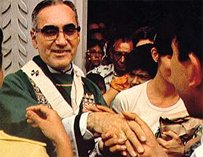
 Many would like a preaching so spiritualistic that it leaves sinners unbothered and does not term idolaters those who kneel before money and power.
