
|
|||||||||||||||
|
COVER STORY
Supporting the formal system Role of the State Government in education development
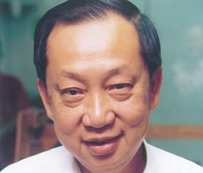
by Datuk Dr Toh Kin Woon
MU dropped from 89th position last year to 169th this year, while USM did not make it to the top 200 this year, despite attaining 111th position last year. The public are rightly concerned over this drop. However, while standards in universities are important, standards at the primary and secondary levels of our country�s educational system are equally important. Academic standards in universities are, in part, determined by the quality of the output from the lower levels of our country�s system of education. Hence, as much as we should pay attention to arresting the decline in standards of our universities, we must also not neglect the important issue of raising standards in our primary and secondary schools. Targeted areas In this regard, State Governments can help, even though education is largely under the jurisdiction of the Federal Government. For example, The State Government of Penang � through its Education Consultative Council, under the Socio-Economic and Environmental Research Institute (SERI), the Penang Public Library Corporation, and the support of many individuals � has launched several projects which complement and supplement programmes within the formal educational system. In particular, these projects are targetted at areas which have been given less stress or even neglected but are nonetheless important in promoting the educational development of our students. These areas include providing intervention support programmes for children with learning difficulties; promoting continuing education; encouraging reading; improving the quality of pre-school education; stimulating an early interest in Science and Mathematics; and promoting an interest in fine arts. Allow me now to elaborate on a few of these projects. Helping children with learning difficulties One of the committees set up under the Penang Education Consultative Council (PECC) is the Committee for Non-Formal and Continuing Education. Since its establishment in the late nineties, this Committee has launched two major projects viz. Bureau on Learning Difficulties or BOLD and Promoting Activities in Continuing Education or PACE. i) BOLD BOLD was set up to help children with learning difficulties acquire basic literacy and numeracy skills or children who have been deprived of the opportunity to do so due to family or socio-economic circumstances. The immediate objective is to support their learning with alternative teaching methods until basic literacy and numeracy is achieved. To achieve this goal, BOLD has been actively organising workshops on its own; taking part in talks and workshops organised by other institutions or organisations; and designing and implementing intervention programmes to support learning. Major areas covered in these talks and workshops are the role of play therapy in promoting learning among children with learning difficulties; speech and language therapy; dyslexia; coping techniques for parents of special children; sensory integration and learning difficulties; and understanding the behavior of ADD/ADHD children. Specialists in different aspects of learning difficulties were invited to conduct these workshops and talks. BOLD also trains and supervises volunteers to work on its learning support programmes. Quite apart from acquiring basic literacy and numeracy skills, BOLD�s activities of play therapy and learning support intervention are aimed at facilitating the child�s self-discovery, development and growth; enabling self-healing processes to take place and promoting greater well-being; as well as providing for the child to experience growth in the most supportive conditions. Since 2004, BOLD has facilitated a pilot project that involved bringing two teams of occupational therapists to help meet the needs of children in special classes in five schools in the State. Impressive results All these projects of BOLD have achieved impressive results. Children with learning difficulties, which affect around 10 � 15% of school-going children, under-privileged children and even children who have never been to school because of poor socio-economic circumstances or family upheavals have been known to have achieved progress in reading, writing and the acquisition of numeracy skills as a result of BOLD�s programmes. Parents who have children with learning difficulties have now gained a lot more confidence in coping with them while teachers are now able to handle these children more professionally. Just as importantly, BOLD now acts as one centre that they can refer to for assistance in coping with children with learning difficulties, including emotional and behavioural as well as various kinds of school-related problems. (ii) PACE The setting up of PACE is based on the firm belief that education is a life-long process and facilities for continuous learning should be available to a broad spectrum of society. The main objective of PACE is to promote the culture of continuous learning by providing more opportunities to acquire new skills, ideas and knowledge. In line with this objective, PACE organises each year two series of public talks, all of which are held on Sunday afternoons. Each series usually runs for 12 consecutive weeks and the 12 topics cover a broad range of interests such as astronomy, health care and medical issues, self-development, social issues and hobbies. Most of these talks have so far been well attended, showing that programmes organised by PACE have support among the public in Penang. Promoting the arts Arts in education Arts in Education or just Arts-Ed is a joint project of Universiti Sains Malaysia and the PECC. Arts-Ed has two official working partners � the State Education Department and the Penang Heritage Trust, while the Secretariat is SERI. Objectives Its objectives and focus are to:
So far, Arts-Ed has been promoting arts education among students through organising short courses and workshops by professional artists in the fields of music, drama, visual art, literature and video production in schools throughout the year. Since its launch, hundreds of children have benefited from Arts-Ed programmes. These include:-
Penang Public Library Since 1995, the Penang Public Library has been active in promoting reading among members of the public. It also offers resources, especially its Penang Collection, for research by scholars interested in the history, culture, heritage and education of the State. Physical development To date, the library has experienced a rapid pace of development. The Penang Public Library currently has a new State Library in Seberang Jaya; five district libraries of which three are new (Georgetown, Seberang Perai South and Balik Pulau); three community libraries of which two are located in Komtar and Mayang Mall Shopping Malls, 54 rural libraries, one children�s library and ten mobile libraries. All these 74 libraries are electronically linked so that users can access resources in each of these libraries at any one of the branches. Penang Library Network (PLN) Portal Recently, the Penang Public Library took over the management of the Penang Library Network (PLN) Portal, which was developed by a Committee of Librarians, and which was earlier housed at USM. This portal networks the catalogues and databases of books and journals in all participating libraries, which now number around 15, mostly institutions of higher learning, both public and private. With the launch of this PLN Portal, users, especially university students in member libraries, can now access each other�s data base. This facilitates the running of the inter-library loan system and helps overcome the shortage of reference materials in private institutions of higher learning. The PLN Portal is the first of its kind in the country. Activities To encourage greater use of the library facilities, numerous programmes have been organised, particularly at the level of village libraries. These include talks on literary works, art competition, scrabble games, lessons on internet access and story telling. These programmes are run by the Board at the level of the State, and Library Committees at the parliamentary constituency and village levels. Overcoming constraints As can be seen, many activities can be organised at the level of the State to promote educational development. More particularly, the State can focus on areas that somehow have received scant or no attention within the formal system of education. Areas such as cultivating the reading habit, encouraging the arts, promoting continuing education, and helping children with learning difficulties can be developed by the State Government working closely with other institutions and organisations. This close cooperation helps overcome the resource and capability constraint often faced by the State, through the mobilisation of the energies, talents and capabilities of educationists and other professionals. Much can be achieved as a result. Please support our work by buying a copy of our print publication, Aliran Monthly, from your nearest news-stand. Better still take out a subscription now. If you prefer to read our web-based edition, please support our work and make a donation. Now tell us what you think of this article in fewer than 250 words. Your comments may be published in the Letters section of our print magazine, Aliran Monthly. | |||||||||||||||

 ...the State can focus on areas that somehow have received scant or no attention within the formal system of education.
