
|
|||||||||||||||
|
BOOK REVIEW
Back to an ethnic future?
by L D Raj
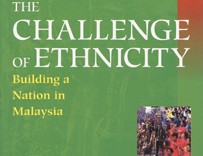
The title of this book promises much. Its six chapters and an introduction combine a focus on the history and present contexts of ethnicity and nation-building in Malaysia with a detailed examination of key areas of contemporary �challenges of ethnicity�. If it falls somewhat short on delivery, it is because the book is a collection of seminar papers on ethnic relations in Malaysia presented in Universiti Sains Malaysia in 2002�2003. Between them the essays cover a fair amount of ground. Yet there is a lack of unity of discourse that compels the reader to work very hard to pull various strands of argument together. Some of the chapters, too, would have benefited from more rigorous editing. It is also problematic that much of the evidence in some chapters is anecdotal and bound to events in 2002�2003. Presenting such evidence for discussion at seminars of the time was fine. However, the evidence is less convincing when judged against wider and subsequent developments. Much of the book reinforces the fact that �communalism is a dominant manifestation of Malaysia�s multi-ethnic society�. The respective chapters by Cheah Boon Kheng and Johan S. Abdullah lucidly chart how the negotiations for Merdeka became crucially linked to ethnic issues and concerns and how the codification of differential ethnic rights in the Constitution and the dominance of communally based political parties set the stage for subsequent ethnic contestations. Other chapters add analysis and comment on identity (particularly the continued manipulation of our ethnic identity at the expense of a shared �Malaysian� identity), the likely correlation of ethnic polarisation to primary school backgrounds, the conservative role of the middle class, and the potential transformation of the business culture through �new� partnerships in small enterprises. Thus the book covers a reasonably broad scope of concerns. But maybe because of the unevenness of the chapters, the reader wonders if the book has sufficiently unravelled the flux and process, ambiguity and complexity of the interactions and dynamics bound up with issues of identity, ethnicity and nation-building. I would have liked to see more attention paid to the interplay between two crucial factors. One factor consists of the conditions that created the modern state, such as the state�s capacity (associated with the rise of capitalism) to �homogenise� a population through dominant patterns of commerce, industry, communication and education. The other factor comprises the �imaginings� of personal, ethnic and national identity in Malaysia. Such analysis would raise important questions. For example, can new patterns of socio-economic life break persistent ethnic divisions and advance a shared commitment to nationhood? If so, how would they do it and what kind of nationhood would result? For that matter, how far has burgeoning consumer capitalism affected the motivation to go beyond the status quo in search for alternative �imagined communities�? To some extent, the writers address such questions but they reach different conclusions. Vejai Balasubramaniam contends that the status quo will persist: �the Nation is not about to be re-represented�. However, Chin Yee Whah concludes that business culture is being transformed, from being ethnically determined to being based on class. But Chin�s conclusion, based on his study of Malay-Chinese partnerships in small and medium enterprises, may be prematurely optimistic considering the SMEs� relatively minor role within the dominant, ethnicised rentier business culture that influences even the �genuine� partnerships analysed by Chin. Johan�s chapter is the most explicit in charting a future which, he argues forcefully, should be derived from a debate on Malaysia�s unique multiculturalism. To that end, he is encouraged by an on-going �creative reflexivity through consociational arrangements� and the maintenance of �broadly democratic practices in the face of communal contestations and tensions�. Against this, though, he identifies four impediments to multicultural practice. The Constitution does not enshrine the equal worth of citizens. The political system is highly communalised. Certain interpretations of Islam may obstruct multicultural discourse. And there is still a lack of �social forces� that can break the communal-consociational mould of politics. Of course, whether one�s vision of Malaysia�s future can be allowed to be a �shared� vision or a shared �imagining� depends very much on one�s determination and ability to provide space for that vision in the public domain. This is far from being easily attained. We just have to recall how the state has systematically repressed or harassed people who have led or joined alternative movements, including various workers� movements, ethnic political parties and campaigns that strove to be consistently inter-ethnic. Securing democratic space and an audience for alternative �visions� has long been a major challenge. Reading the book under review may lead one to ask how changing social conditions can be a help or hindrance. What role, for instance, would be played by changing demographics? Will they lead to a relaxation of tensions as a result of altered perceptions of threats and the needs for protection and communal advocacy? Or will they result instead in starker ethnic exclusivity as minority voices are further marginalised or neglected? Aliran Monthly is an independent reader-funded publication. We rely heavily on people like you for support. Please contribute to our work by buying a copy of our print publication, Aliran Monthly, from your nearest news-stand. Better still take out a subscription now. If you prefer to read our web-based edition, please make a donation if you can afford it. Any amount will be most appreciated. Now tell us what you think in fewer than 250 words. Your comments may be published in the Letters section of our print magazine, Aliran Monthly. | |||||||||||||||

 Johan�s chapter is the most explicit in charting a future which, he argues forcefully, should be derived from a debate on Malaysia�s unique multiculturalism.
